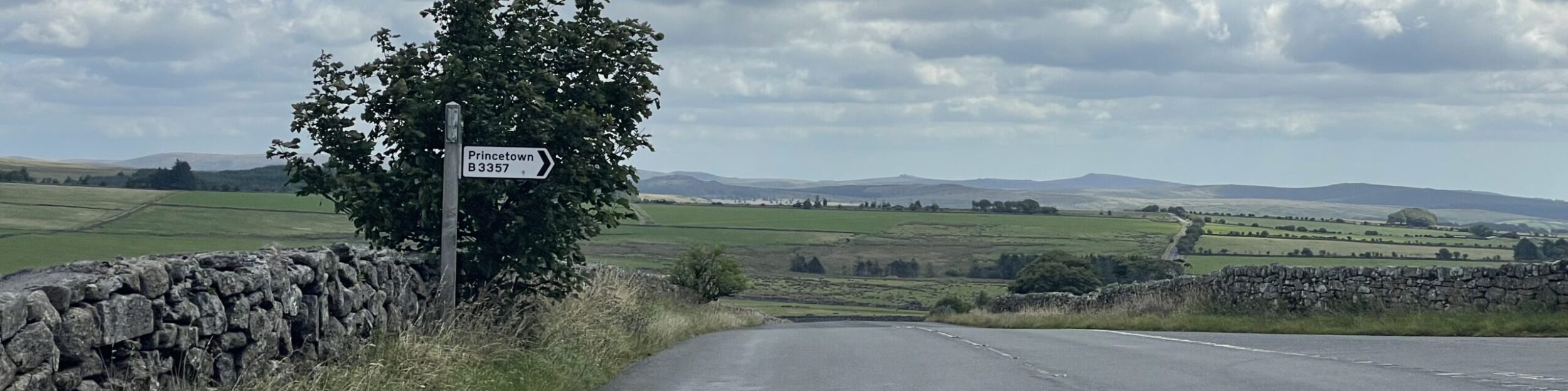
In which Sid, Doris, Tim and Sarah spend a few days to do all that is correct for a French country holiday.
The (air conditioned) holiday house, in the grounds of the Clos Castel at Casteljoux in the Lot et Garonne, is taken so we can holiday with Tim and Sarah. Thirty years ago we met them on a walking trip, as with other long lasting friendships, in Morocco. They still like to play games, and Doris’s finger was not actually broken in the melée.
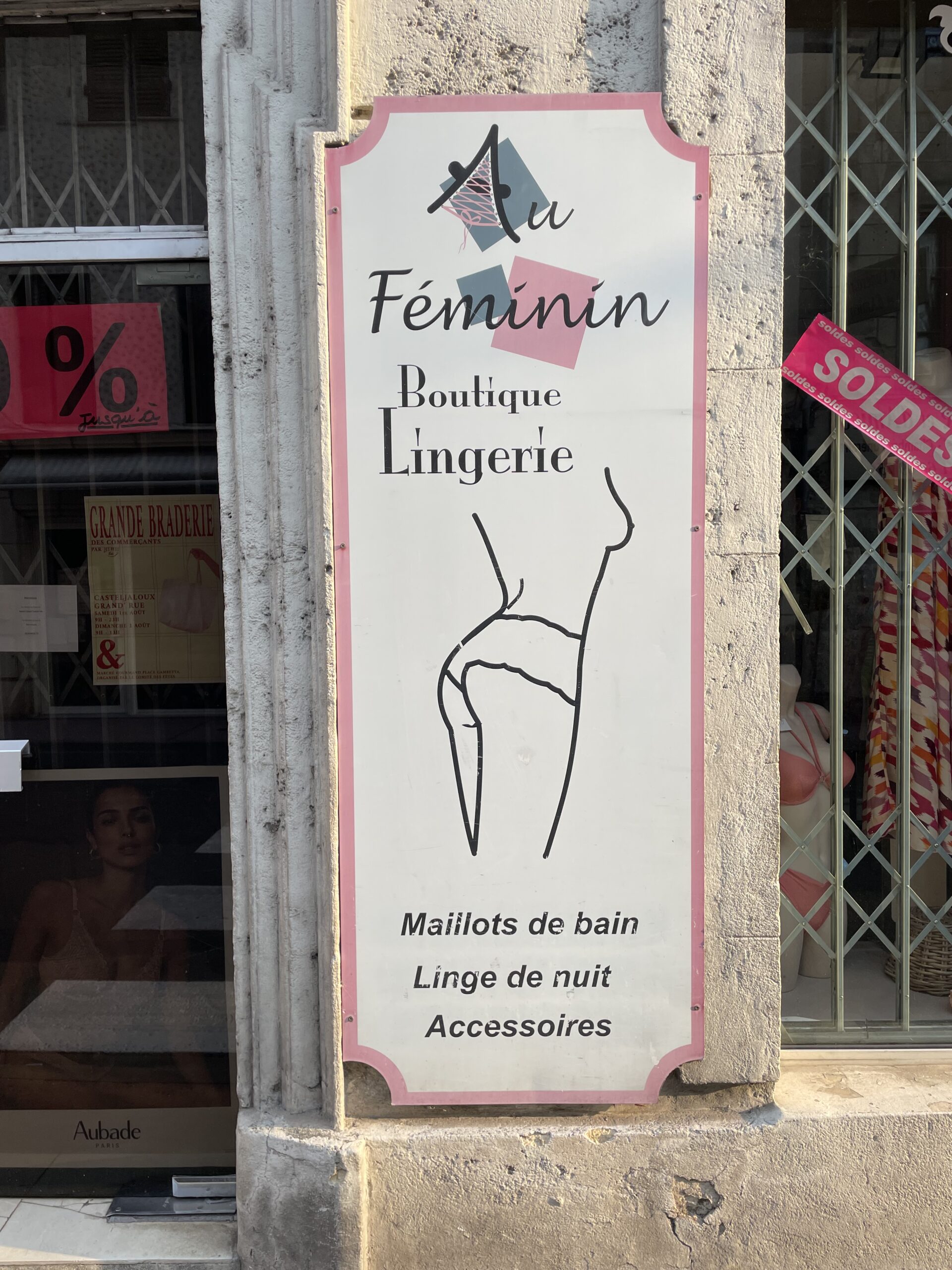
Casteljaloux, a six hour Hare SSE from La Rochelle, is an ideal French village. Though just 5,000 souls they have a thorough market on Tuesdays and Saturdays, with a square of cafés and restaurants. There are competing boulangeries, patisseries, traiteurs, pharmacies (for the aged French) and tabac/presses. Doris was impressed that the ladies of the town could support a lingerie shop with excellent window displays. La Flamme Rouge is very important at Tour de France time.
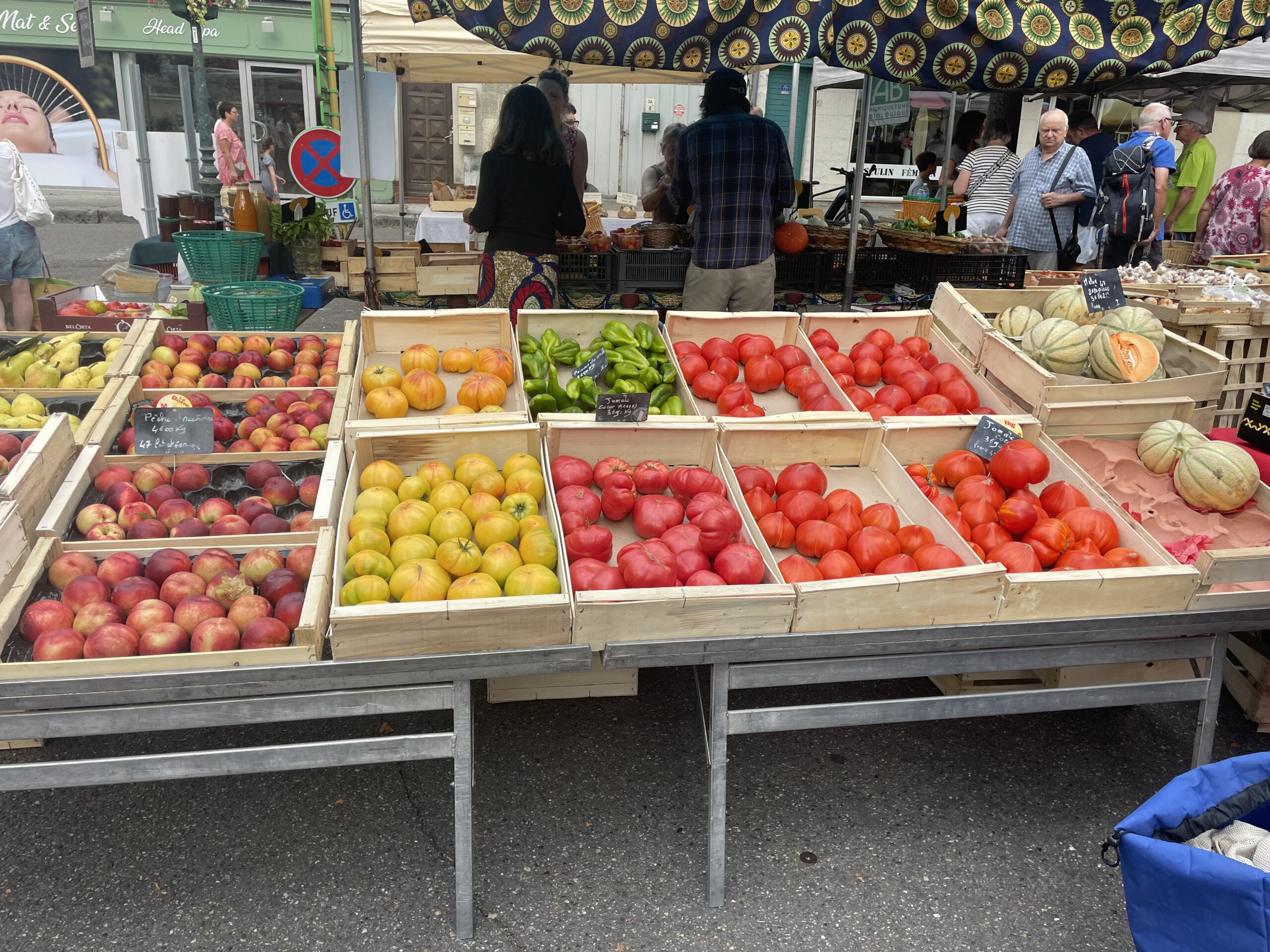
There is a hot water spa and an arena. Importantly the house is minutes away from a giant Leclerc supermarket for all other, mostly liquid or salty, needs. We should quickly tick off: Rue de la Liberté, Henri lV, Victor Hugo, Avenue 8th May 1945.
There is a Place de Kunheim to celebrate their twinning. Kunheim sounds German but is on the French bank of the Rhine. In September 1939 the town was evacuated and many came to Casteljaloux. The twinning was formalised in 1999 when there would have been a few people who recalled the move.
The mediaeval element of the town has been built over or abandoned. The walk of the old town is soon done. Casteljaloux was home to the Knights of St John only until 1241, though the idea of protecting pilgrims persisted, so today they run volunteer ambulances and first aid stations. (Sid, you should probably check that continuity.)
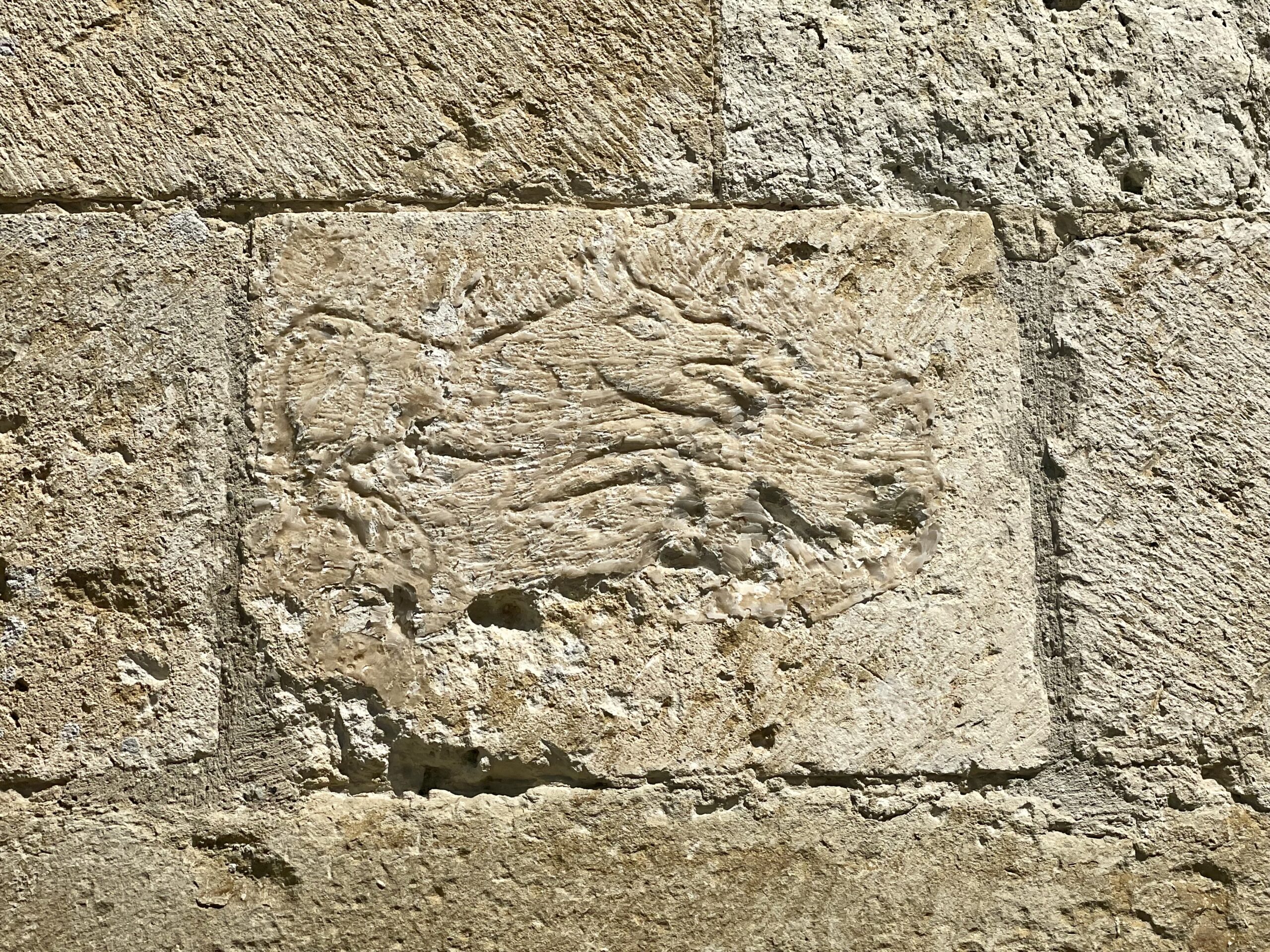
On Wednesday we found it was much easier to take four in the Hare than Tim’s Audi TT and set out for the bastide town of Vianne. Like Salisbury this was a planned new town, built rather later in 1284 on the site of an abandoned abbey, itself on an old Roman road. For cathedral hounds (you know who you are) the fortified church has a graffito of a she wolf in heraldic pose that may show the way to a secret tunnel. Might do, but there is a second signpost which is missing.
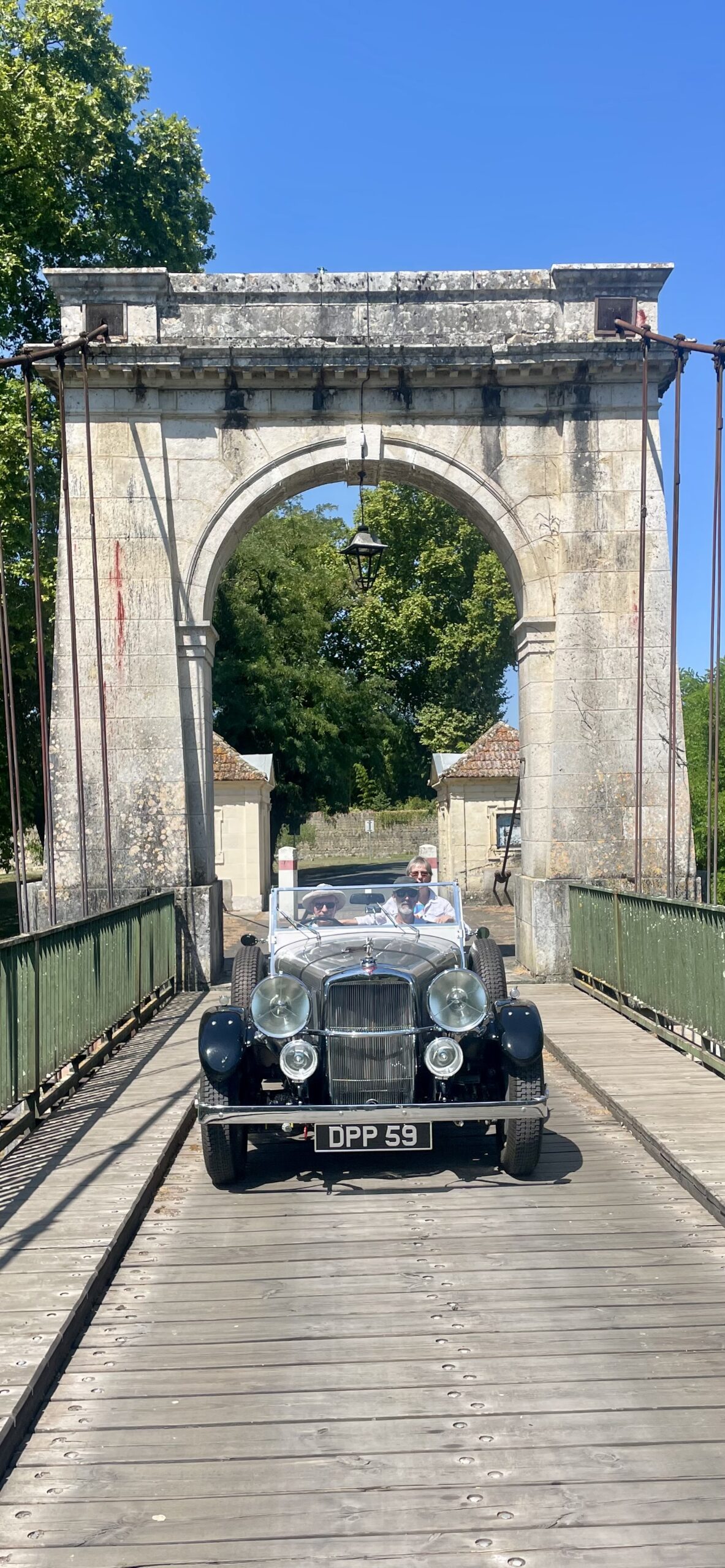
The town then suffered through the 100 Years War and Wars of Religion (cf Henri lV and Edict of Nantes). Sid skates over all that to celebrate the building of local canals and in 1842 a suspension bridge over the River Baïse, with wire ropes holding wooden planking. Here Doris is on the wobbly planking taking the picture.
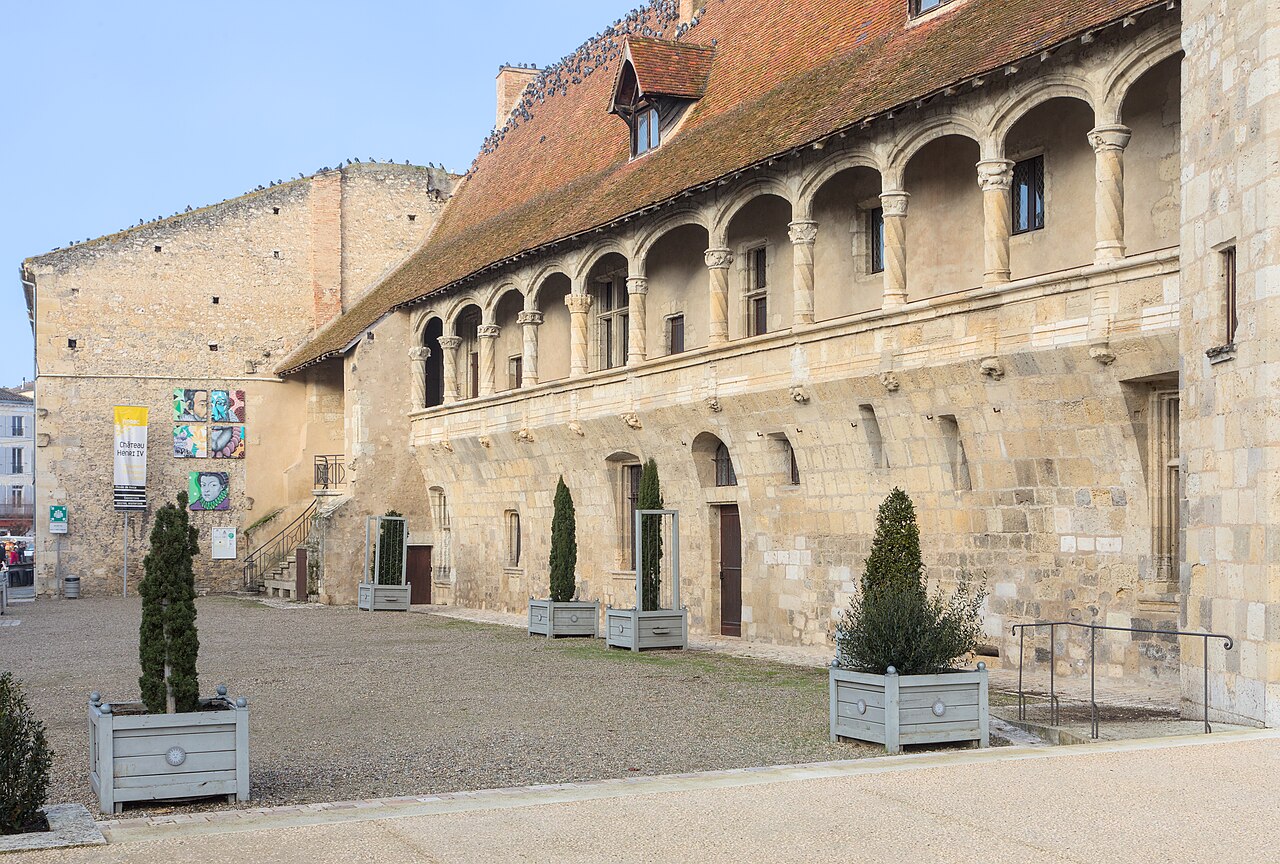
Onward to Nerac, and the one remaining wing of the Chateau. Mostly knocked down after the revolution the late gothic and early renaissance wing we see here overlooked a courtyard which is now a small town square.
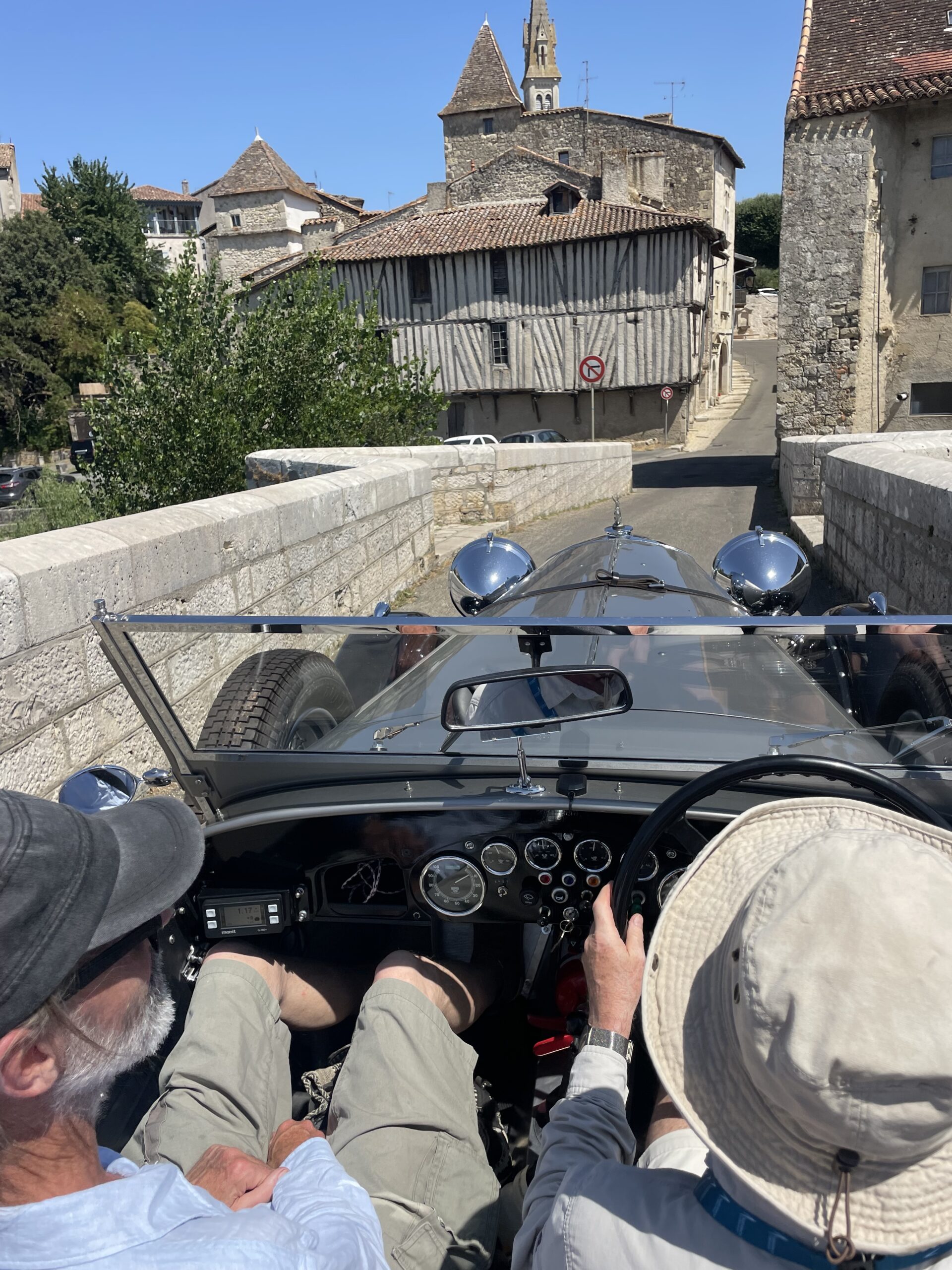
Leaving town Sid takes a wrong turn. Doris says not to worry, keep on going and she will sort a way out of town. A Madame of many years hears and then sees the Alvis coming towards her and shows Doris and crew how happy she is to see such a vehicle on the tiny, stone bridge across the Baïse. A few days back Sid would have proceeded nervously, but now he is a more confident driving fellow (though he has no eye to spare for Madame and if you check the speedo is only doing eight mph).
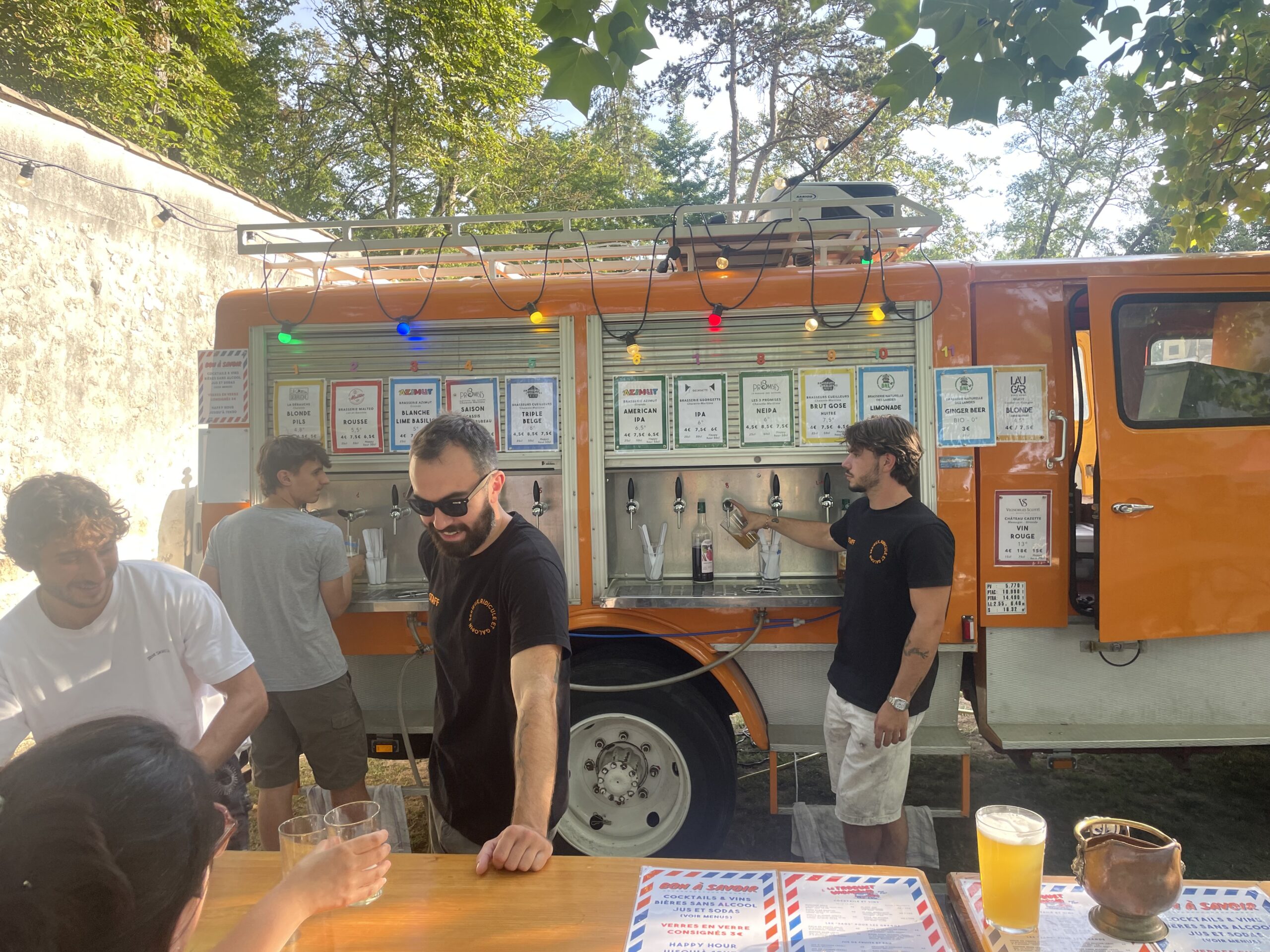
Back home it is time to go down to visit Les Pompiers de la Bierre who have converted a fire engine, which is used to carrying a lot of liquid, to provide taps for many tasty beers and a vin rouge. French techno plays, children eat chips and mosquitos eat all but Sid. He is too poisonous.
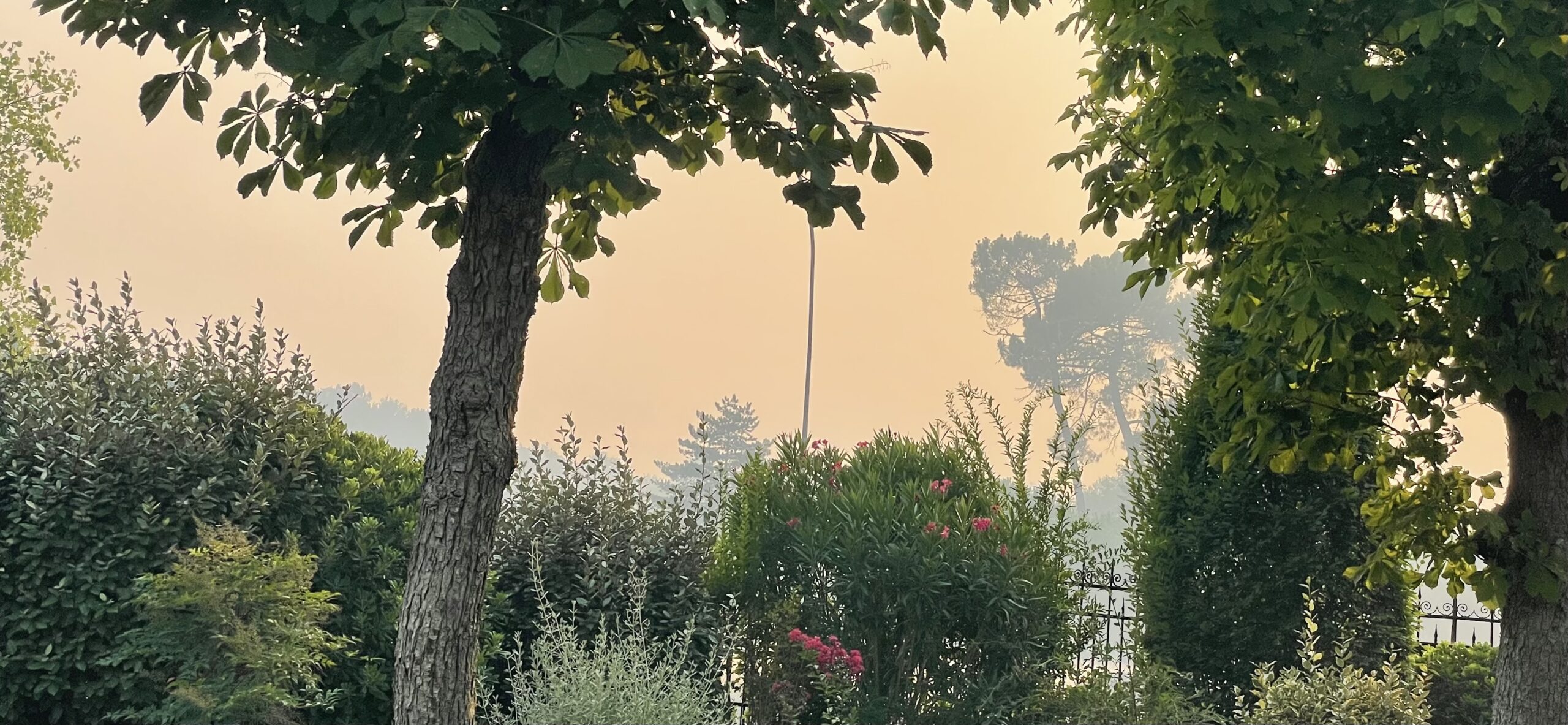
It may be they have to convert the beer truck to a fire truck. There is a fire burning 110 kilometres away on Cap Feret and the smoke is thick here. Over 140,000 are evacuated as the canicule and high winds create perfect wild fire conditions.
We have been looking forward to this below all week.
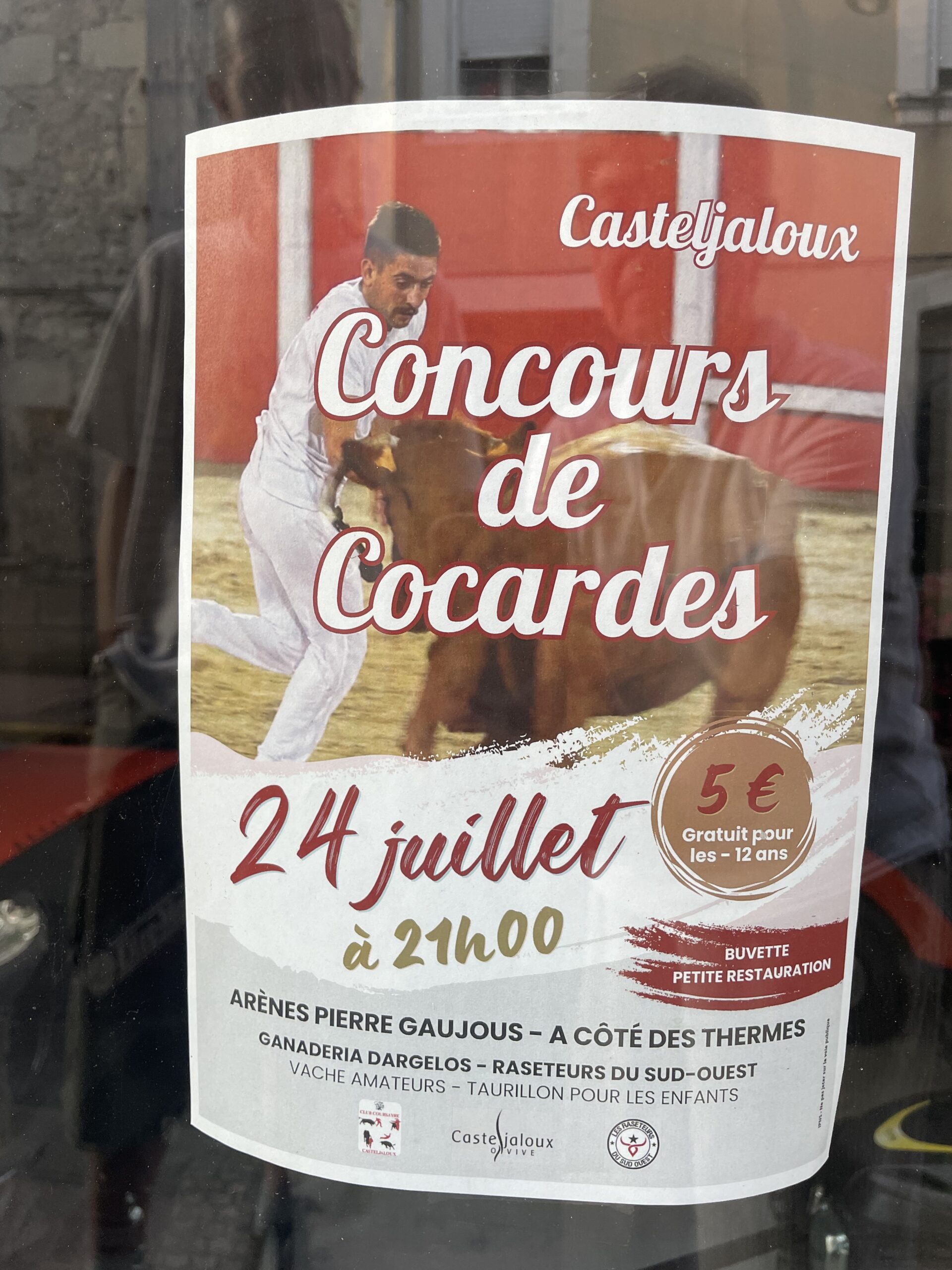
We have no idea what to expect so Sid interviews the commentator: A young bull is released into the grand arena of Casteljoux. There are three cockades tied around its horns. A team of six young men will try to remove them. They run from the bull while trying to reach back to capture the woolly flower. The bull is fierce. The men can escape behind a wall or jump right over the barriers, which they do with great agility. C’est un grand spectacle.
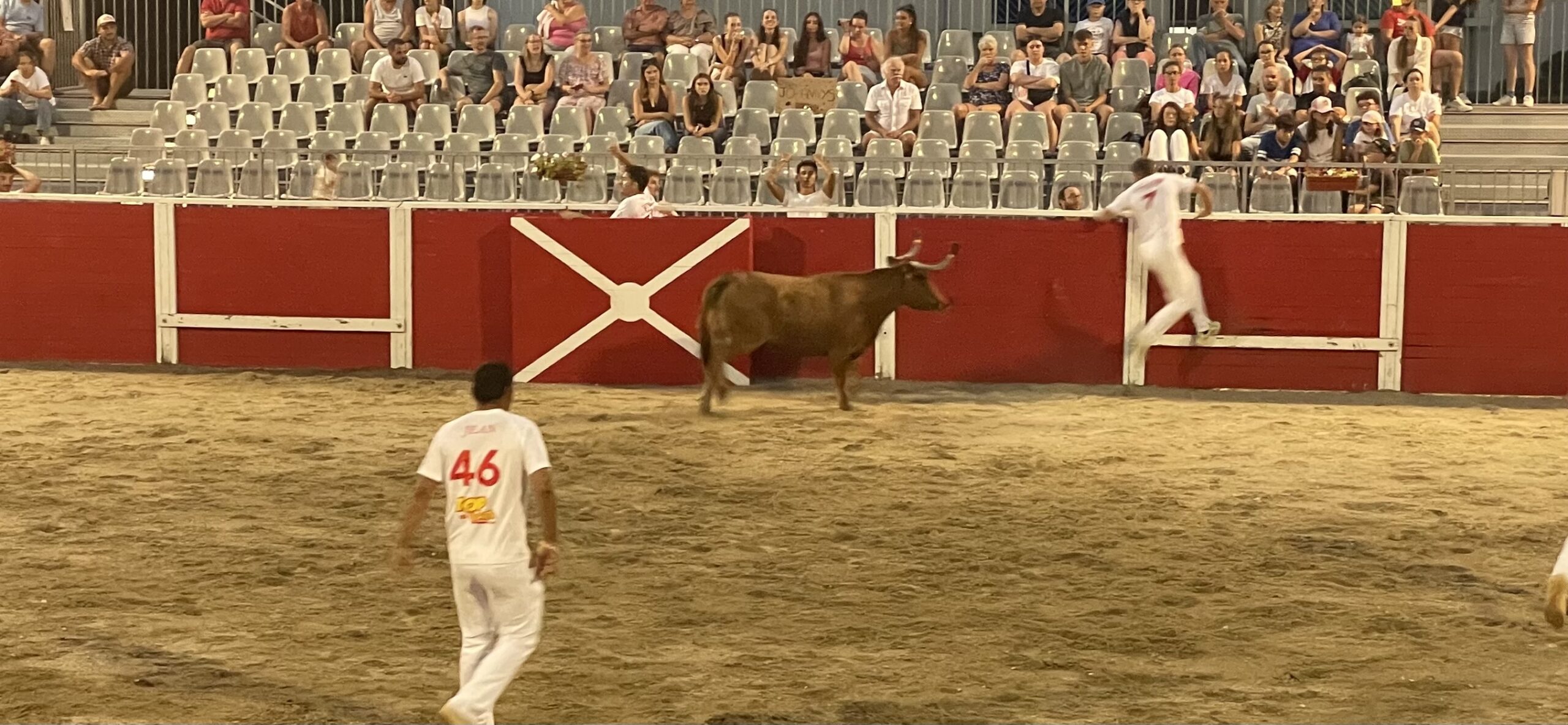
After five minutes that game is over and the little bull lured away with a cow. Then a new bull, new team, beer, chips, mosquitos as before. Our team of four is lured away at half time.
Finally, a word on the Catholic church first built in the 1300s. Knocked down in religious wars it was rebuilt in the 17th and 18th centuries. In 1685, Louis XlV (more booing) revoked the edict of Nantes and Protestantism was illegal again, so their Temple got knocked down. After the 1789 Revolution churches were illegal. This Notre Dame of the Assomption was renovated in the 1900s by Republican Catholics and so, unusually, carries the inscription Liberté, Egalité, Fraternité. (Which sentiments they took to IndoChine and North Africa.)
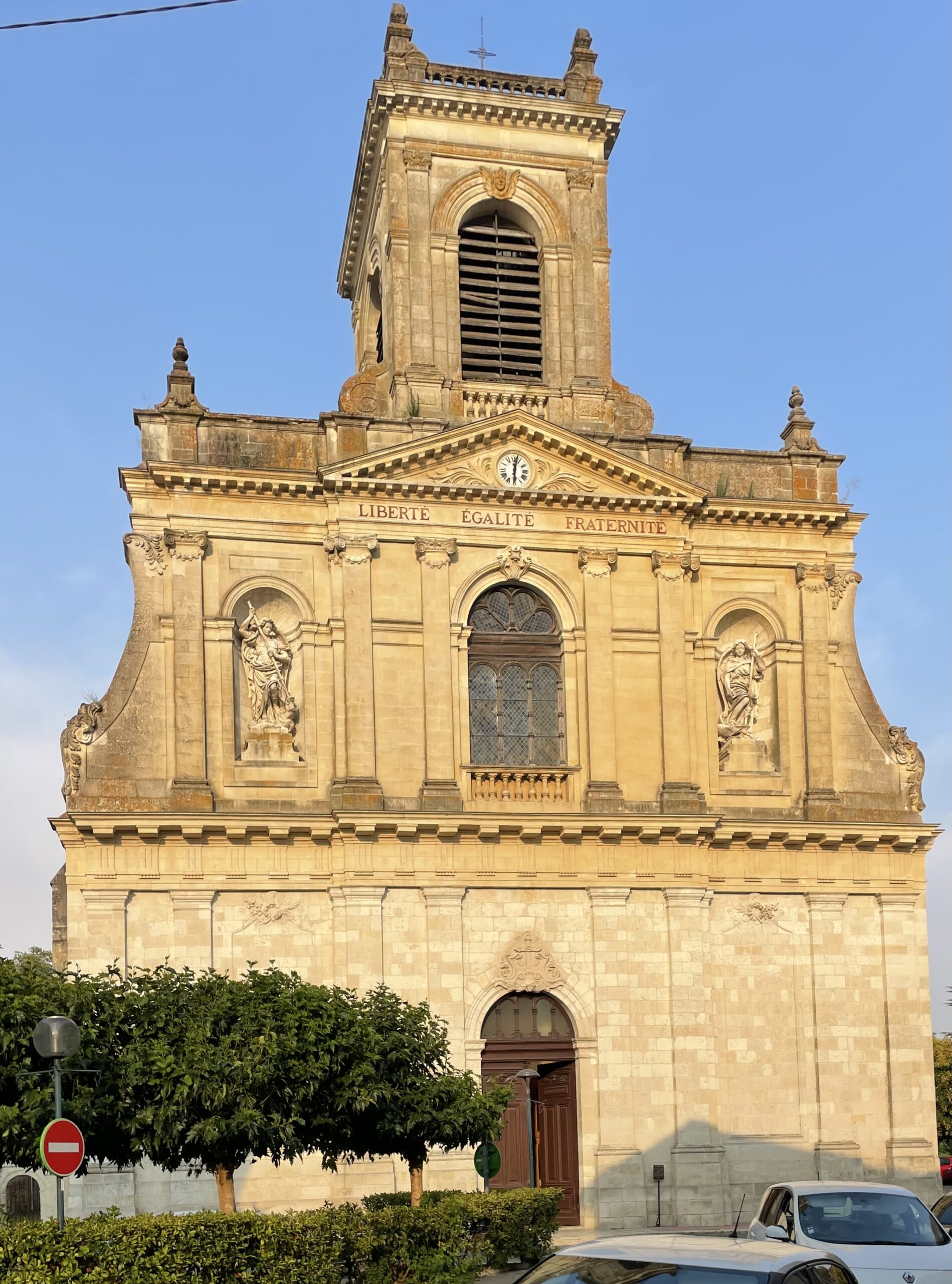
The glass is all from the 1840s so presumably the revolutionaries had knocked out the old stuff. Actually having the motto over the door does not seem so strange now that, in a bit of a U turn, all the churches are owned by the state. Funny old world.
Tim and Sarah depart northward. Sid and Doris have a new plan to go home from Spain, driving only one day to Santander and then home from Plymouth. Bon voyage.