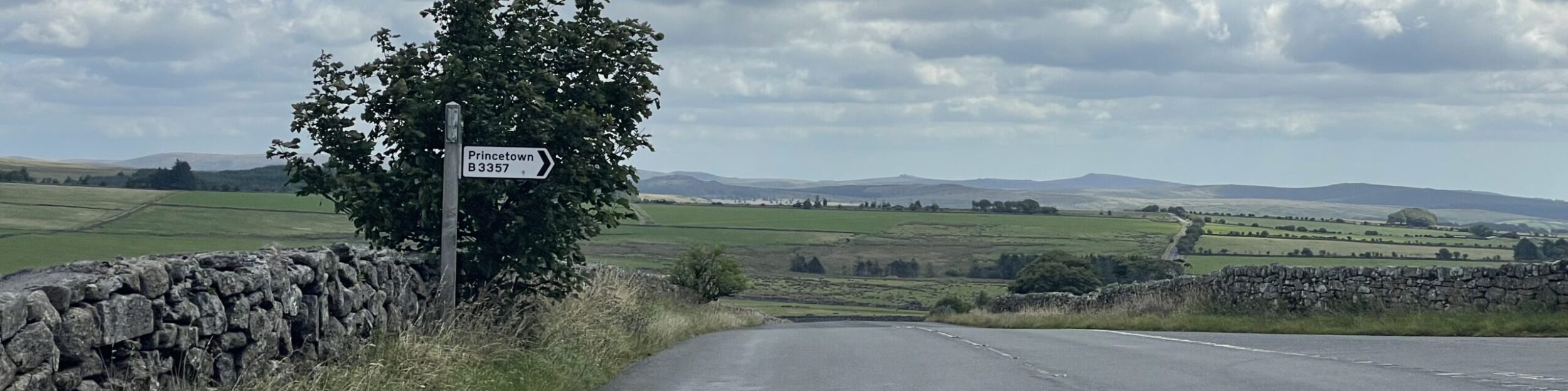
In which Sid and Doris visit Viollet Le Duc at Pierrefonds castle.
It is market day in Senlis. It is August, warns the chatelaine at La Boheme. Many of the stall holders will be away on holiday. The fish wagon has moved, and much is for the worse. Doris notices much that is good, such as the traiteur’s wagon. The French love a bit of gloom.
There are pretty corners.
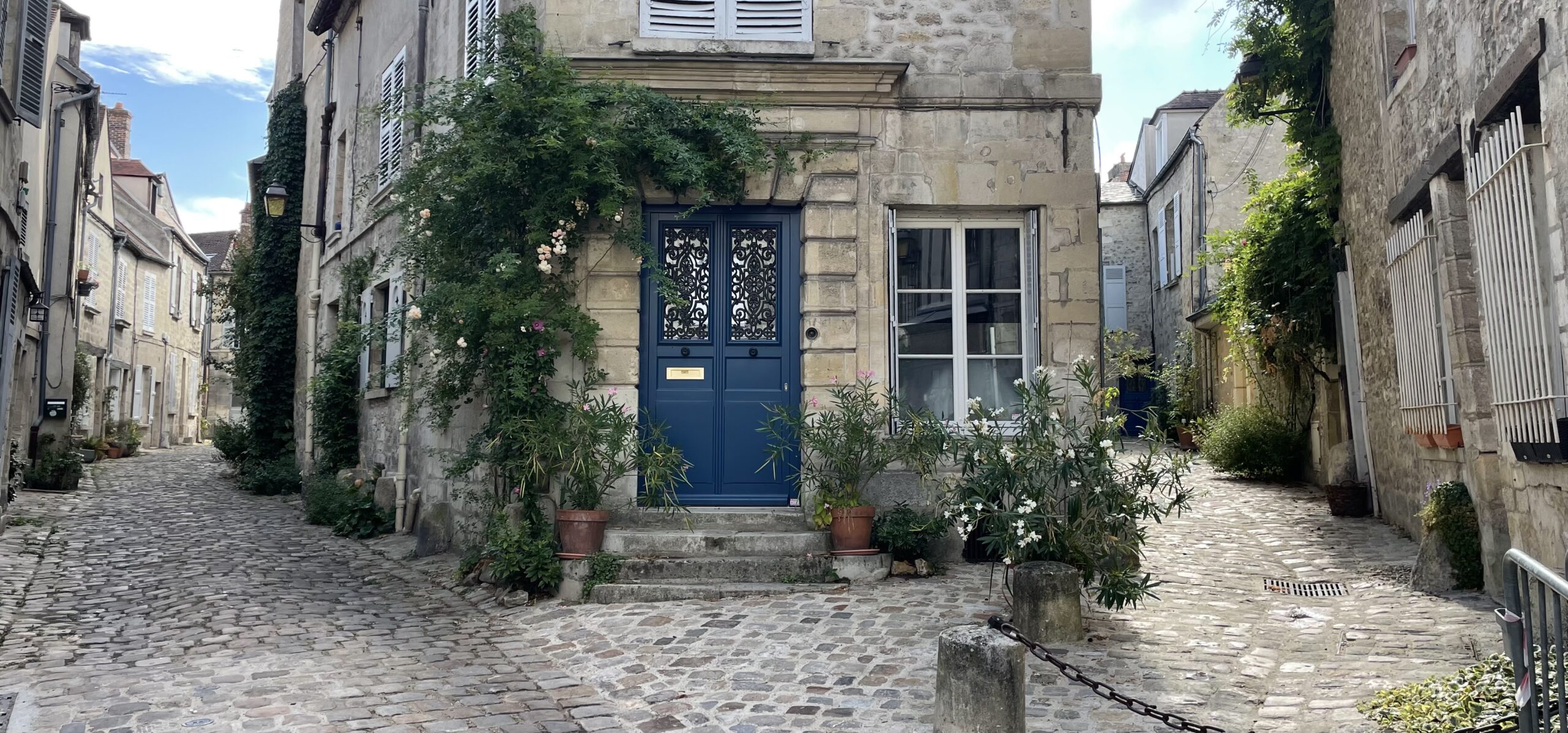
The Cathedrédrale Notre Dame de Senlis dates from the 400s. The building S and D see is mostly from 1151, on the site of three smaller buildings. In 1504 a lightning strike caused a fire and many vaults collapsed.
So, of course, when rebuilding add another six metres, add a new southern transept and more flamboyant decoration. Yeah, more. It now looks like this. The main entrance to this quite square building is through this south transept. (Thank you Wiki for the picture.)
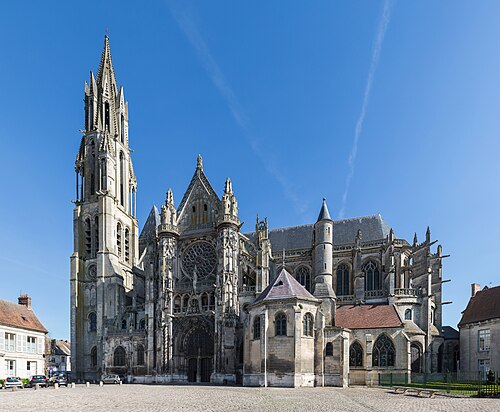
Cathedrals are a constant work. Looking up, S and D see nets are strung to keep bits of the bosses falling on the faithful, though you could also light a candle.
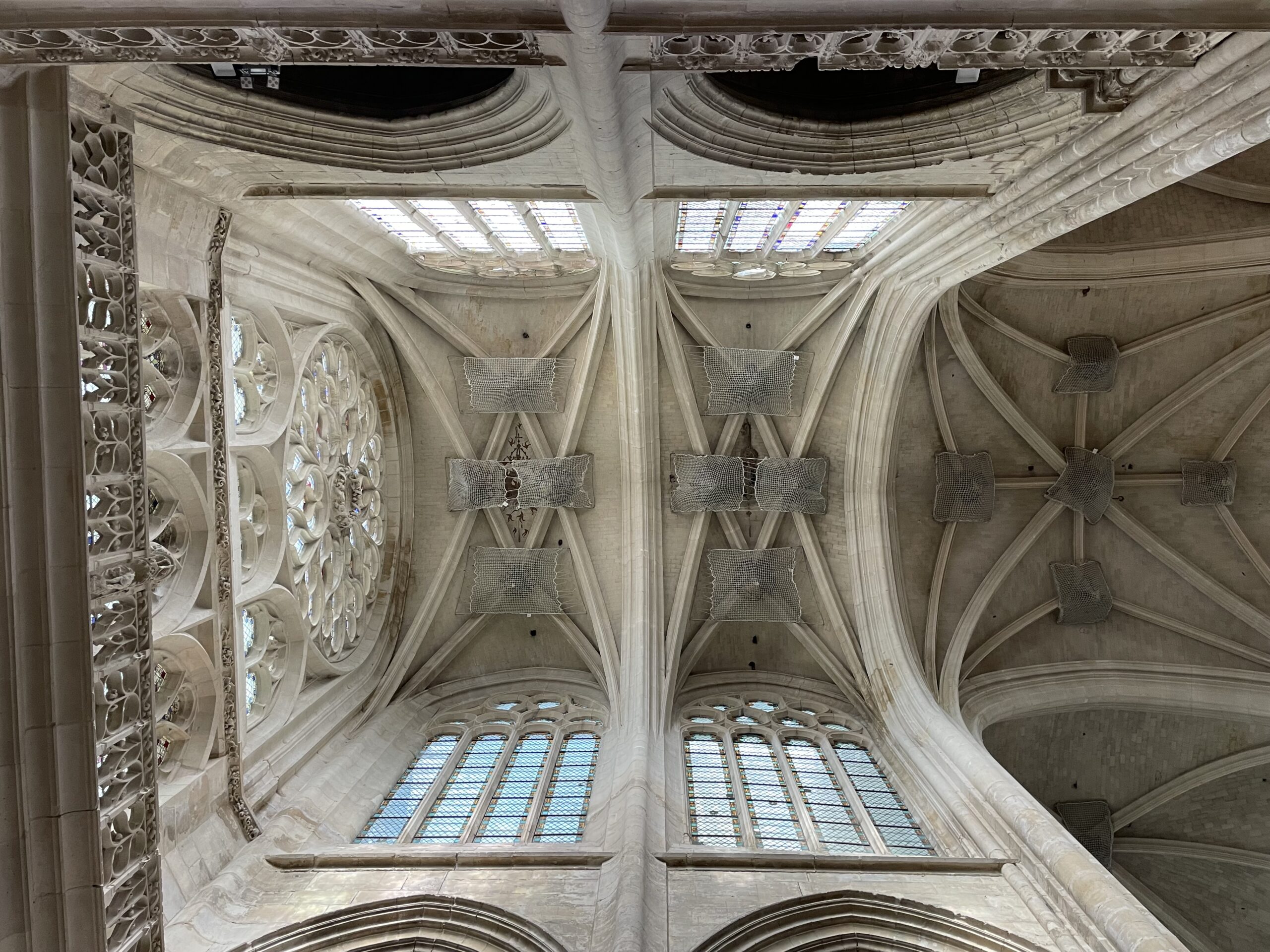
We are not far from the 1914-1918 front lines.
Sid and Doris head off for an altogether more frivolous restoration at Pierrefonds, this by our hero Viollet Le Duc who did much of his work for Inspector of Historical Monuments, Prosper Mérimée – who also wrote the novella Carmen. (See also Bizet).
Le-Duc was an architect influential in restoration and in the birth of Art Nouveau. Gaudi; Horta in Belgium; Frank Llloyd Wright and the whole of the British Arts and Crafts movement are listed as influenced by Le-Duc’s Dictionary.
In 1851 Napoleon lll became Emperor. His friend Mérimée pushed Le-Duc’s career as Napoleon supported grands projets, some ecclesiastical or economic (railways) and others more for La Gloire.
At Amiens, Le Duc persuaded Empress Eugenie that they should clear out all the Louis 14th Classical accretions and recreate the original-ish Gothic that is there today. S and D have also seen his work at Reims and, best loved of all, at Carcasonne. But I digress, as S and D visit the Chateau de Pierrefonds.
In the early 1600s the owner was on the wrong side of Louis 13th. Pantomime booing now …. And cardinal Richelieu’s troops took the castle and began its destruction (see also La Rochelle, Raglan and Corfe). They had a good go and then went for a really long lunch.
Napoleon 1 bought it in 1810 but you will recall he didn’t really have the time to devote to the restoration. (A car might take six years, a biggish boat might take twelve.) Until 1857 it was mostly used as a romantic party and rave venue. Then Napoleon lll decided to have the fort turned into an imperial residence. (This is bigger than just putting in a new ballroom.)
Here is an interior which may put you in mind of Castle Drogo, the pretend castle by Lutyens in Devon.
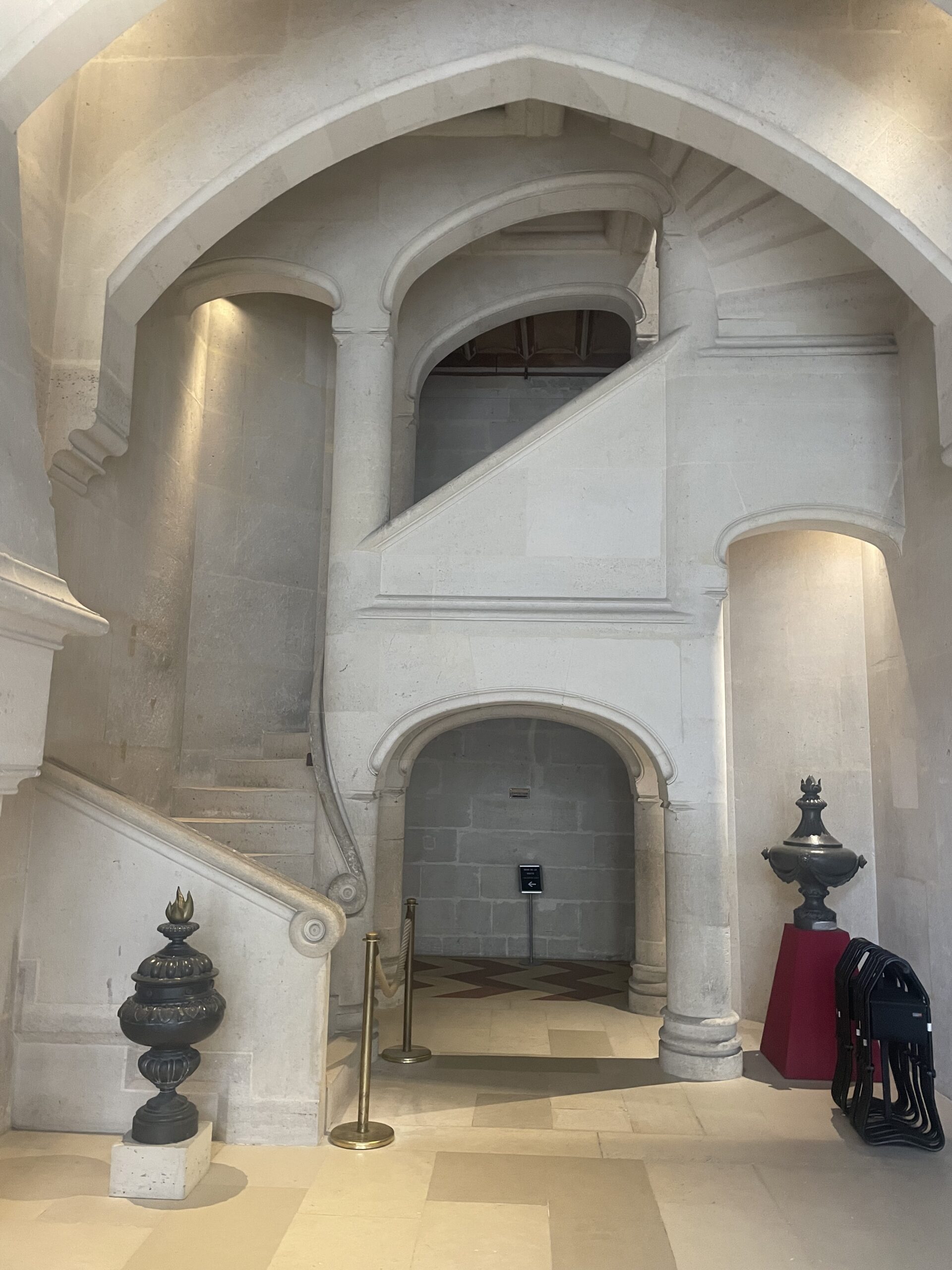
Le-Duc and Napoleon both died before the interior decoration was finished, so walking around you occasionally see some swatch or designs on the wall. It is a fabulous visit; do go.
Sid and Doris sit by the lake for lunch when Sid spots the Conveyance of the Day. You may scoff but Young Timers is where the market is, and anyway a Renault 5 Turbo would be lots of fun. Whee, scree, shpeeesh goes the turbo wastegate. Hat on backwards, Sid.
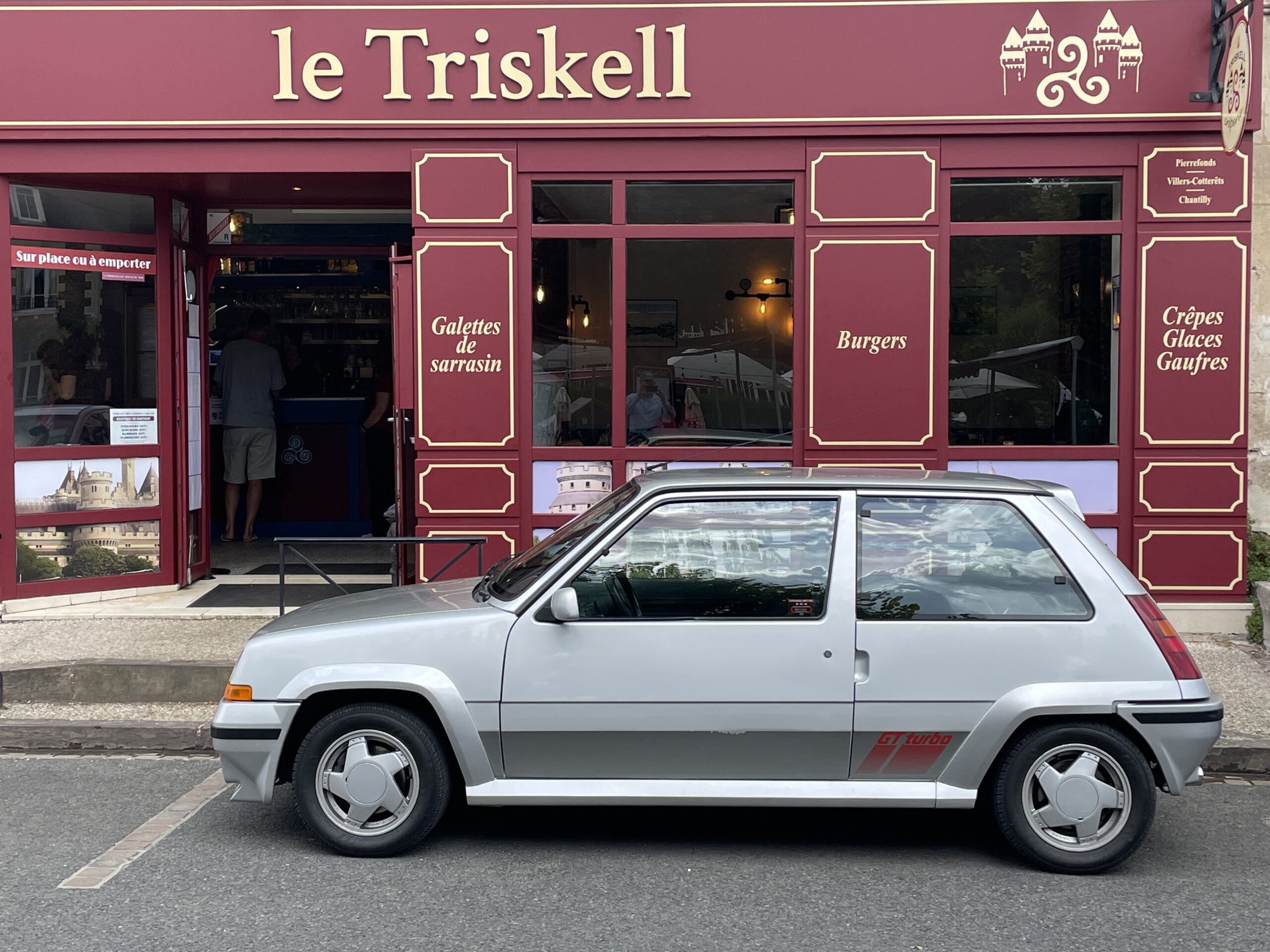
Those noises are all boy driving sounds. Doris spots some good advice, Drive like a woman. You can probably make out the French.

Sid drives to Soissons (like a nun, as usual) to a great welcome at the Best Western Plus Hotel des Francs.