In which Sid and Doris fail to visit a tin mine, for the best of reasons.
On the way down to the Minack Theatre yesterday (or, more accurately, on the way up down up down up down) your correspondents saw and immediately diverted into the PK Porthcurno Museum of Global Communications. A swift visit was sufficient to show that a swift visit was insufficient, so today saw a return visit for some more thorough scrutiny.
A slightly surprised welcome from the door staff (“I know we say the ticket is valid for a year but nobody ever takes us up on it”) leads us into a most intriguing place. This is a very interactive museum and children of all ages are encouraged to discover things.
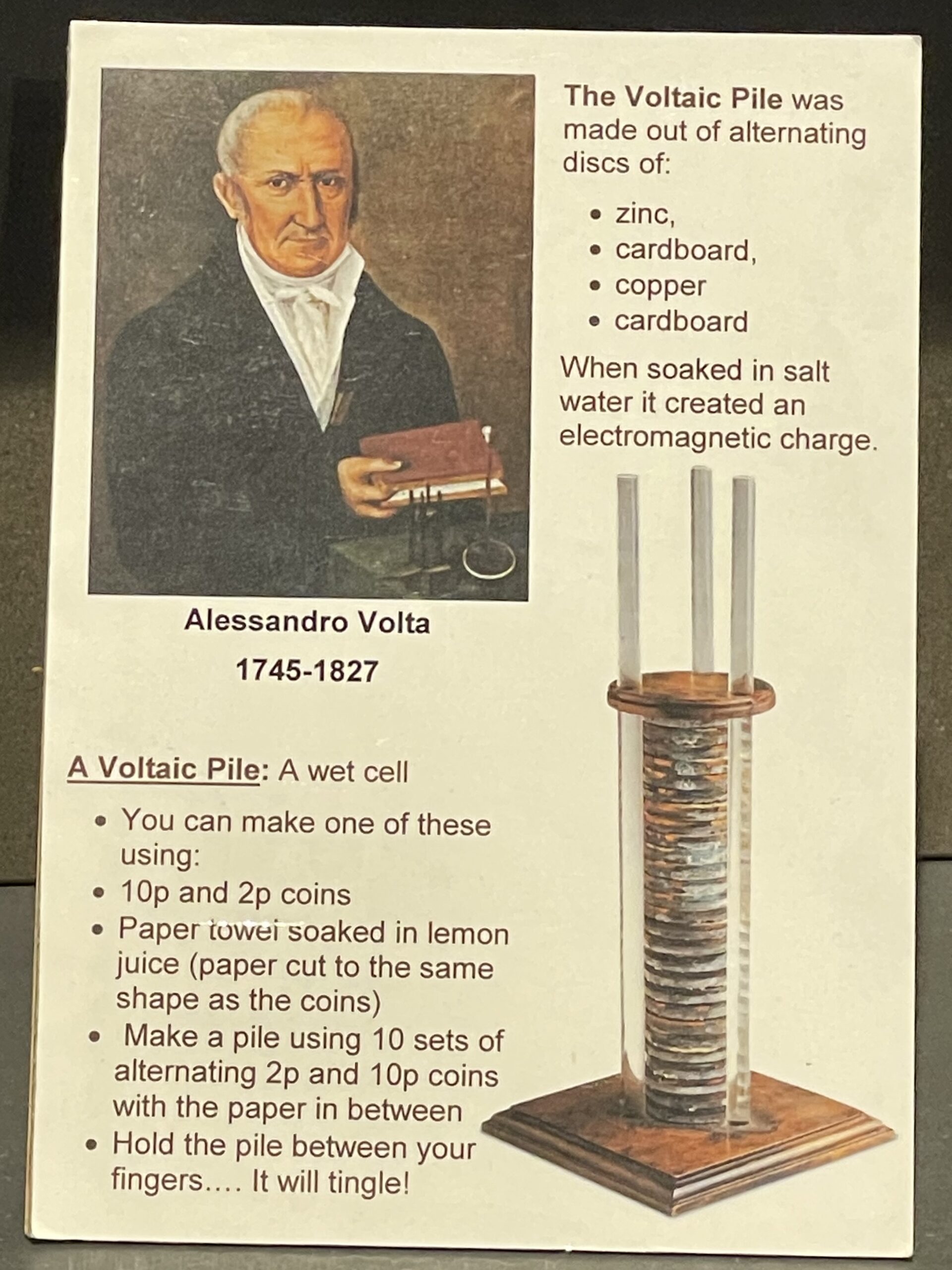 One exhibit among very, very many explains Volta’s pile – the “wet cell battery” which our reader(s) may remember being used in car batteries, along with detailed instructions on how to create one with alternating 10p and 2p coins and lemon juice. Are you interested yet? If no, then click the right-hand link at the bottom of this post which will take to you to the next day, if yes then read on.
After covering the invention of morse code (“Have a go here” with two morse keys and headphones to create and receive your own messages, we couldn’t get anywhere near it as it was being monopolised by dads and sons); the list of standard messages for cables which allowed people to pay for 17 26 34 and have the message transmitted Son Born You Have Not Replied To Previous Messages Please Send Money; and all sorts of exhibits about the creation of a land-based cable system, we get onto the deep sea underwater cables. Which we all know exist, but have any of us ever thought about HOW they exist? The answer is both simple and hugely, fascinatingly complex.
Hundreds of miles of cables were created, with the central copper core wrapped in all sorts of protective layers (including gutta percha, see also electrification of Newport Mansions) and coiled (inasmuch as you could coil such big cables) into the hold of a specialist cable laying ship.

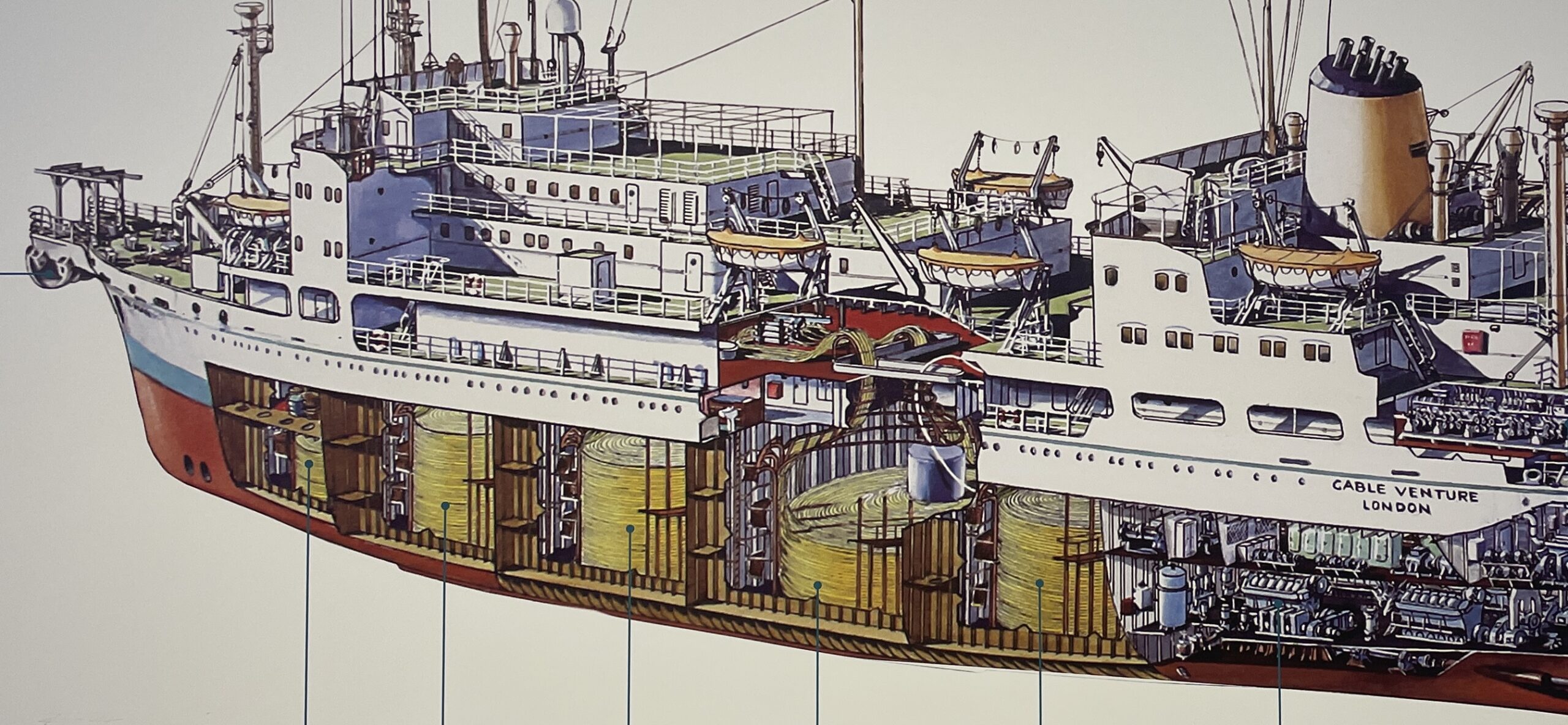
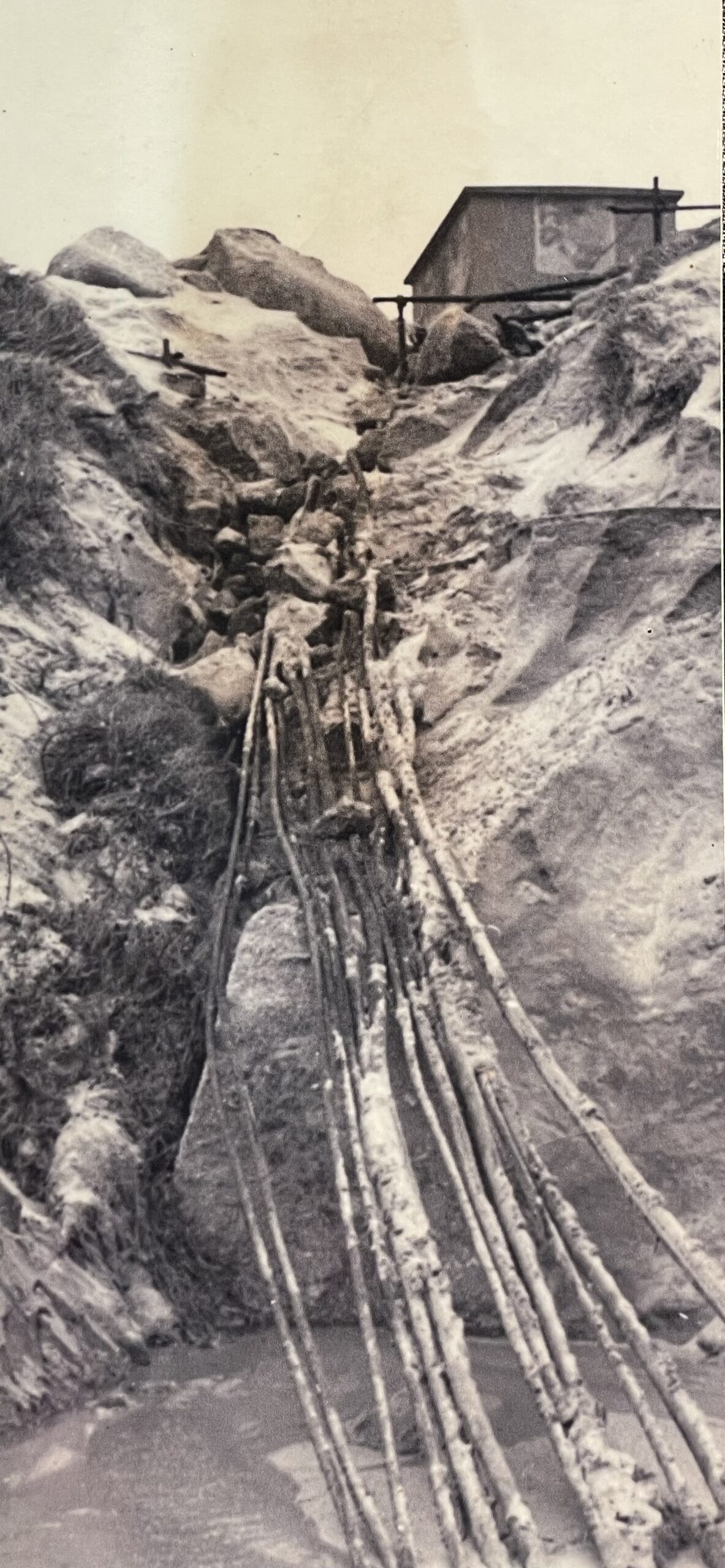
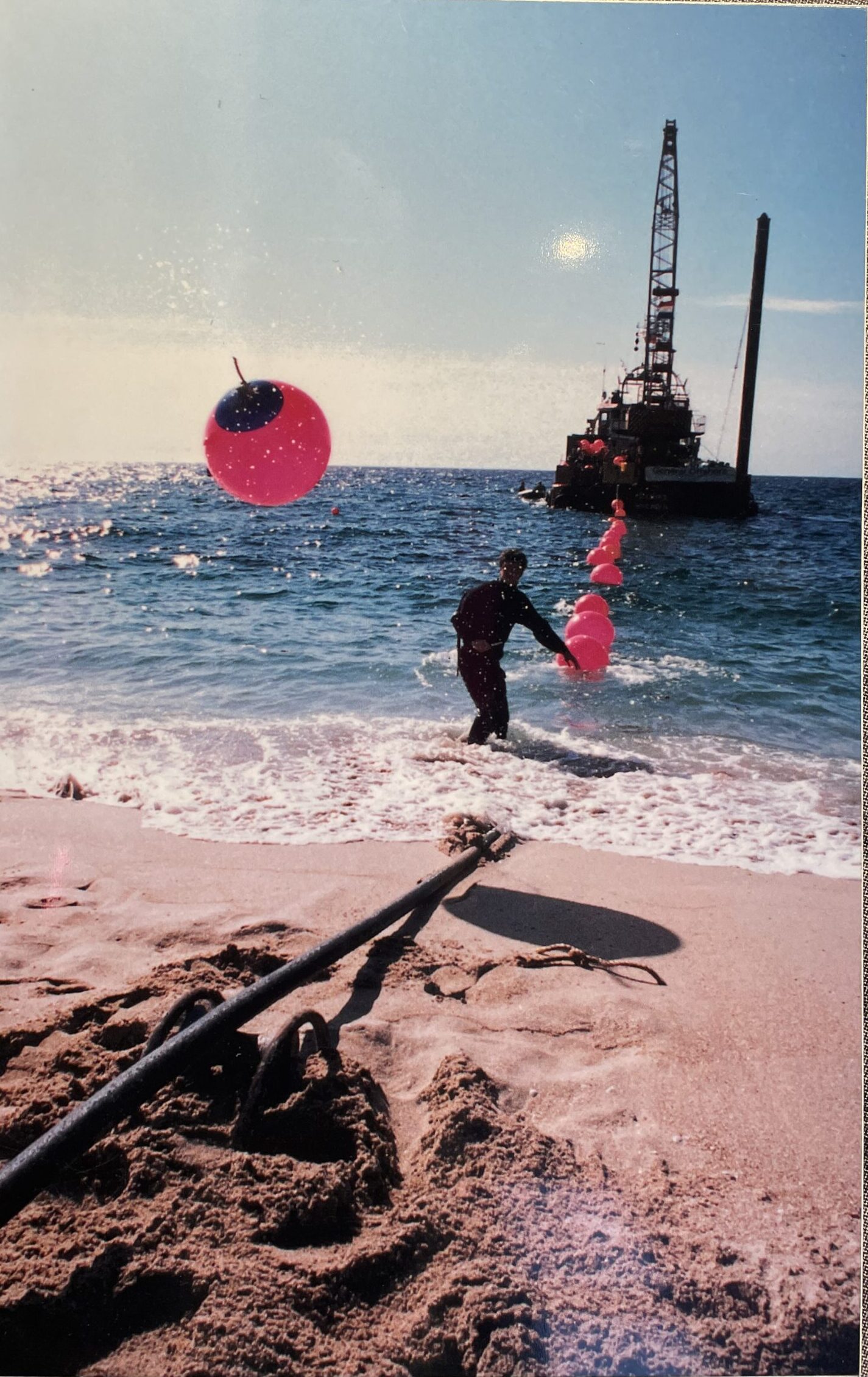 One end was secured to a small hut on Porthcurno beach and linked to the UK telegraph system. The ship then set off, to Lisbon, or to Madeira, or to New York, unreeling the cable as it went. At the far end the ship anchored and the end of the cable was taken ashore and run up the beach by huge teams of men, oxen, boys, donkeys or whatever brute labour was available. It was dragged as far as another small hut, where it was wired into the far end of the local telegraph system or (in the case of a small island in the middle of the Atlantic Ocean) a signal amplifier and another Really Long Cable.
When you wanted to cable, or eventually phone, from your house to someone overseas (do you remember the introduction of IDD or International Direct Dialling?) a continual string of copper and amplifiers would be established from one end to the other, routed through this little hut in Porthcurno. Which is pretty mad, even by Bonkers standards.
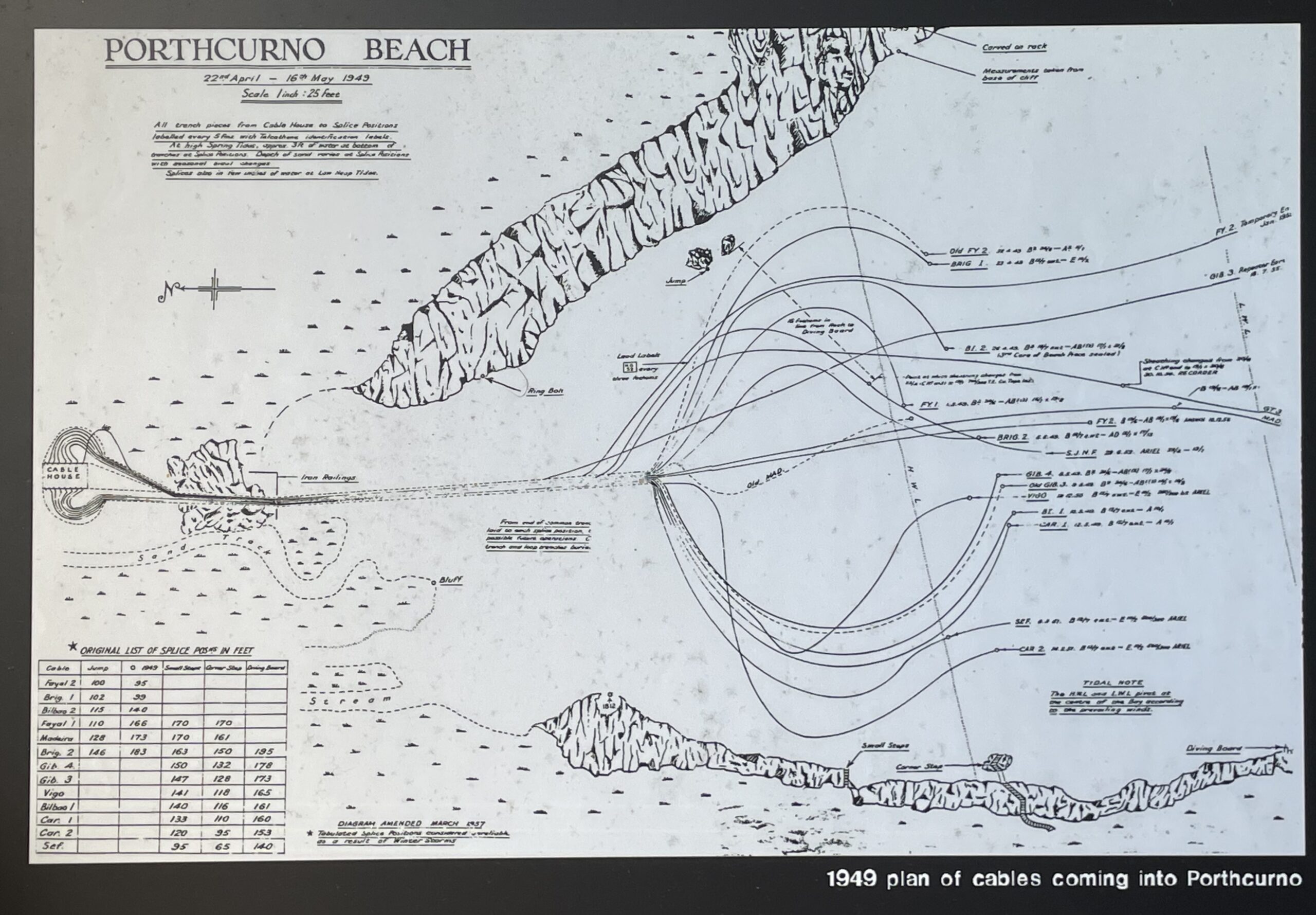
Here is a picture of the inside of the little hut showing those thousand-mile cables terminating, and next is a picture of how the heavy cables were dragged out round the bay so you could find the right one if you needed to. The hut is on the left.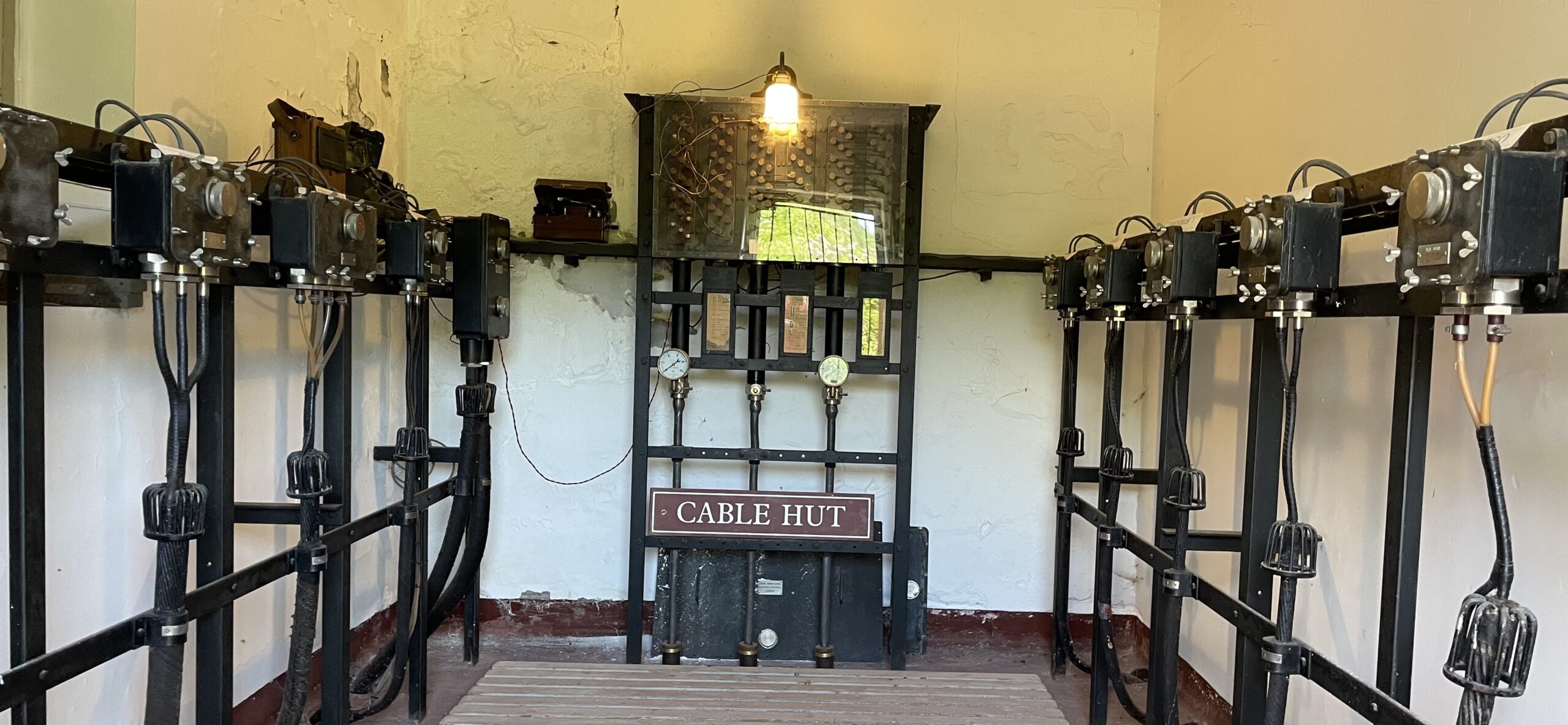
A video showed a skilled operator joining one end of a RLC to another RLC mid-ocean, and another exhibit showed people using the resistance of the length of the cable to detect where it had been broken and how you fish around for the broken end (hint: sail at 90′ to the cable line). [For sail please read steam, as there are several new technologies involved here. See also inventions of Kelvin, Wheatstone, Vail, and later Marconi and radio – S.]
This site explains that Porthcurno still has a yellow and red do-not-anchor-here sign but BE WARNED oh sorry is it too late, I meant to say don’t click on it unless you have some time to spare.
Welcome back.
The development of the wireless system is covered, and the threat it posed to the cable system, with the result that the UK government combined them both into the company logically called Cable and Wireless. Which Doris now remembers she used to work for, in the early days of Mercury Communications.
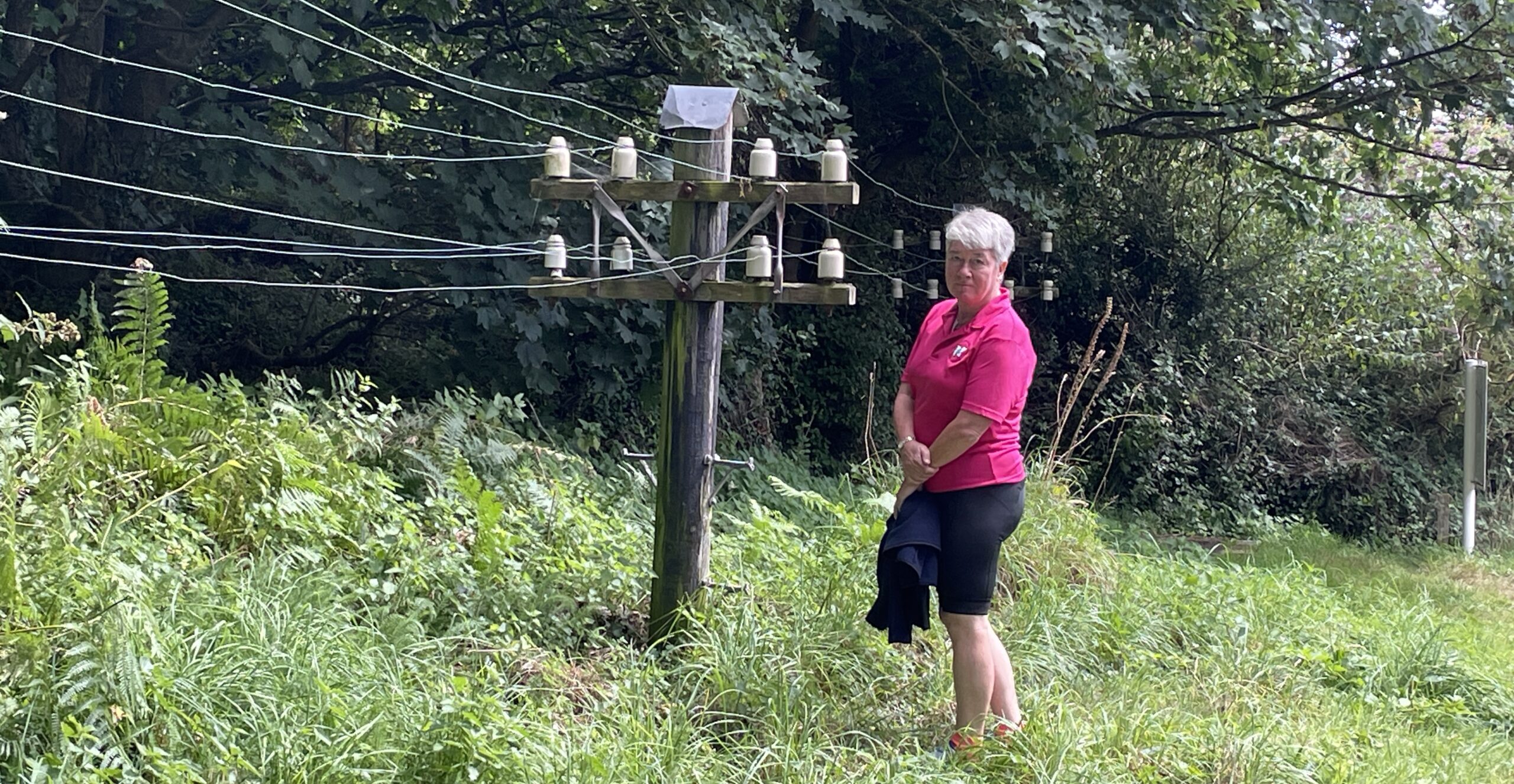 After a final visit to the place where the telegraph maintenance engineers were trained, using special low-level telegraph poles, your duo cycled on towards Geevor Tin Mines.
We apologise to our gentle reader(s) but there are times when even a Bonkers Brain is full, and this was a time. The Tin Mine visit would have required a complete change of mindset from 1900s innovation to the determined exploitation of the landscape starting many hundreds of years earlier, and it felt impossible to try and enjoy them both fully in one day.
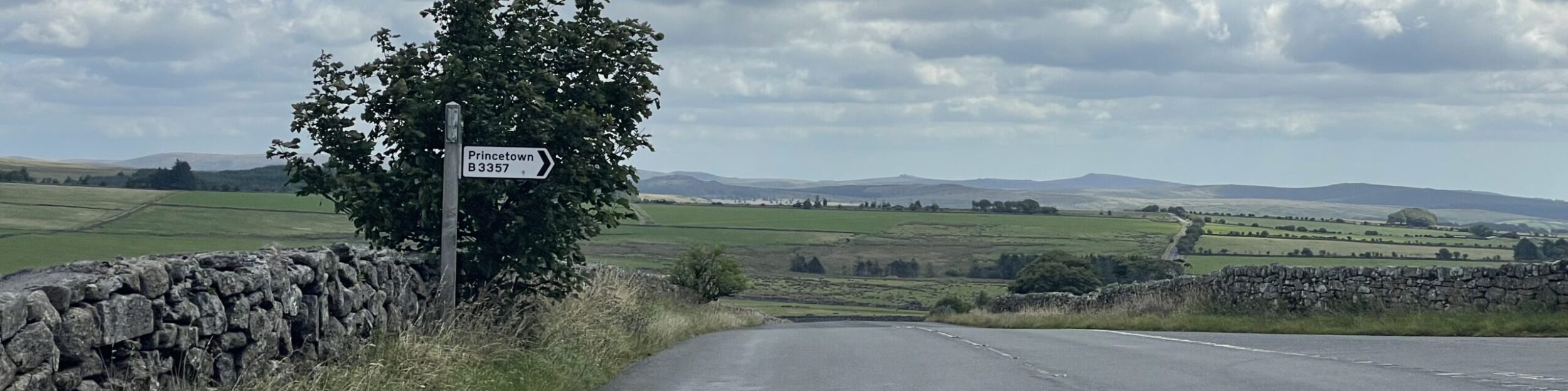
We just refuelled at Geevor and cycled onwards and upwards to some very pretty although exposed heather moorland, at which point Doris said “Does my rear tyre look funny?” Flat is not really funny, but the weird thing was that this puncture had been caused by a single staple (as in, one of those square bits of wire you apply with a stapler) which had obviously been living between the tyre and the inner tube since… well, since the tyre was put on. Which was before the Romin’ Or T(o)urin’ trip.
The day is sunny, the heather is pretty, and many motorists pass by and with a dexterity almost entirely unlike Uncle Podger’s Sid and Doris wrestle with the new inner tube and tyre and the chain and the gears and the back wheel and finally get it all back into place.
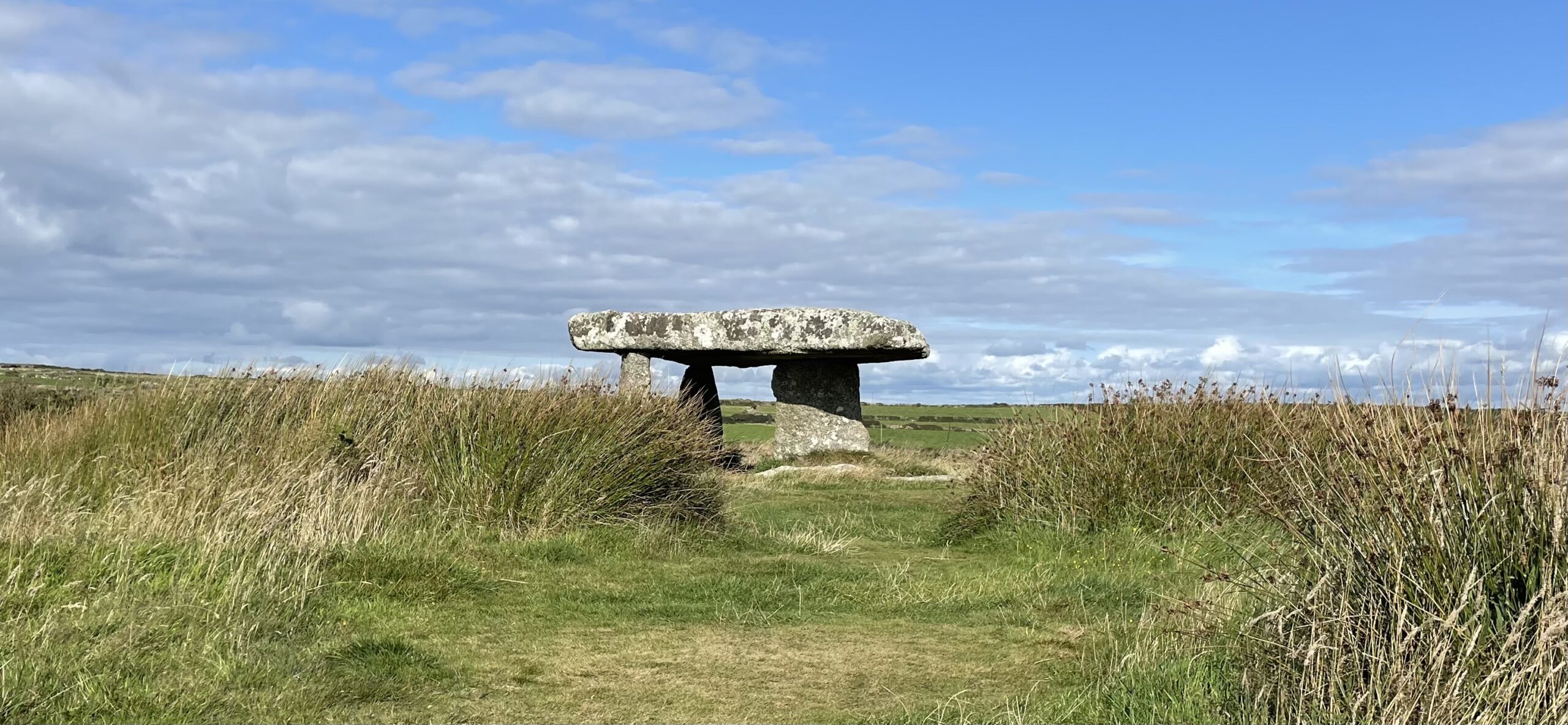
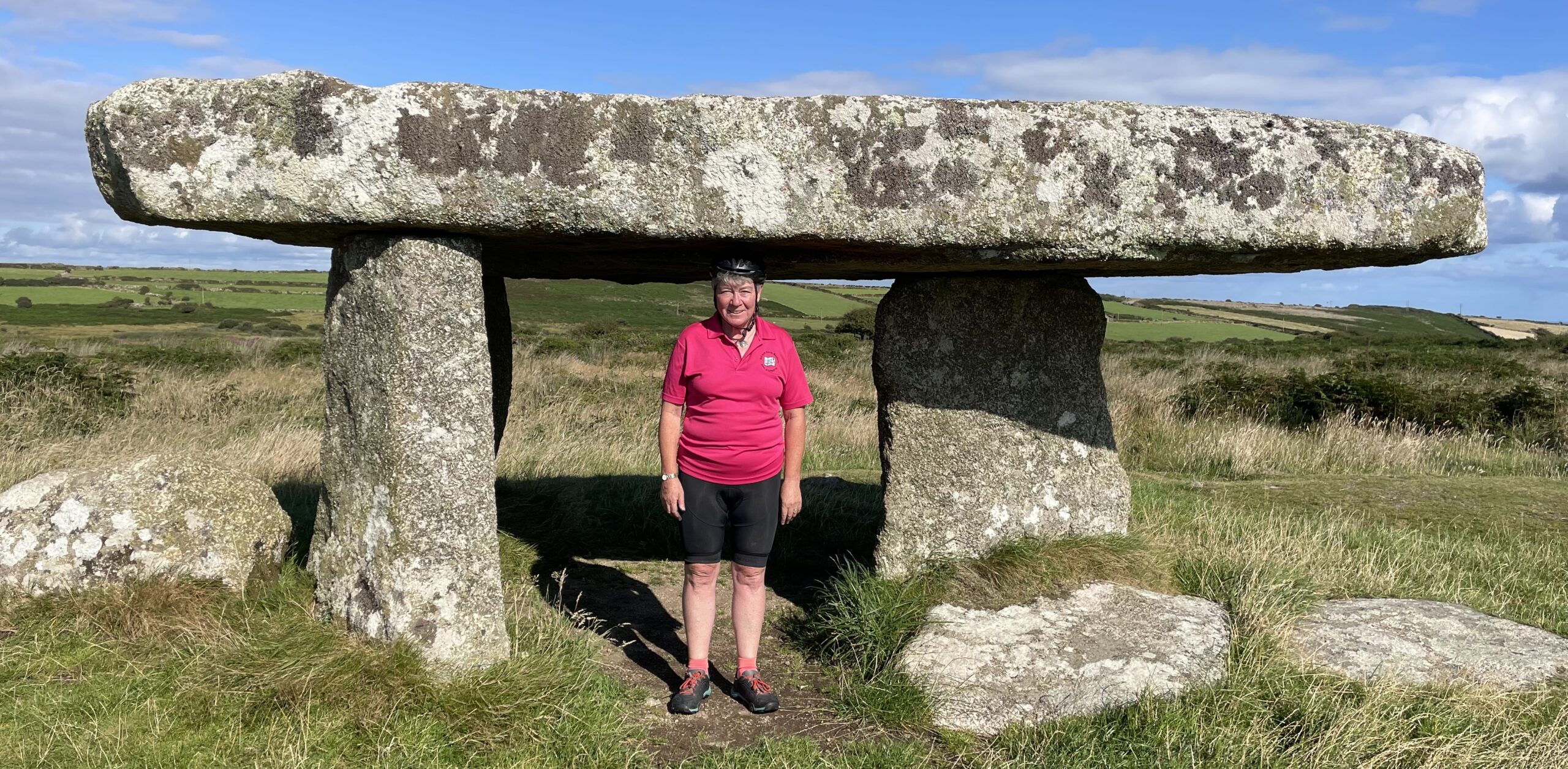
The almost-all-downhill-thankfully journey back to Penzance takes us to, and eventually past, Lanyon Quoit, after Doris has stopped doing her hilarious impersonation of a pillar of the community ha ha.
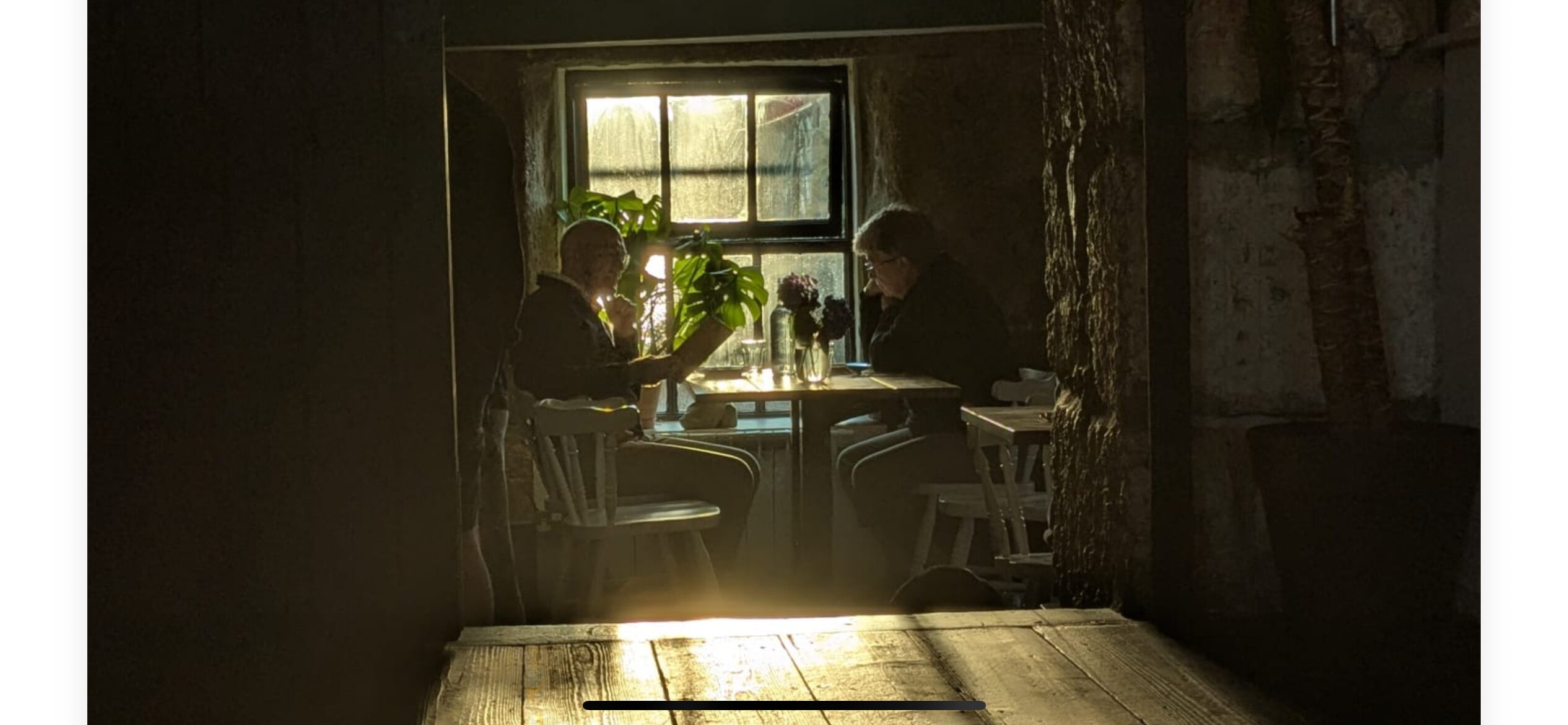
Your duo finished the day by becoming stars of stage, screen and most importantly Instagram as they are today’s Featured Image in the Barbican Bistro’s InstaFeed in a photo more beautiful and atmospheric than any that they have ever taken.