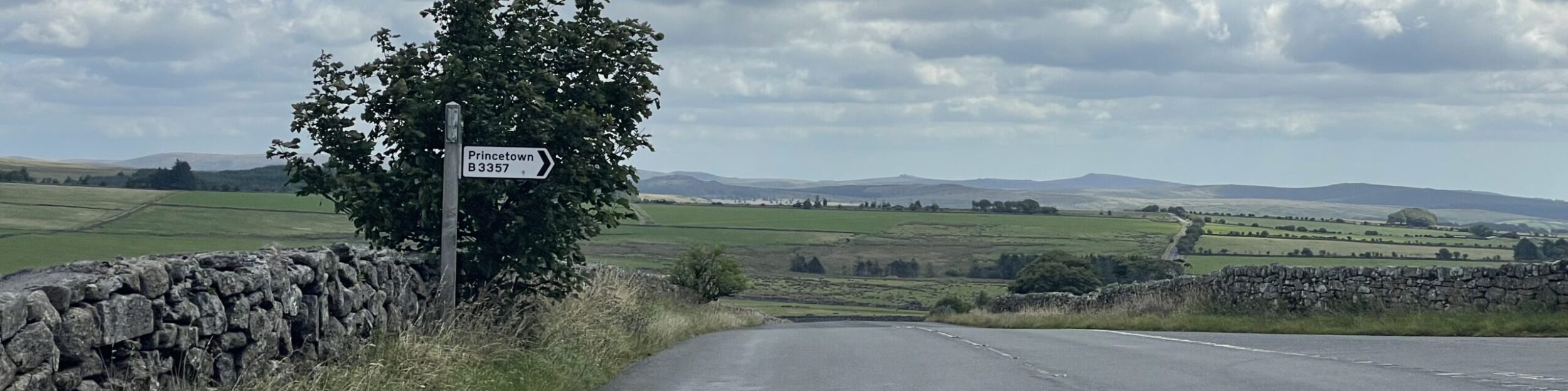
In which Sid and Doris take the open top Alvis through a canicule to an abbey, vintage Le Mans and Little Rock.
Canicule is a French word dating from 1500 for a hot period associated with the Dog Star that rises and sets with the sun in summer. The Salisbury canicule is not so obvious before six in the morning as S and D hardly wake the neighbours at all, getting the car through St Ann Square and off to Portsmouth. It starts first time with a few seconds of choke, but always with a strange clanging as the starter encourages the flywheel, crank and six pistons to have a suck on the three SUs. In the 1930s Tatra, Panhard and Dymaxion had already shown the way to aerodynamic efficiency but they didn’t attract English buyers (or anyone much). So we push a lot of air aside and carry a 120 litre fuel tank.
The afternoon queue to get out of the port into Ouistreham, despite the officials not using the EU’s new EES entry system, gave neighbours the opportunity to admire The Hare and his lovely body. So, a late start for a three hour-plus autoroute hack down to the Hotel de France at La Chartre sur le Loir. It is in the Sarthe and was a favourite with Le Mans teams.
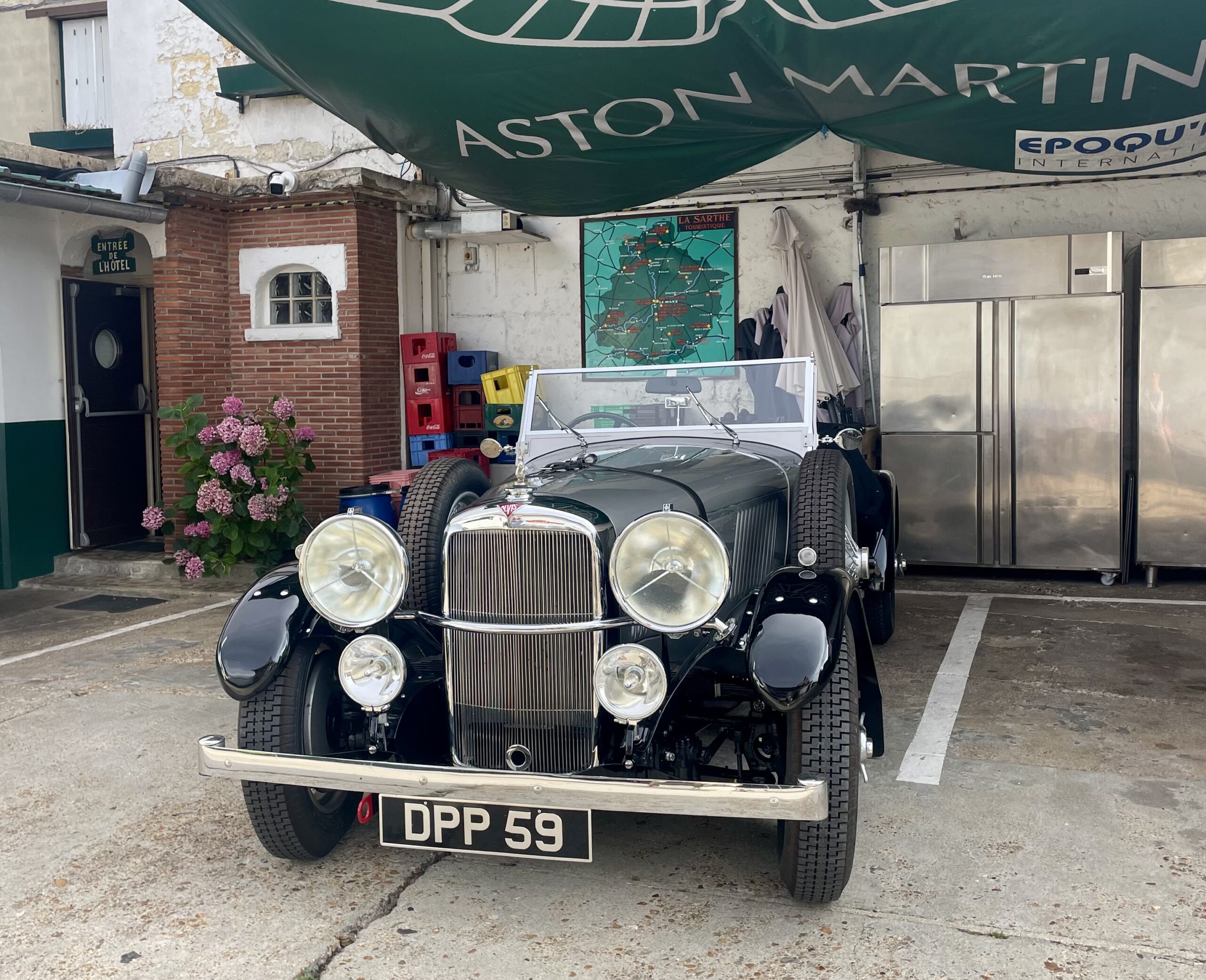
The Hare sits under cover in the courtyard where Astons and Jaguars sat in Junes gone by. À la recherche du temps perdu, the hotel is Le Mans themed. It needs a make over. The photos are fading. Past glories are past.
S and D have decided to have a holiday in La Rochelle. On the way, a lunch stop in tiny Airvault with its Romanesque and Gothic abbey church. There is a boulangerie open through lunch, which is eaten in the shade of the market hall.
Though the entire church, now wildly over-large for a parish church, is amazing in the S&D style of ‘just another church in just another town’, there is an added delight. Sid and Doris are thrilled to find there is a mechanical organ using long cylinders with pins, as found on a biggish musical box, to act on the keys. The box was shut but here is a picture of their picture.
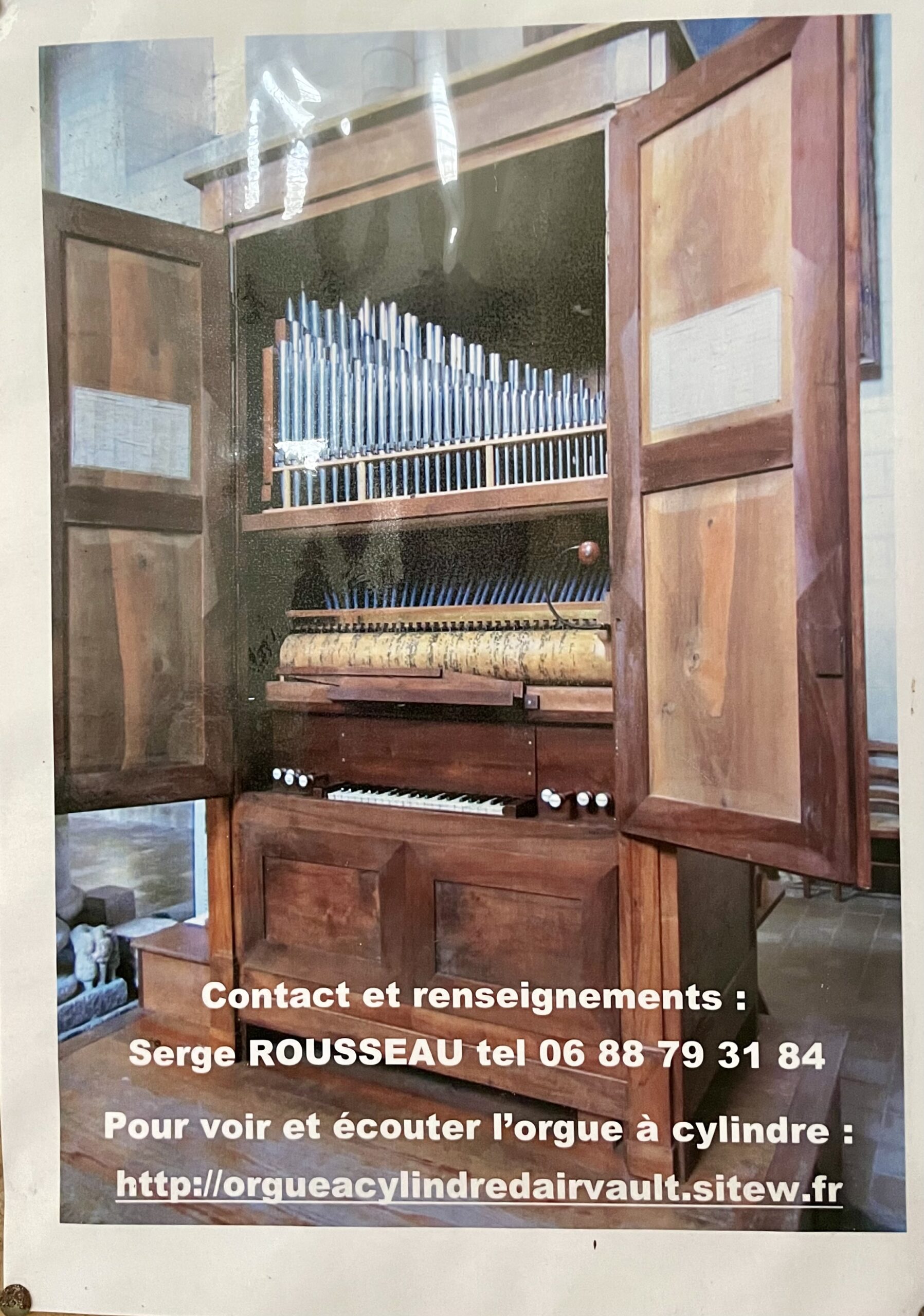
Bellows puffing and cylinder turning is another application from Armstrong. Here is a link so you can delight in the sound while watching the winding and organ stop selecting.
The Alvis really suits the old Routes Nationales where the speed limit is 90 kph and we bowled along. La Rochelle has a well thought out car repulsion system but Doris is not fooled. We park by the canal, taking off the steering wheel to pull over the tonneau cover, until the Doris-booked covered parking is available. All is going very smoothly except that on our return the wheel does not re-engage with the steering column. There are some seconds (maybe hours) until the correct splines are found.
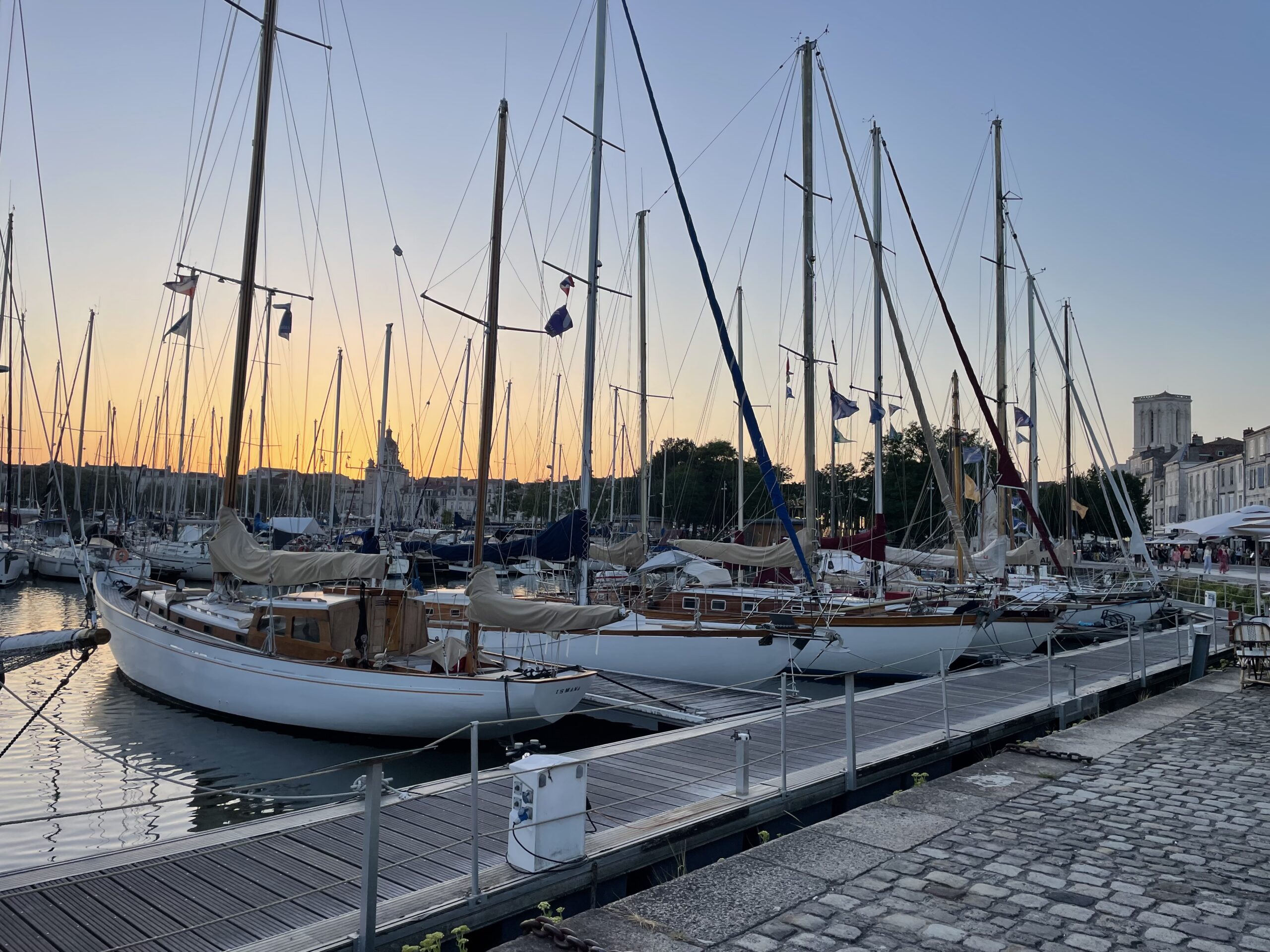
La Rochelle, on the Atlantic coast, has been a port town since the 1100s, protected from the ocean by three islands. The Porte de Plaisance is in town, the commercial and fishing ports giving way to varnished wood and a lot of white fibre glass.
The big dock is out at La Pallice which was favoured by the Germans with a U Boat base. It took direct hits from Big Boy bombs but was undamaged. It was later taken over by the French navy along with U Boat 766 which in 1947 became S-09 Laubie. A very modest swap for what the French had lost from 1940 to 1945. (Reparations after WW2 in the west were more sensible than post WW1.)
With the car parked out of town, S and D walk back in enjoying the Friday evening crowds. Just here Europe feels very prosperous. The French, or at least Jean Luc Melenchon’s party, La France Insoumise, believe they can afford to take la retraite from age 60 though they live to their mid 80s. They are wrong and headed for a seven per cent budget deficit by 2030 ( and debt at 118% of GDP) unless someone turns off the tap. In the meantime the very efficient bars and restaurants are full. No wonder when the Rochellaise beer is so tasty. They only have a few months to harvest the tourists and they do it very charmingly, selling evening strolling ice creams to all hours.
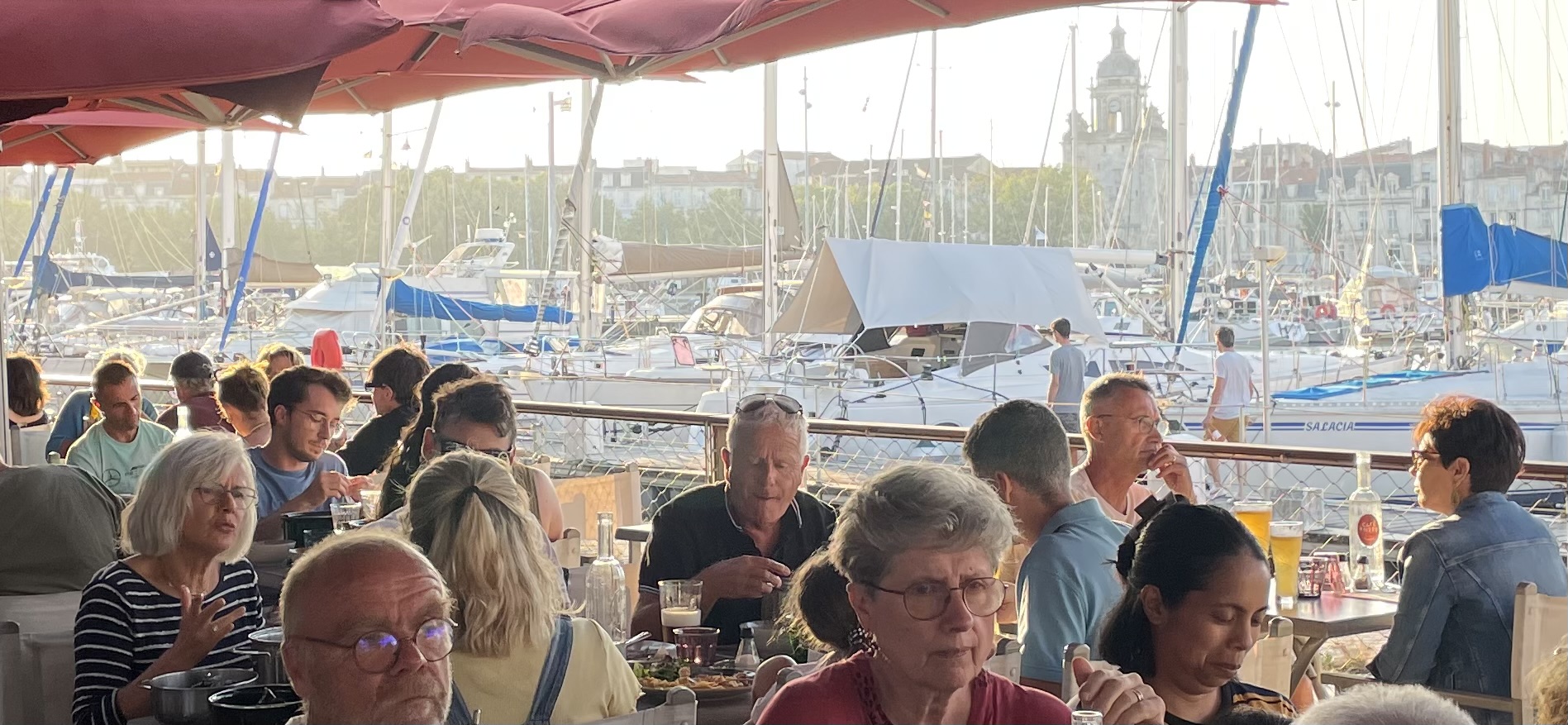
The town history is the history of trade and religion. In 1152 Eleanor of Aquitaine married Henry Plantagenet who became Henry II of England. La Rochelle (Little Rock) was a tiny city state with no feudal dues to pay and with this advantage became a major trading port and a member of the Hanseatic League. These were trading towns with agreed low tariffs, most of which were on the Baltic and North Sea. (Sid has been proposing a Hanseatic trip for a while, and here is one of the furthest flung visited.)
Perhaps the Hanseatic connection was why in the 1500s La Rochelle became the centre of French Protestantism. This did not play well with Cardinal Richelieu (pantomime booing here), in 1628 he ordered the town besieged, building a wall across the harbour entrance to prevent resupply from allies overseas and ruined the city. Even so, trade with New France (Canada) and the Triangular Trade prosperity returned. In the early 1940s it was the Atlantic trade that kept Britain fed. The German navy built five Atlantic U boat bases, one of which was at La Rochelle.
S and D visit the HQ of the 3rd U boat flotilla, built under what was the appropriately named Hotel des Etrangères. Here deep under ground they set out the control rooms and dormitories for 60 naval staff, complete with a bar. This was decorated by two girls from Hamburg, shop window display artists, who subsequently toured German bases painting murals which are still here for us to enjoy. In the picture below you can see their ceiling painting. The people are not real.
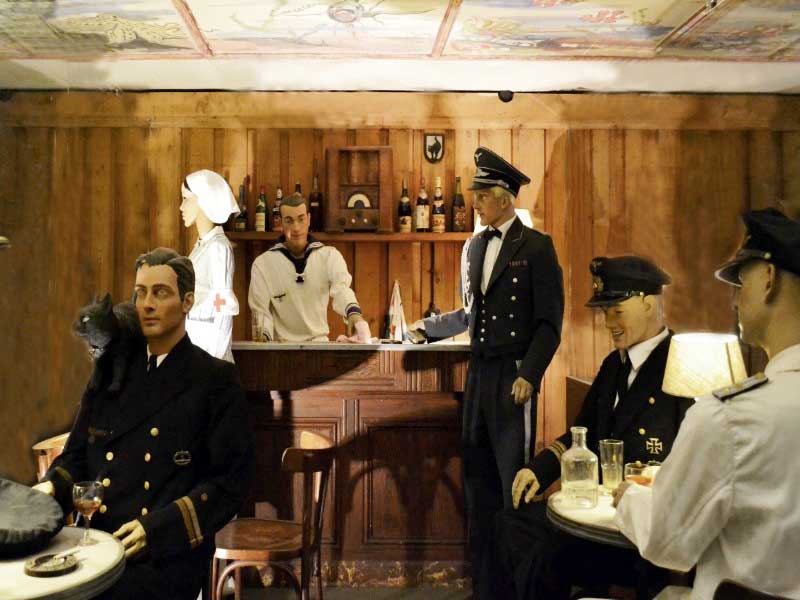
Though the U boats came close to starving the UK by late 1944, when airborne radar and Enigma had tipped the scales, the average life of a crew at sea was three weeks. Better have a drink and send a letter home.
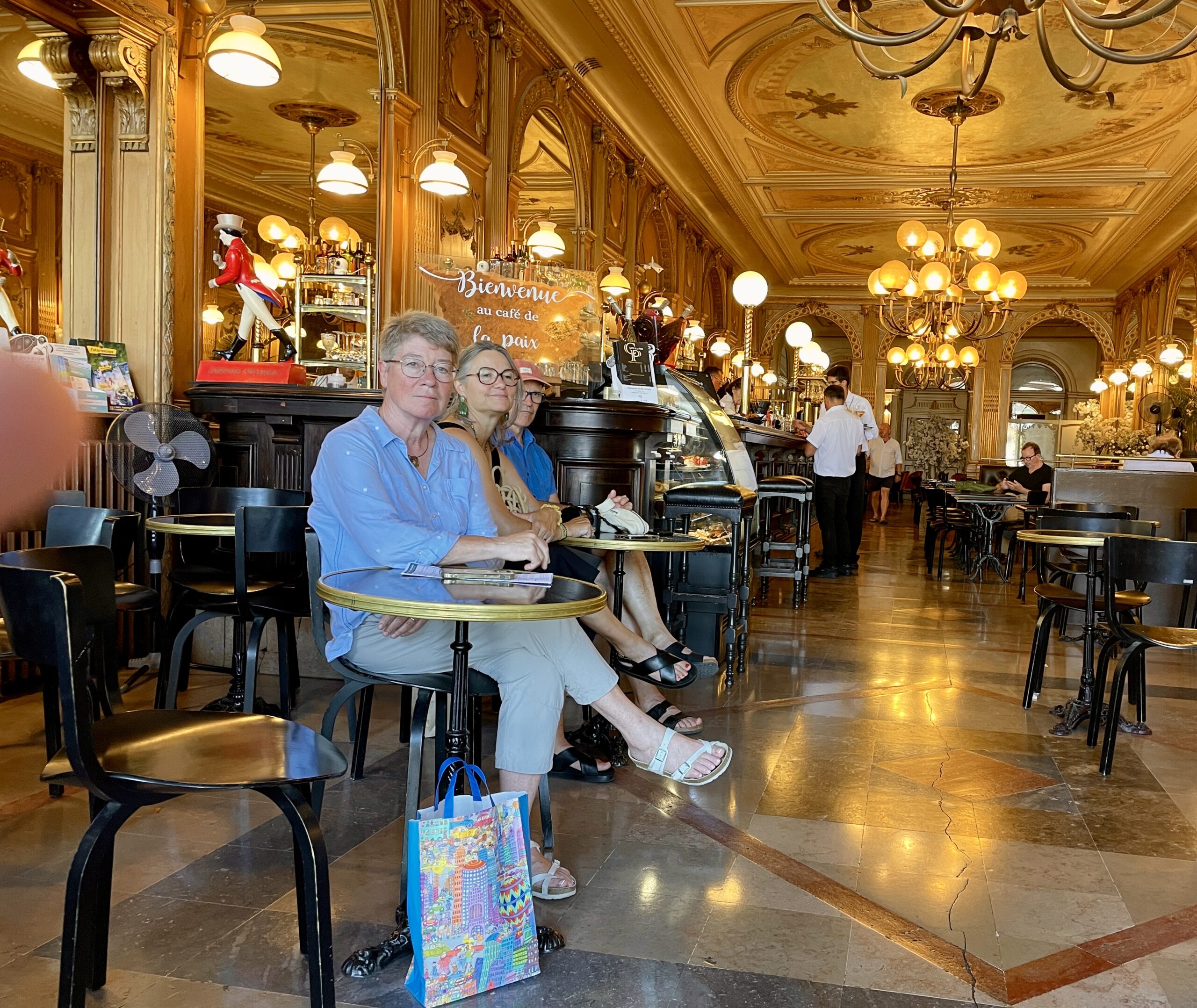
Where better for the drink than the Café de la Paix? Maybe the U boat crews came in here, maybe they noticed the irony. The café is known for its brasserie style decor and the patronage of Georges Simenon, author of the Maigret detective novels, who lived in the Vendée in the early 1940s (though he did not write Das Boot – not written until the 1970s).
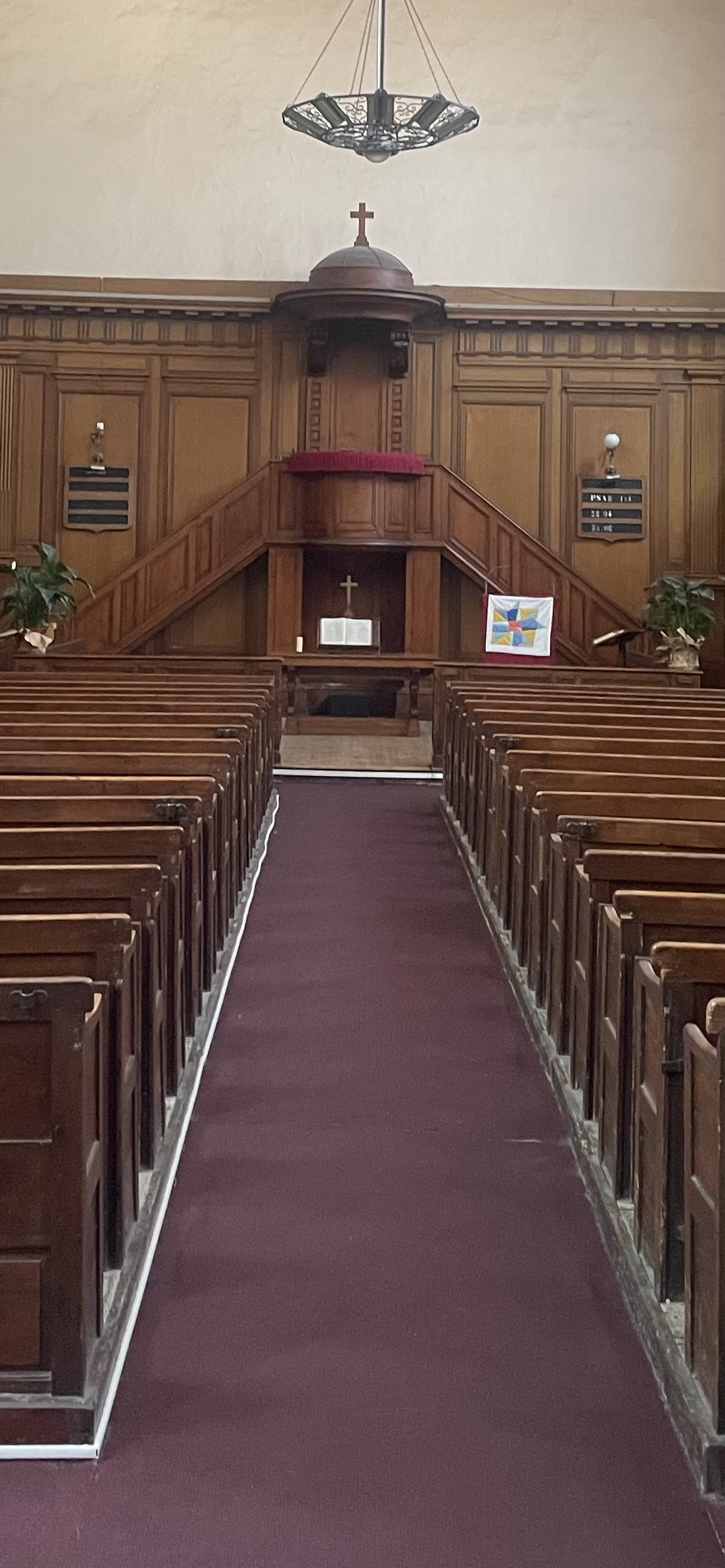
S and D are cathedral hounds. In La Rochelle the Protestant temple also houses a museum of La Culte. The austere church has no altar, candles, thurible or saints – just a simple lectern from which to read the word of God. It was built in 1691 for a convent, was bought by Protestant families in 1793 (possibly the convent had been dis-established by the Revolution?) and was ready for Reformed Protestant worship in 1798. Quite a make-over.
Dinner in the street, courtesy of restaurant Loma (with a self-regarding nod to Noma?) and back to the excellent, recommendable, Hotel St Nicholas to rest up for a mighty journey to Casteljaloux.