
In which Sid and Doris visit the Robber Barons’ gilded age summer cottages in Newport (RI).
 Sid and Doris move from industrial New York and Pennsylvania to see where the profits are going.
The Gilded Age was not like the Stone Age, when pretty much anyone could have a stone. The Gilded Age was a period in US history from 1870 to maybe 1910 when a few families (the Robber Barons) benefited hugely from banking, oil, railroads and steel businesses. In Newport (RI) those riches – often monopoly profits at a time of no personal income tax or inheritance tax – were expressed in Summer Cottages, aka fabulous mansions.
Wiki names 42 mansions built on Rhode Island. Twelve of them have been demolished, some are still private homes (Larry Ellison’s, for one) while the Preservation Society of Newport County maintains others in the spirit of the UK’s National Trust. The next few pictures are from Marble House.
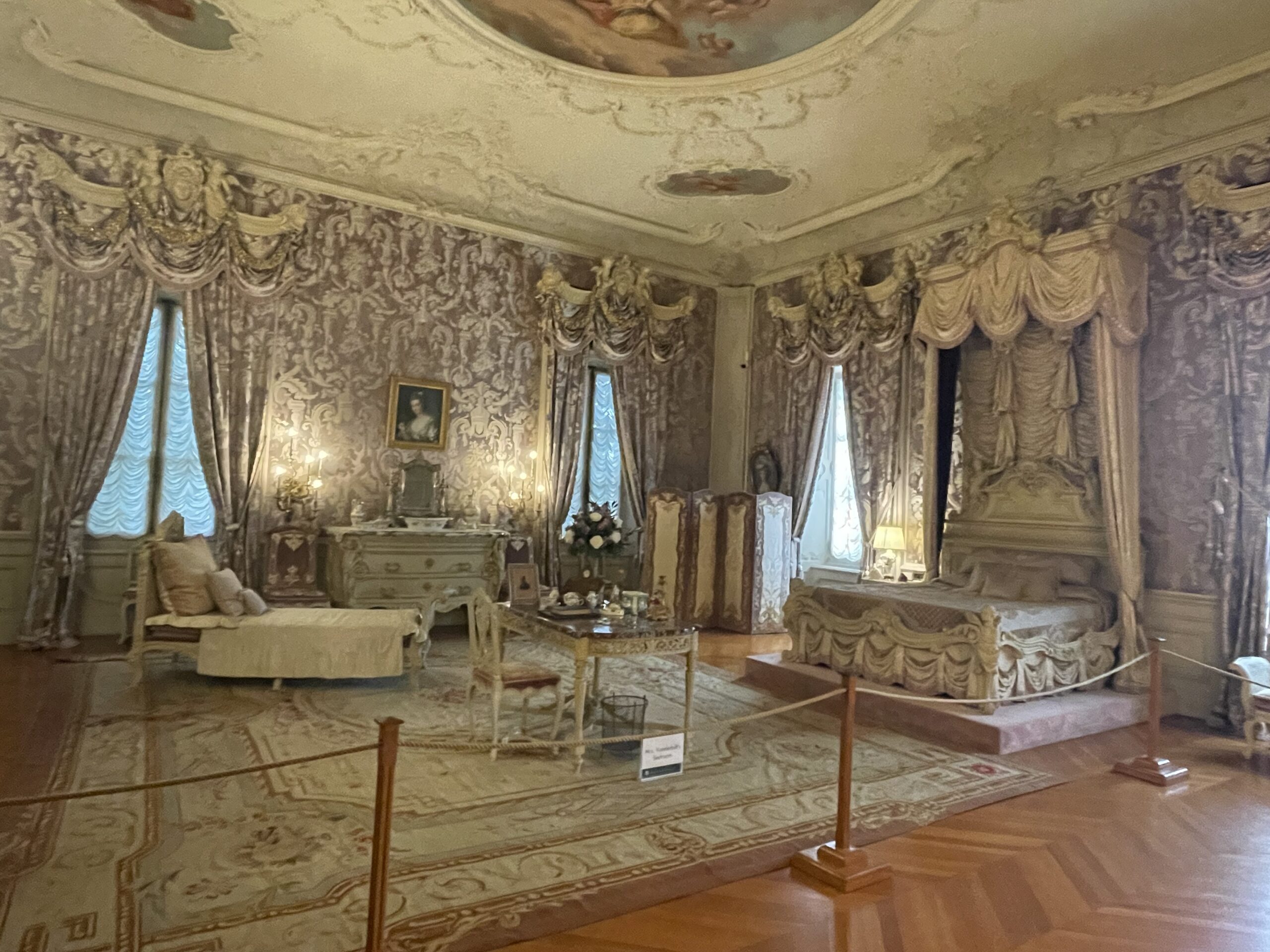 The Newport summer season was an outpost of New York high society (said to number only 400 people) with cottages owned by the Vanderbilts, Astors, Goulds, Eisenhowers, Whitneys, Belmonts, Drexel, Sanford… It was probably a blessing the season only lasted six weeks because you would never meet anyone new.
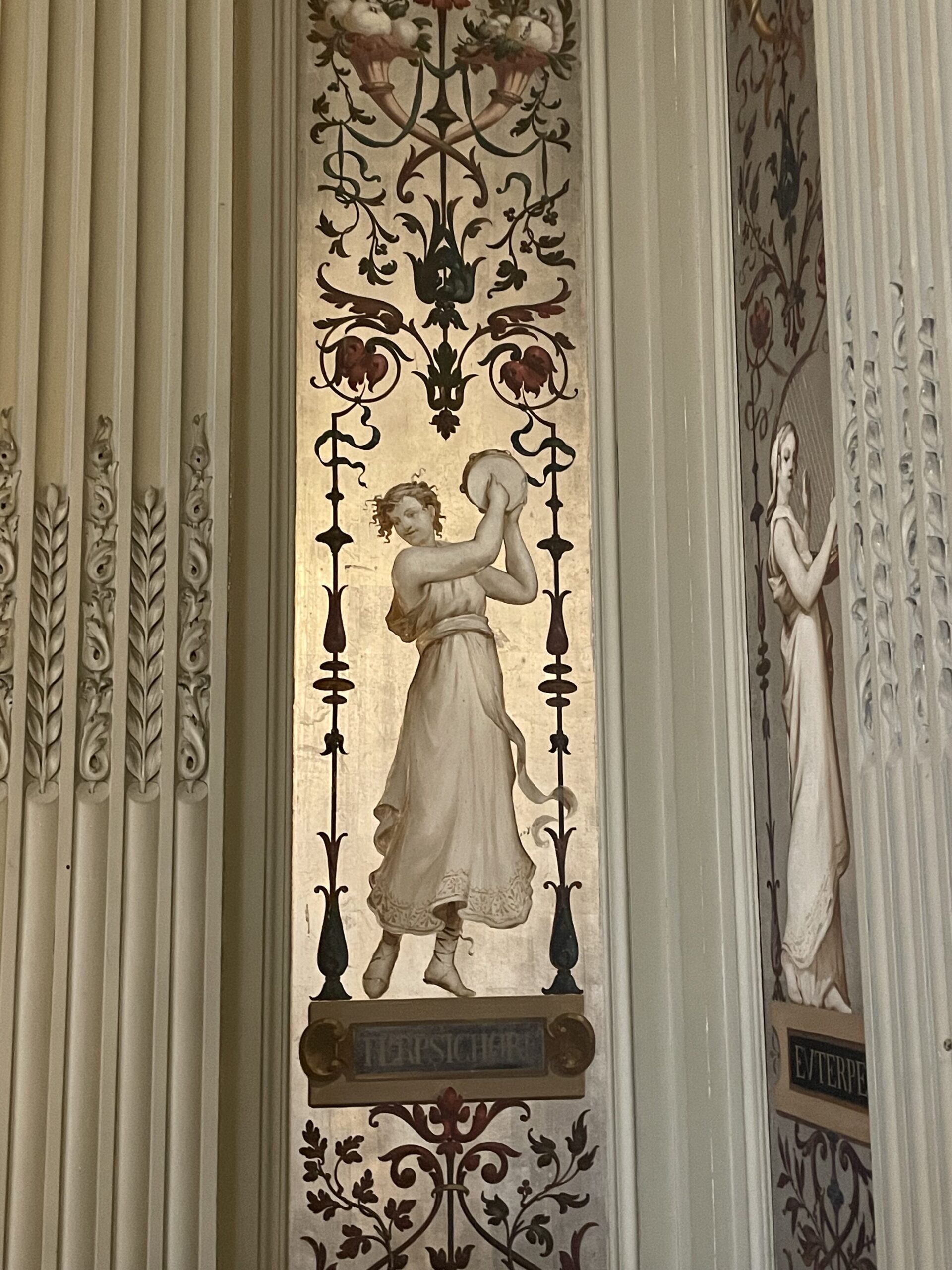 Sid is not going to get on too high a horse because S and D, while not having platinum leaf on the walls like the Vanderbilts, do have very nice wallpaper and a morning room.
The benefits of growing productivity were widely if lightly spread. Wages rose faster than in Europe and millions of immigrants came for new jobs in North East America.
From 1860 to 1890 real industrial wage growth was something like 40%. That sounds great until you work out that it is 1.2% per year. Still, much better than being back on the farm in Sweden or Bavaria (whence the Trumps in 1885), being a slave/serf in Russia or enduring another Ukrainian pogrom. Working people were very welcome and the American Dream was open for business though not everyone could be Gilded.
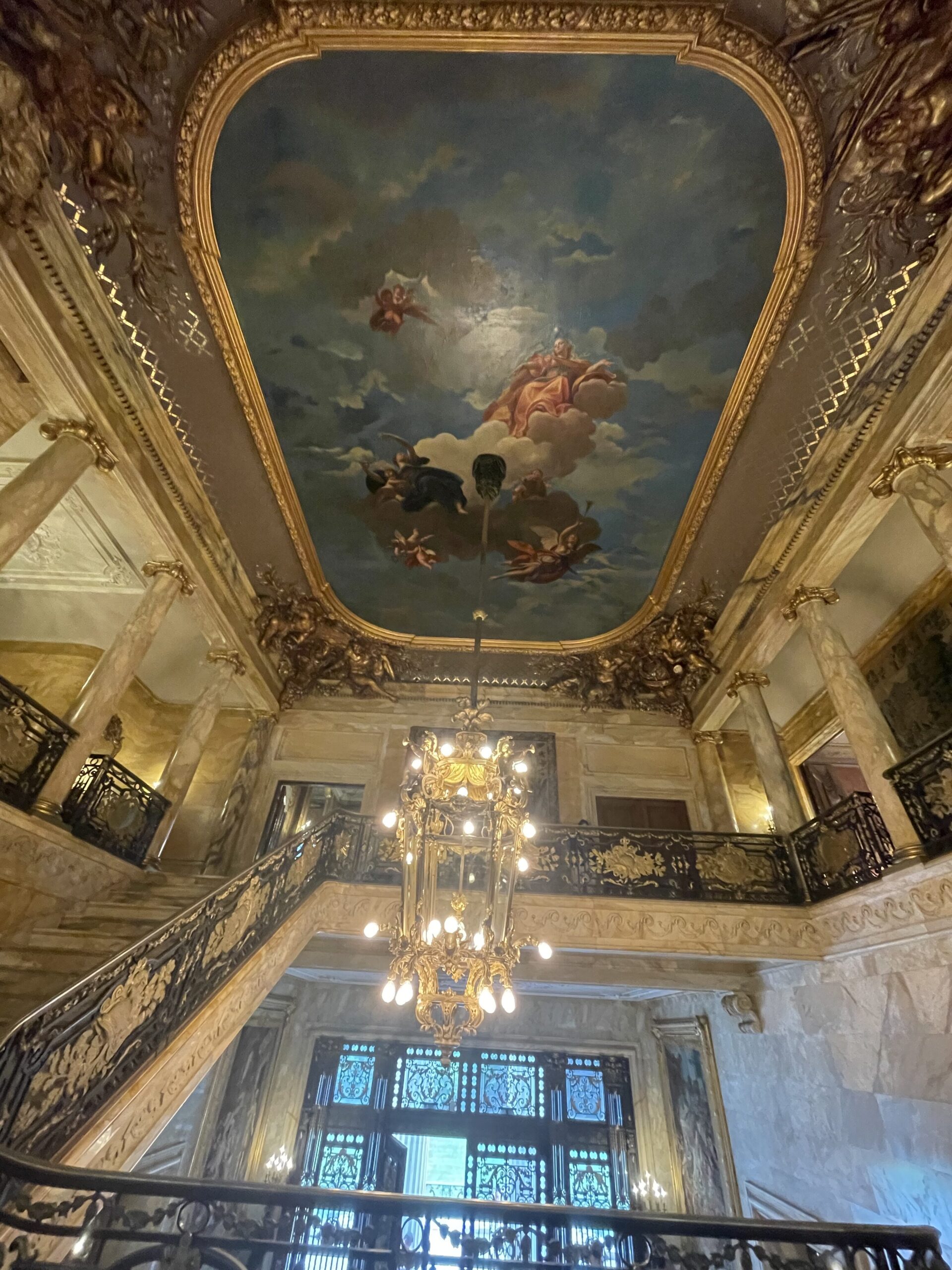 You can over do museum visiting. S and D visit just Marble House and The Breakers. The fifty room Marble House was a 39th birthday present for Alva Vanderbilt from William Vanderbilt (shipping, railroads).
Alva was the daughter of an Alabama corn merchant who moved to Paris at the time of the US Civil War. Her French taste in furnishing ran to marble (500,000 tons in this house, a different scale of Stone Age) and the grandeur of Louis XIV. The dining room is a take on the Salon of Hercules at Versailles. Marble House was built around 1890. The Arts and Crafts movement is in full flow and Bauhaus is only 30 years away.
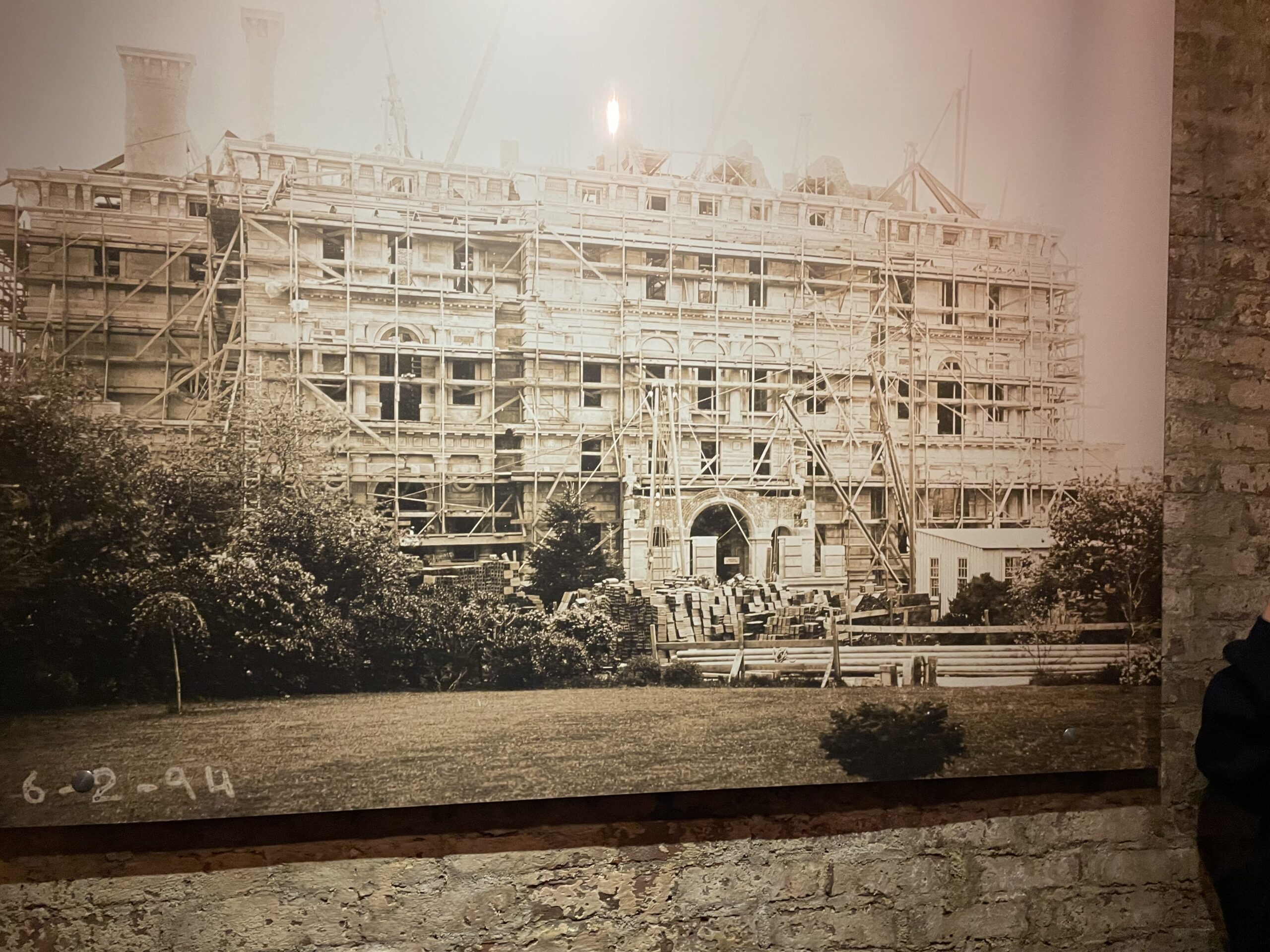 At Breakers, another Vanderbilt house, this modelled on an Italian Renaissance palace, S and D visit the house and get a tour of the rude mechanicals. The house totals 138,000 square feet and has 70 rooms. That is about 100 times the size of a normal British home.
It is essentially a brick and steel house, clad in stone and tiles with full mansion decoration built in 26 months. Much decoration made off site in mock-up rooms, taken down, brought to America and installed. Some great project management. No trucks, no white vans, no electric hoist. Lots of blokes just off the boat.
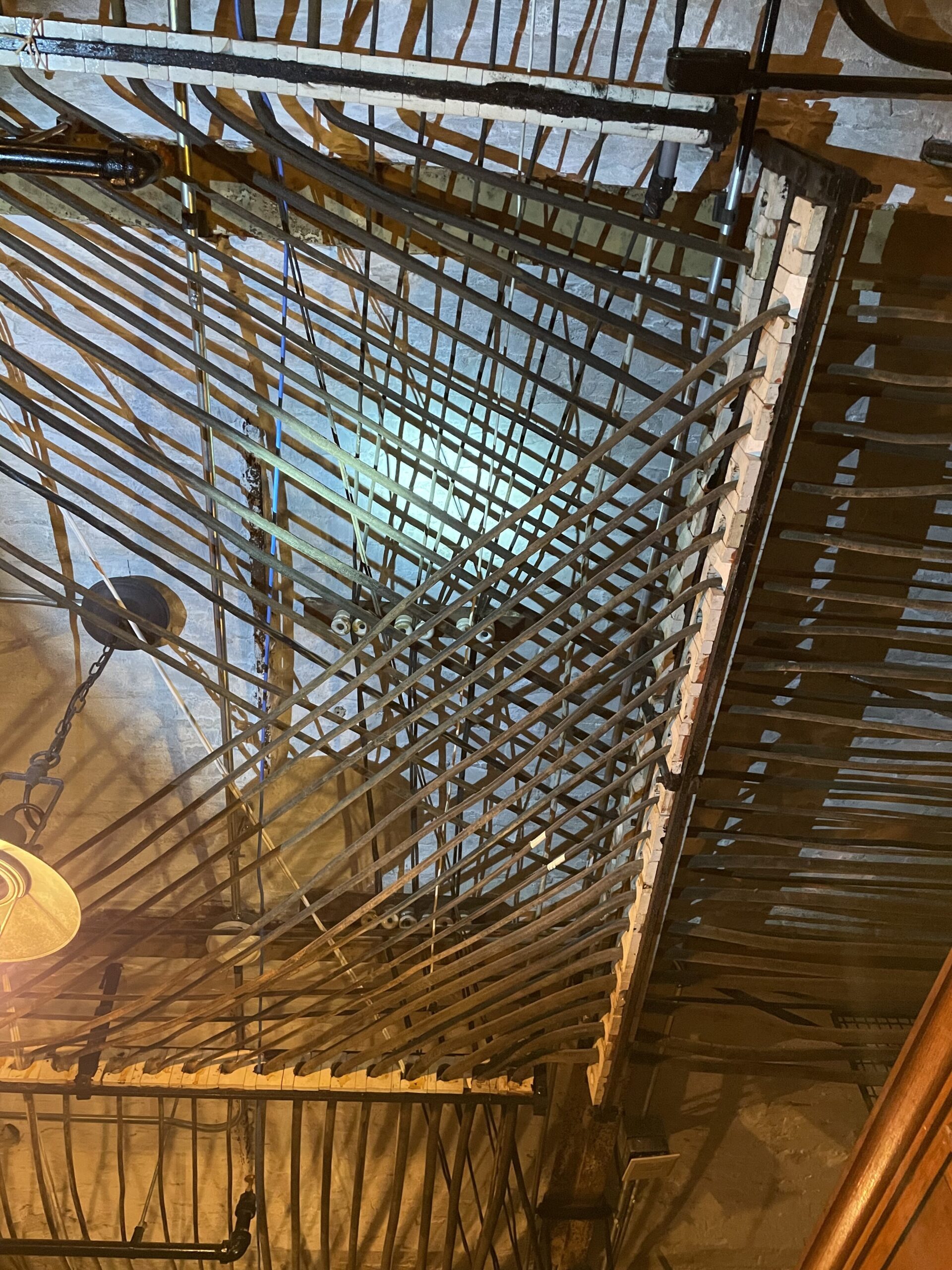 The whole Gilded Age happens at a time of great change. Cars and trucks have not yet displaced the railways but already there are electric trolley services. The Breakers buys its power in from the Newport trolley company.
The picture shows the loom, each wire separate and tar covered, with frames stopping the wires touching.
There’s a remote boiler, so this house doesn’t burn down like its predecessor on the site, which still burns coal to send hot water to radiators at the base of many flues which convect warm air to the floors above.
There are four taps in the bathrooms – hot and cold salt water and hot and cold normal. The salt water is apparently to soothe bottoms after long rides out. All good, but still had lead plumbing. Damn.
A visit to Newport (RI) gets the paws up.
 Overwhelmed with facts and decor S and D take the Cliff Walk back to base. Don’t be so melodramatic: it is a stony path.