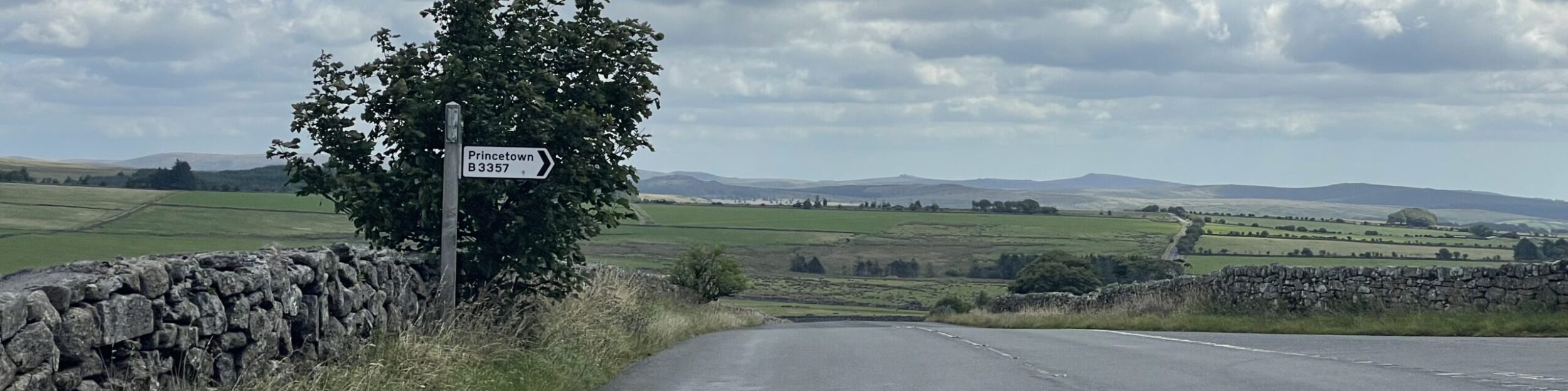
In which Sid and Doris visit two china clay pits, the Eden Project biomes built 25 years ago in an abandoned pit and Wheal Martyn which is both live and has a museum of kaolin processing past and present.
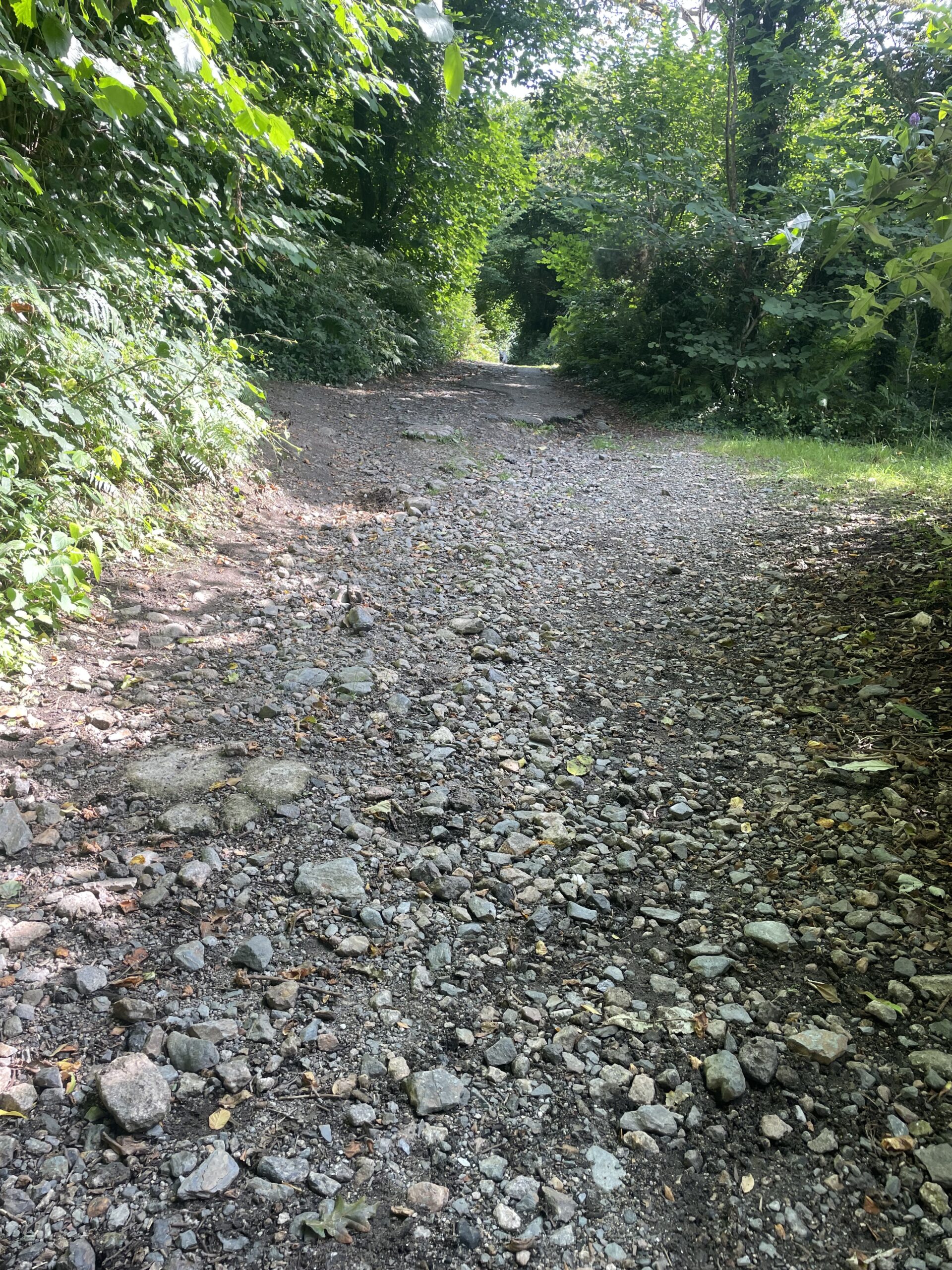 At Charlestown’s Pier Head Hotel they explain that the Eden Project is very uphill. We will not dwell on the horror of National Cycle Route 3, up tracks rejected by World Rally Championship teams.
The Eden Project took over an abandoned 30 acre clay pit in 2,000 and filled it with a rather hilly Kew Gardens. The two Bucky ball style greenhouses cover almost six acres, one for tropical plants and one for Mediterranean climates.
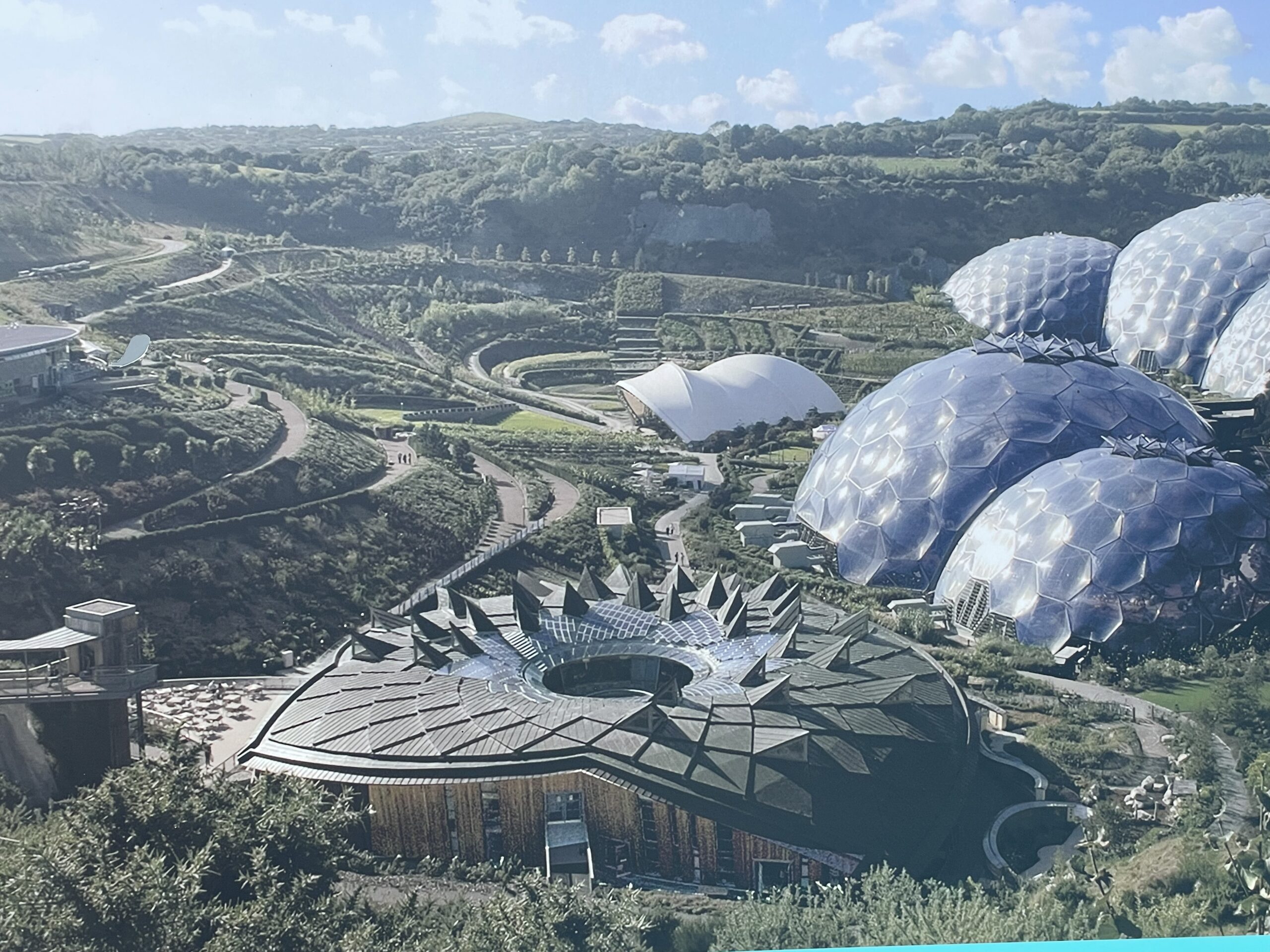 They are tall enough to use the contours of the pit where the mining process created terraces as they washed kaolin out of exposed granite and then blasted to reveal a new face to pressure wash.
Sid and Doris were sceptical about a visit, perhaps because it is such a popular (and expensive) attraction, but it turns out to be a great morning out.
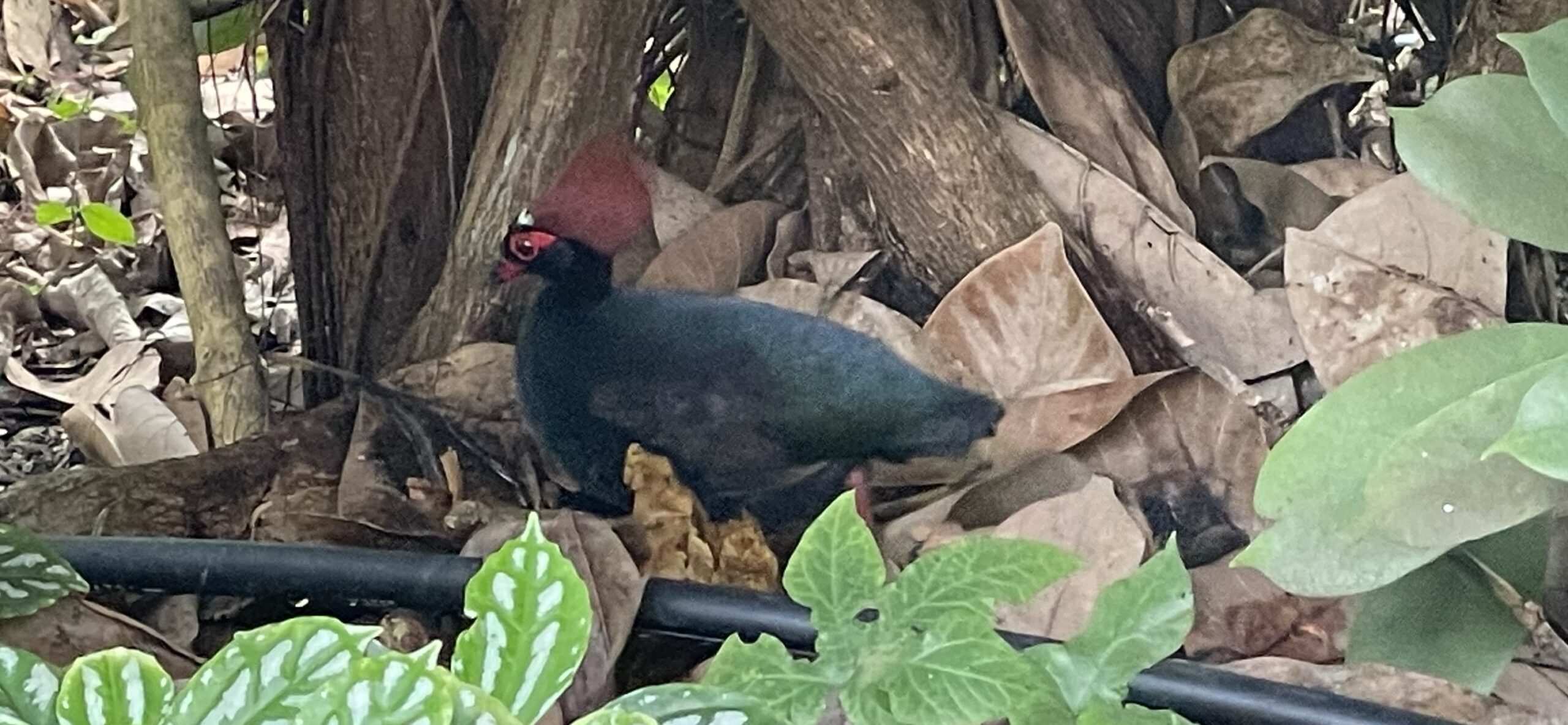 There is extra fun to be had spotting creatures in the undergrowth such as the Africa Green White-eyes bird. This is a male with the white eye patch above its true eyes, although it had no idea of its best side (like watching amateurs getting prizes and steadfastly failing to face the camera while simultaneously smiling and holding the award the right way round).
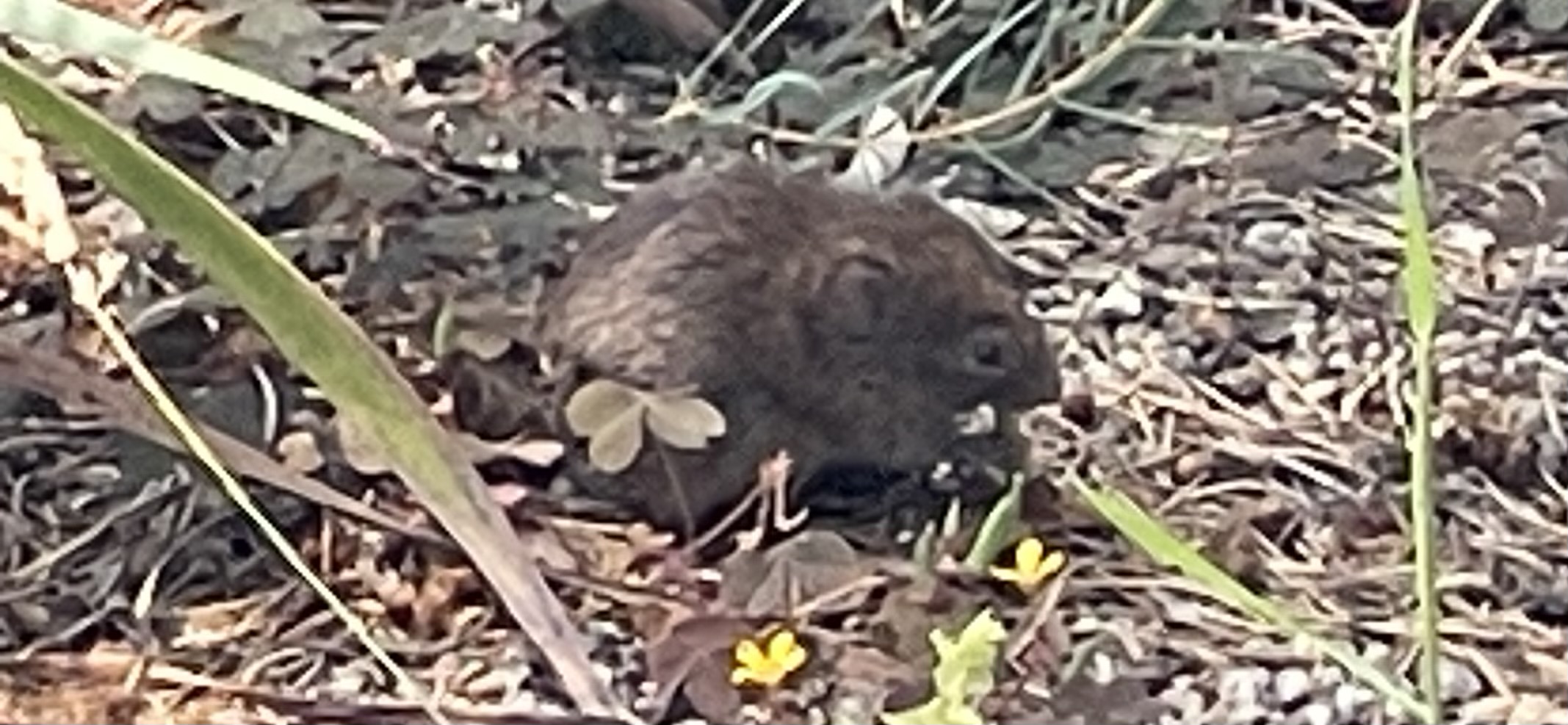 … and the unknown sooty rodent.
For wood fanciers they have sculptures in African Greenheart, which was recycled from the pier timbers at Falmouth Harbour after a fire in 2011.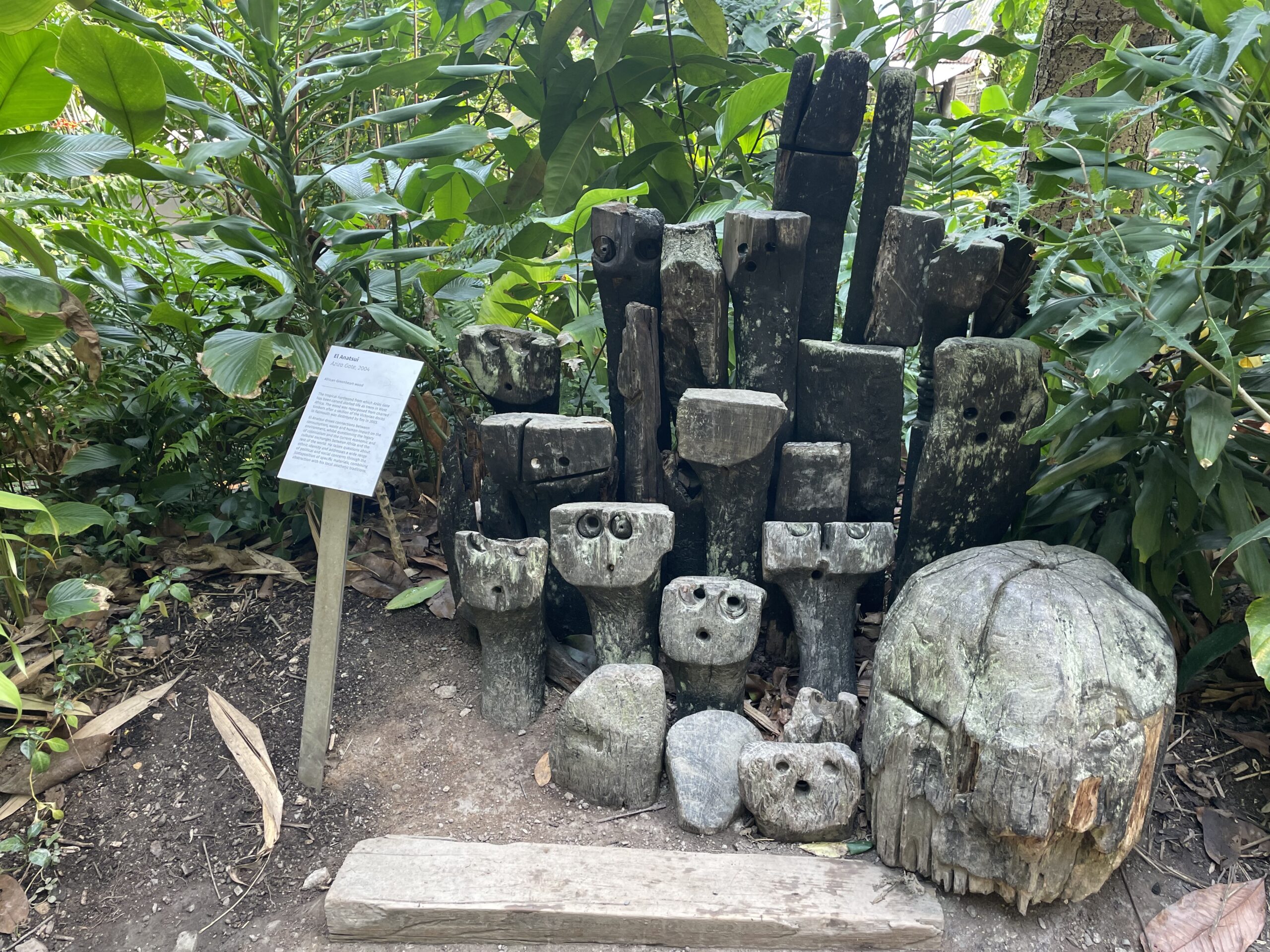
Finally S asks if we can eat any of the exhibits, and helpfully there is a stand selling baobab and pineapple smoothies. Did you know you could eat baobab?
Into the Mediterranean zone for an appropriate pizza verde, then Sid and Doris are off to Wheal Martyn.
Once again it is uphill. Sid calls out, I think I just heard my ears pop ….or perhaps my lower right ventricle. He is such a drama queen.
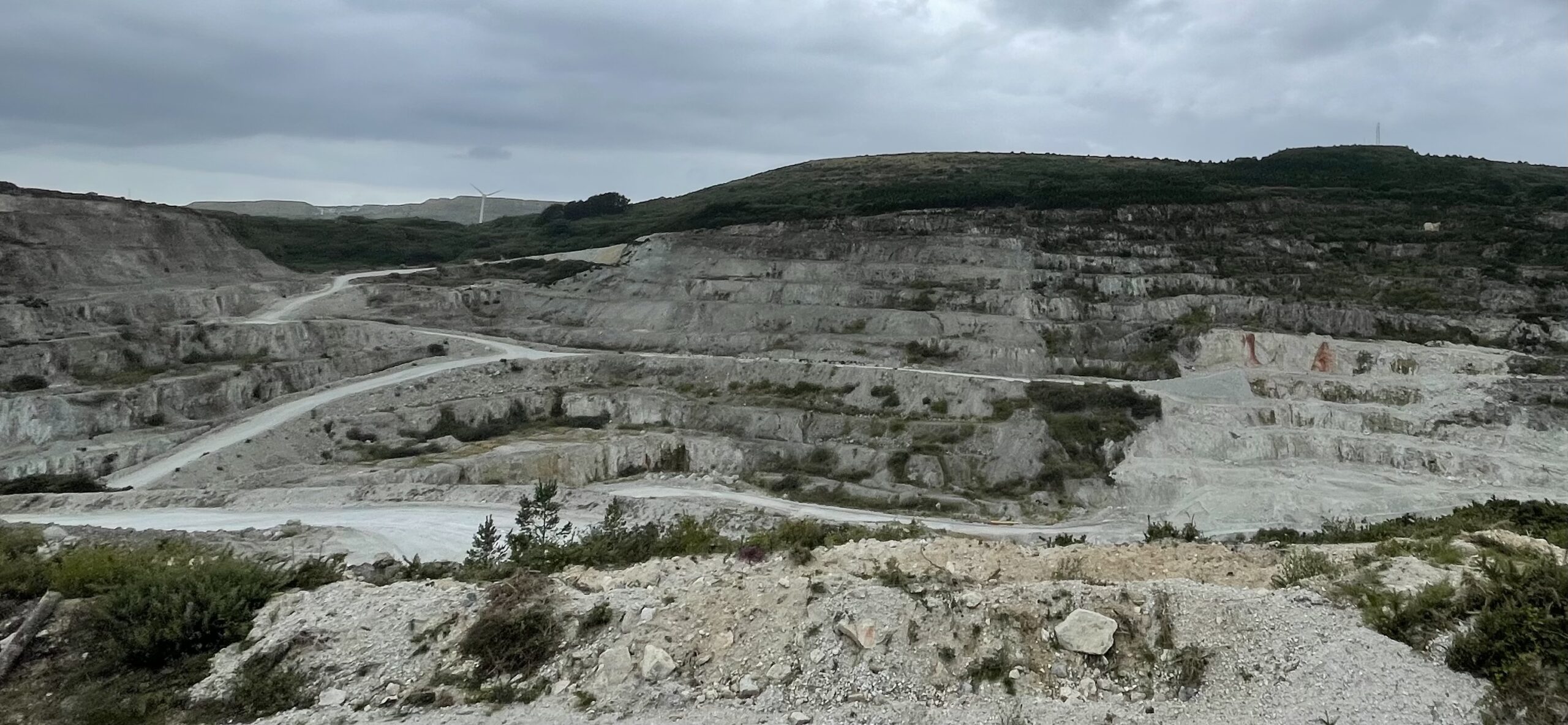 Wheal Martyn is a china clay pit. Cornwall might be known for tin and copper but they were in decline by 1900. Over the last 250 years china clay has brought in twice what Sn and Cu ever did. (Over 250 years that’s £14 billion total revenue or about three months profit for Meta/Facebook, but then they don’t admit they use dynamite.)
WM has two clay pits, one working and the other given over to showing how a pit was worked in Victorian times. This is an accredited museum within a Scheduled Ancient Monument which was worked until 1969. It is a delight. You should go.
China clay, or kaolin is formed as the result of the decomposition of some of the feldspar in granite. Doris is rapidly realising that her degree in Chemistry (long since forgotten) actually included nothing about the chemistry of minerals, so she is as uninformed as the rest of us. Kaolin is used for many things including drugs (remember kaolin and morphine?), insulators, facepacks, and giving the finishing touches to printed paper. It is defined as a clay because it is sticky and fine-grained and can be moulded, and the stuff round here is especially prized because it is very white. (Although there is a secret place to add a tiny helpful drop of blue dye too, but don’t tell anyone else about that.)
The white powder is held in suspension running in leats to settling tanks and drying floors. It is transported as powder, blocks or a thick soup which can be pumped into railway wagons or ships. A lot of the powder product of Wheal Martyn went down to Charlestown Harbour. We will be pleased about that later.
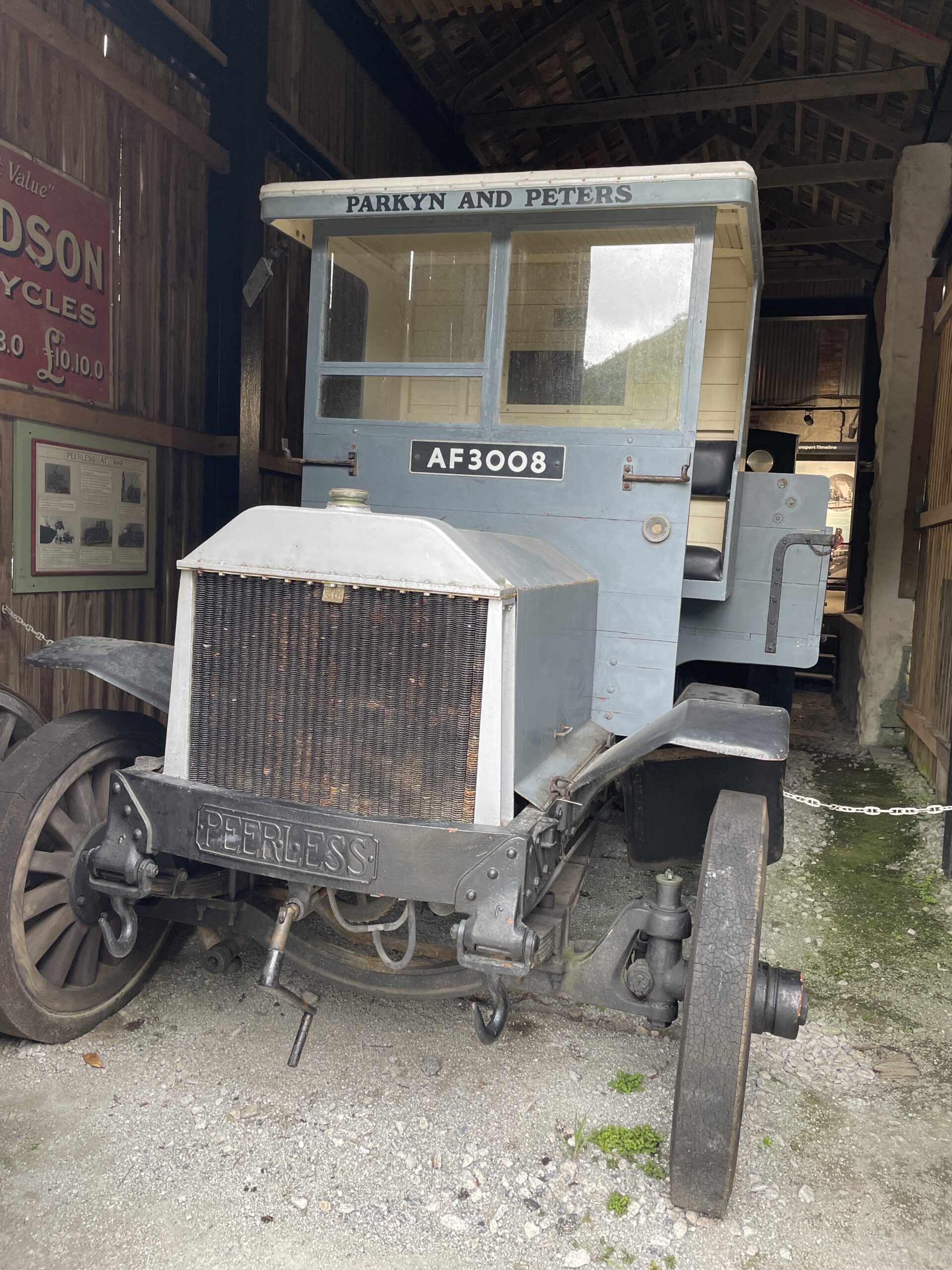 In the First World War many horses were requisitioned and never came back. In 1920 this US Peerless truck was sold off as war surplus and never went back to Cleveland, OH.
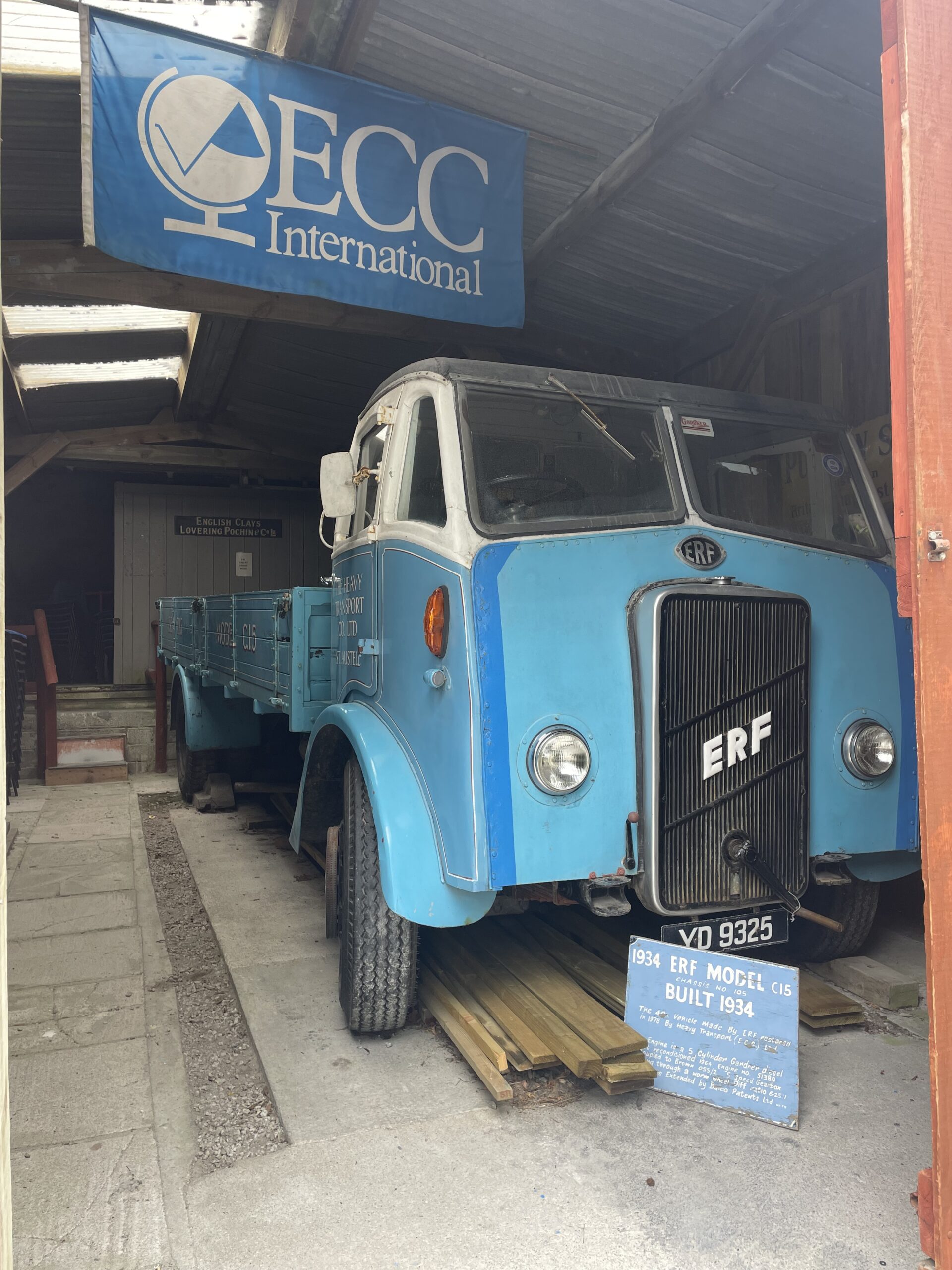 It was superseded by this elegant 1934 ERF. It says something about the local roads that with a diesel engine it has a five speed gearbox and a 6.25 final drive.
The mine’s railway line down to Charlestown has been taken up. Sid and Doris ride the old road bed down to St Austell and so to the Pier Hotel, Charlestown. Hurray for down at the end of the day.