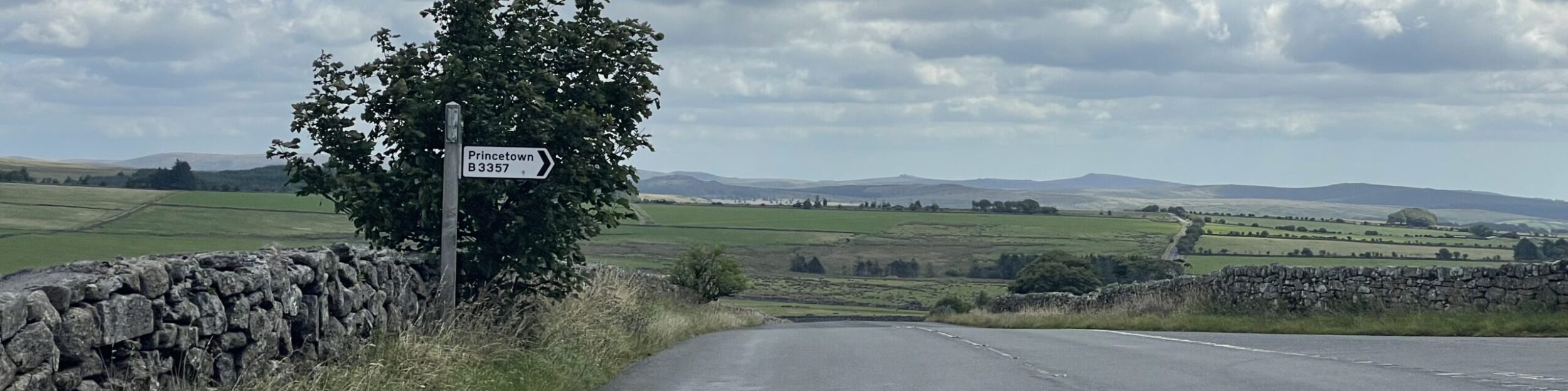
In which Sid and Doris visit the industries that paid for the Robber Barons’ Newport Summer Cottages.
Joe has lent us the Jolly Green Range Rover which is better at making distance than the 1959 Ford. And just as well because a problem with touring America is big hands, small map.
Sid has picked out Scranton (PA) as the first stop, about a five hour drive. It was an agricultural district until the 1850s when iron mills, anthracite coal and the necessary railroads came to dominate the Lackawanna Valley. (We are not far from the Bethlehem steel works visited when S and D went to the US mid term elections in 2022.)
Scranton (named for entrepreneurs George and Sheldon Scranton either in a fit of self aggrandisement or total absence of imagination) became a centre of the railroad industry with huge marshalling yards and locomotive maintenance roundhouses for the Delaware, Lackawanna & Western railroad and four others. The site is now Steamtown, run by the National Park System (may their funding survive).
 It is a steaming hot day in late June with high cloudlets in the sky.
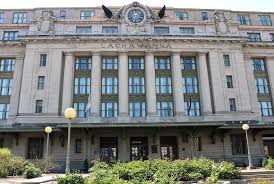
S and D book into the Radisson in the converted Lackawanna Station, now a little out of scale for a town of 76,000.
We walk to the mall looking for ice cream. None, but the security guy does point us through the air-conditioned mall to the mail ramp that lands in the middle of Steamtown. First impressions are not good with masses of rusty freight cars, carriages and locomotives.
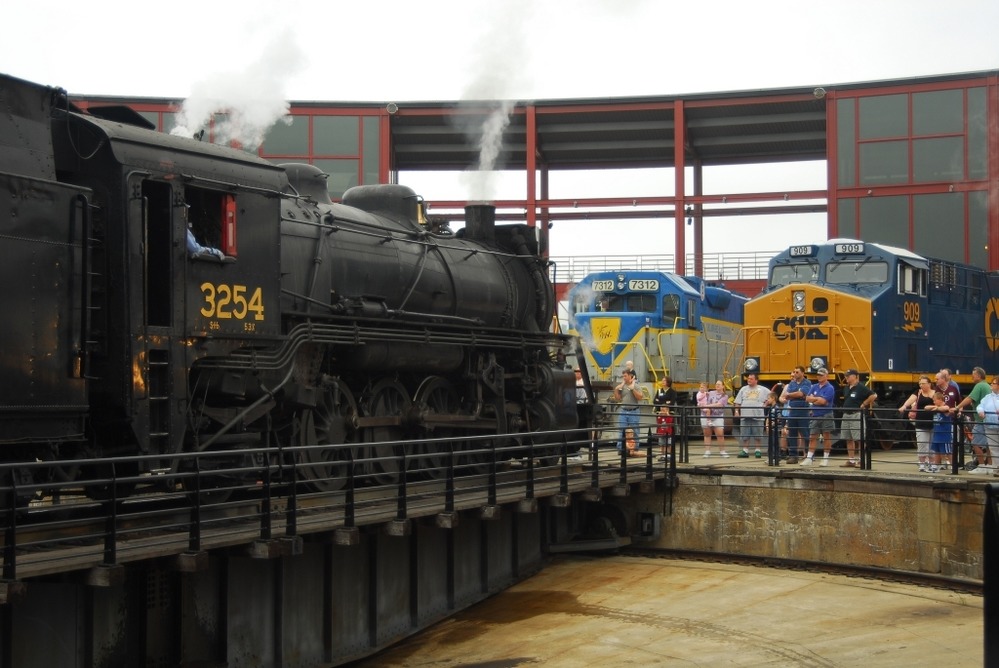 The US railway system grew quickly: in 1850 about 9,000 miles; by 1880 ten times that and by 1918 254,000 miles with 65,000 steam locomotives. Steam locos require about two hours work a day, getting up steam in the morning, then end of day firebox and ash cleaning plus maybe two days service and checking for each three weeks worked.
From 1925 diesels, cleaner and requiring less work (and no stoking) started to out-compete steam. Steamtown museum shows the story of the industry and the rise and fall of Scranton, with the steam repair shop closing in 1949 and the whole site in 1980.
But before the end were hero models like the 25 Big Boys. A Big Boy is an articulated steam engine with four leading wheels to help stability entering curves, two sets of eight driving wheels and a four wheel trailing truck to support the huge firebox.
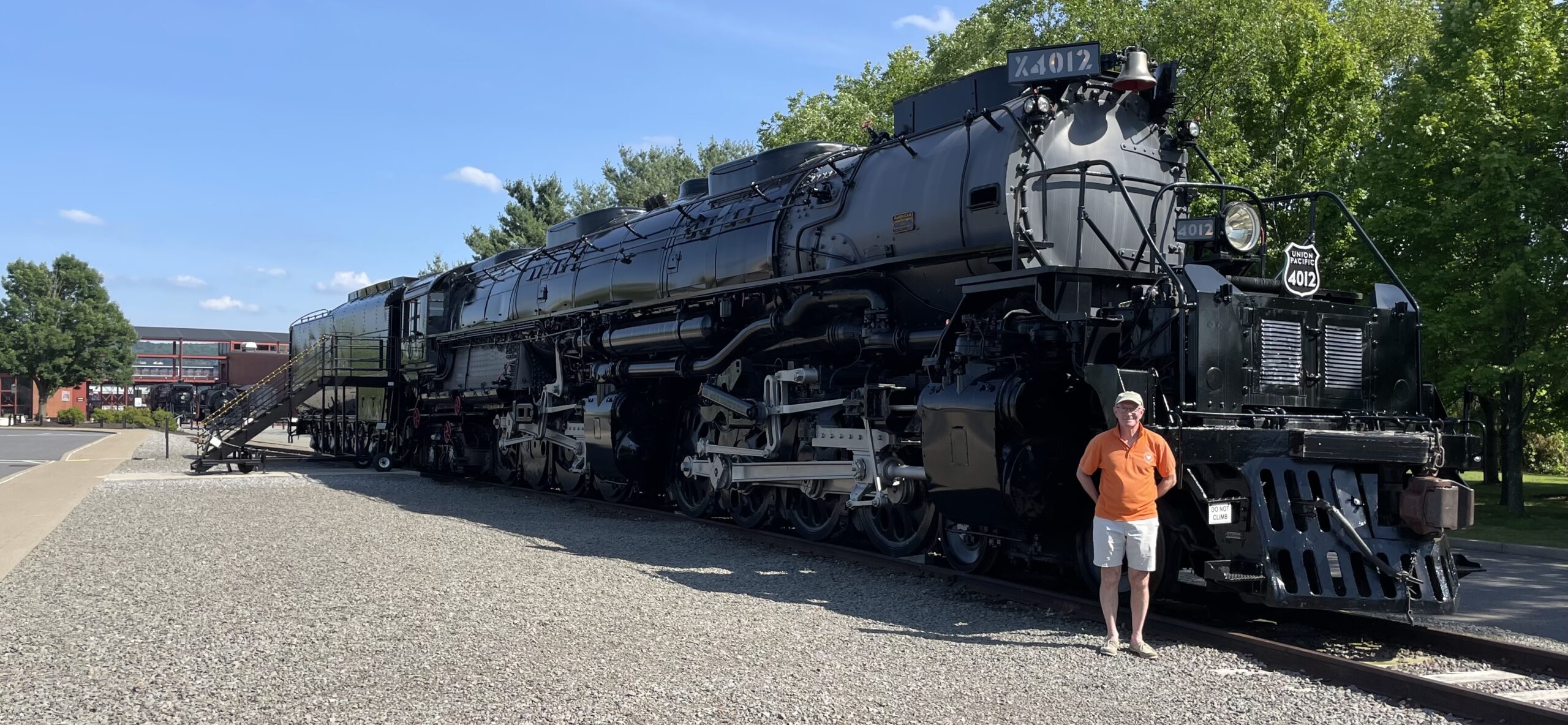
They used 11 tons of coal and 12,000 US gallons of water per hour. They’re 133 feet long and with the tender full weighed 544 metric tonnes (or 1,200,000 lbs as the Americans say) putting out 7,000 horsepower. They were built in war time to pull 3,600 tonne trains of 130 freight cars up the steepest inclines on the network, being finally withdrawn in 1959. This is the one still running. Sid is his usual size in this photo.
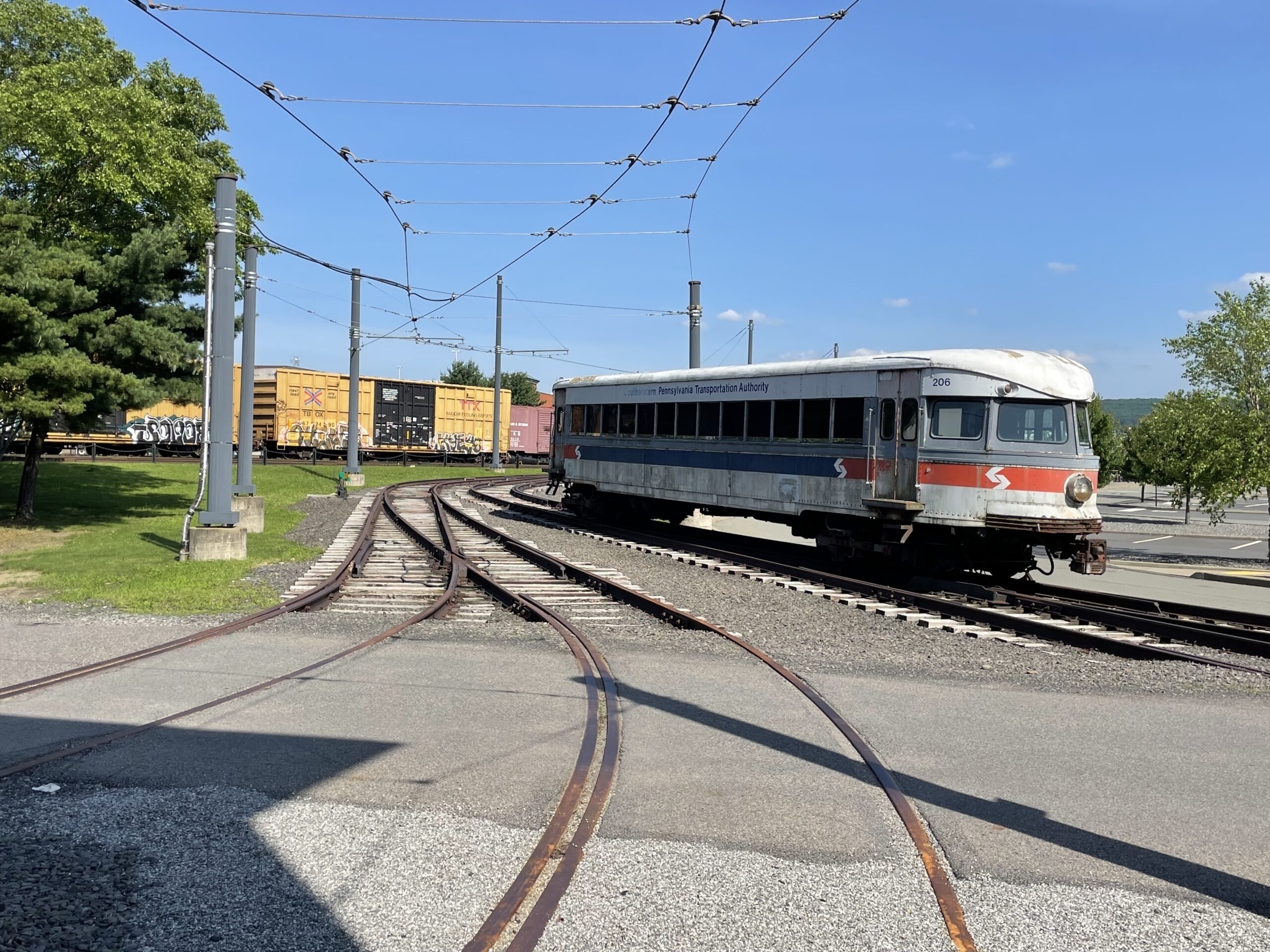 And for all this steam heritage Scranton is known as Electric City because in 1880 electric light was in use in factories and by 1886 Scranton had America’s first electric street car system. There is a trolley museum. Dear Reader, you may be relieved the Trolley Museum was shut by the time Sid and Doris got to it. Just this one picture.
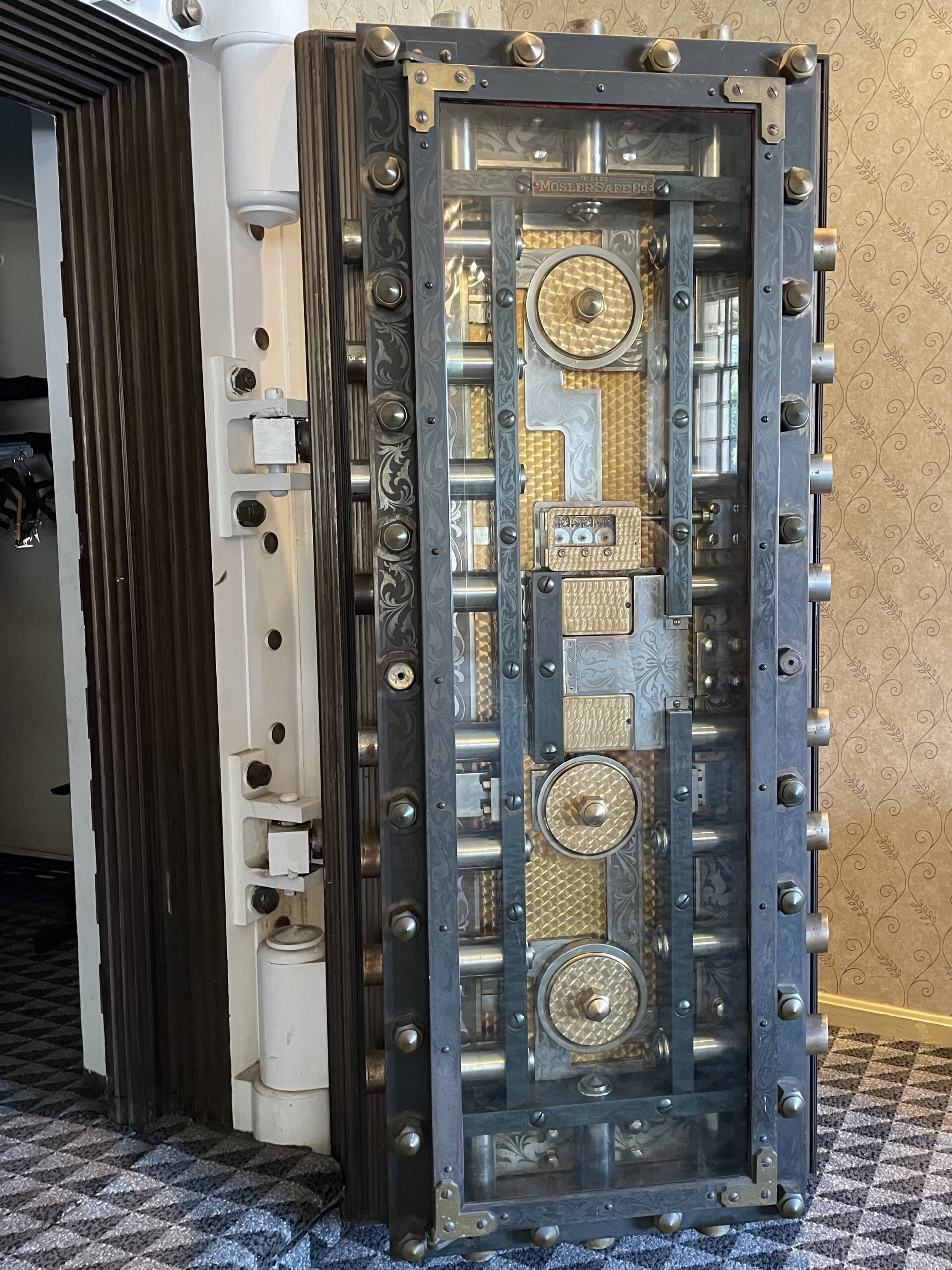 In 1908, as part of an engineering upgrade to the DLW, a new station was built for Lackawanna. The higher floors, once railway offices, are now the rooms of the Radisson hotel.
They still have the beautiful safe.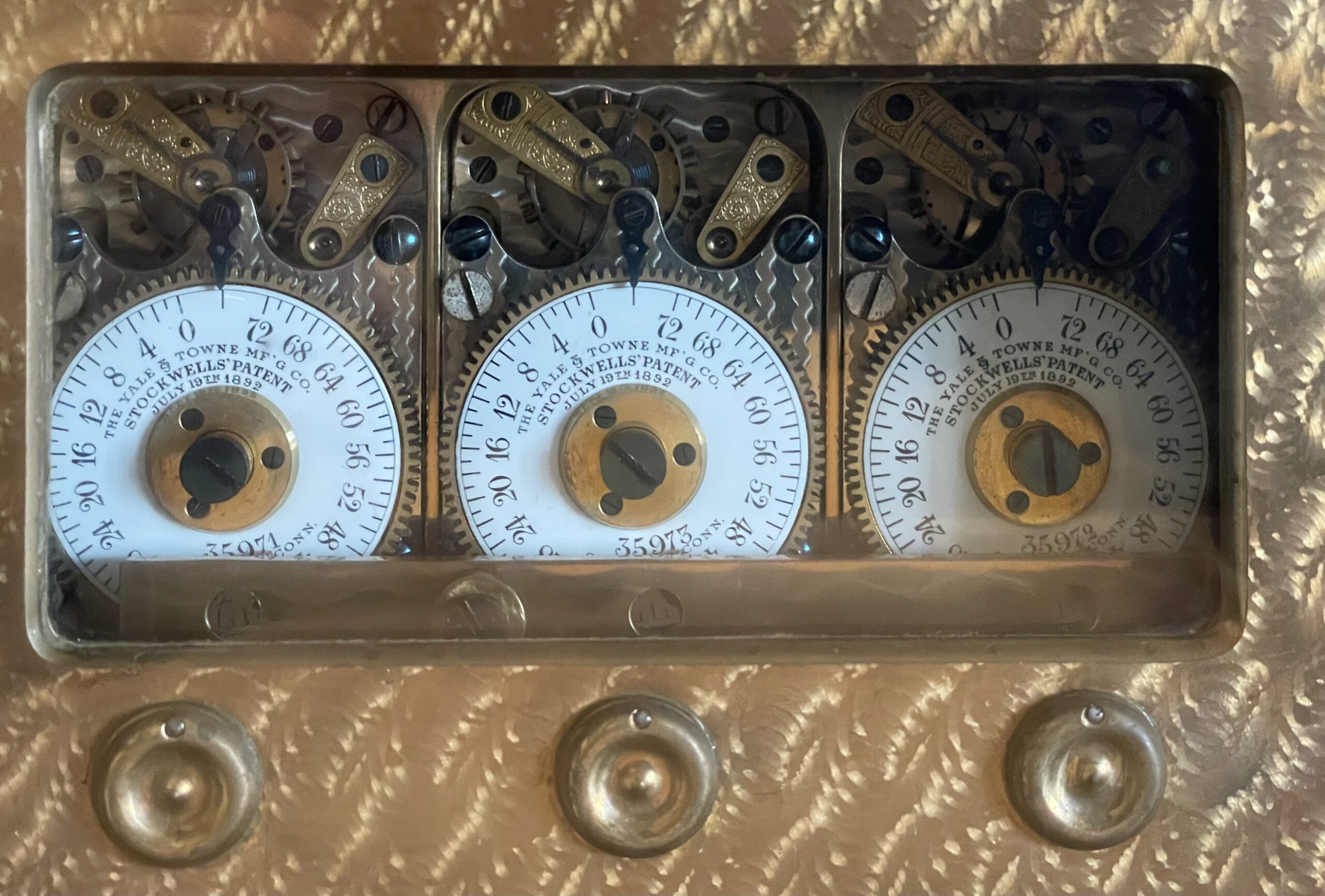
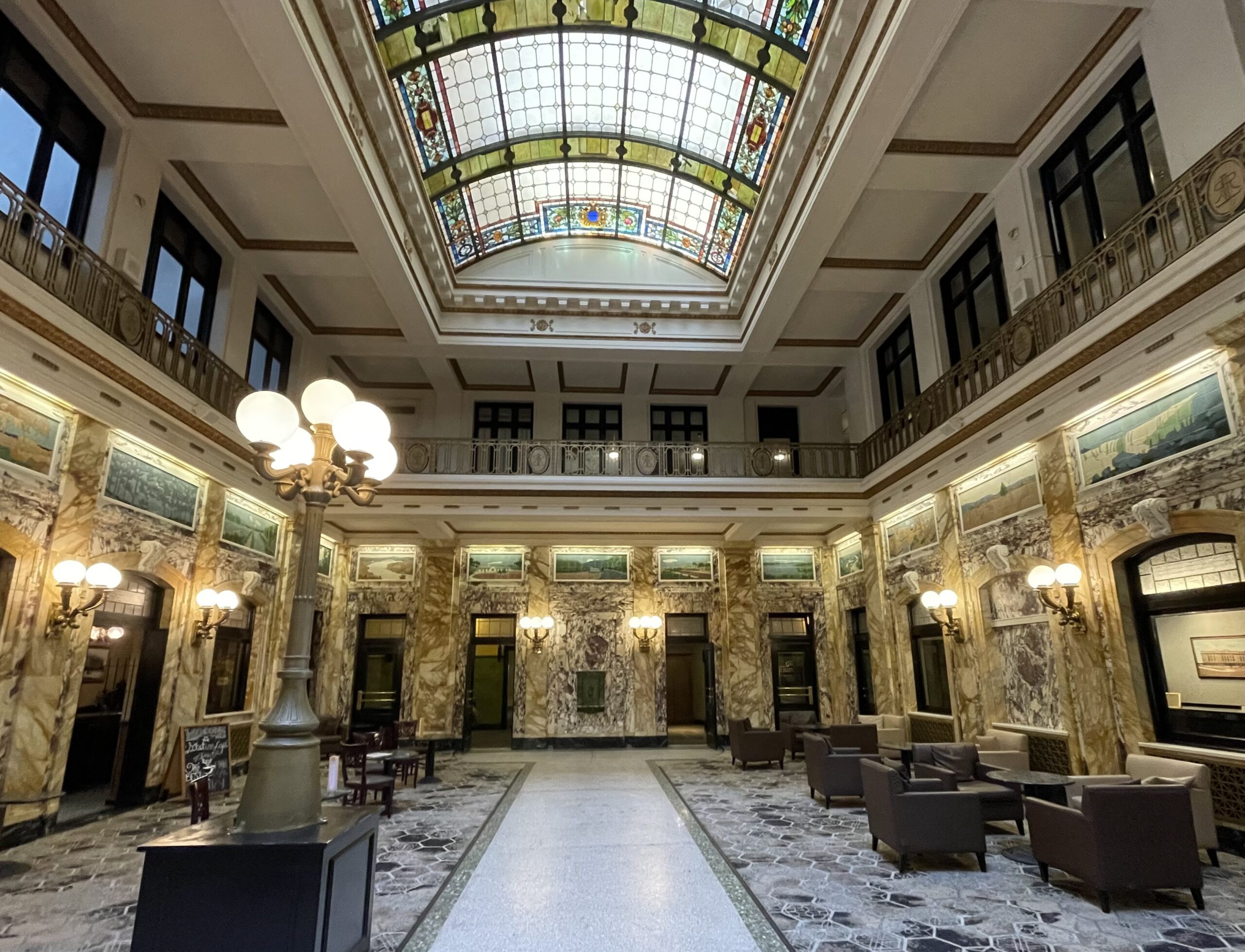 At platform level the double height, marble-walled waiting room is now a restaurant while the ticket office is a coffee shop.
The high ceiling is barrel vaulted in leaded and coloured glass. These are great spaces – you could be in Metropolitain Paris.
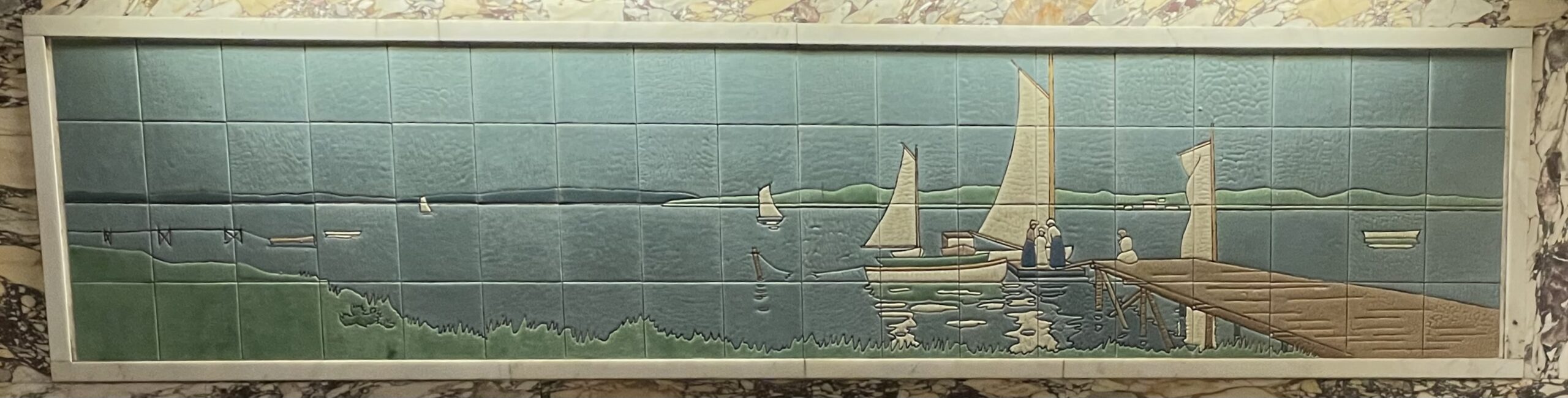
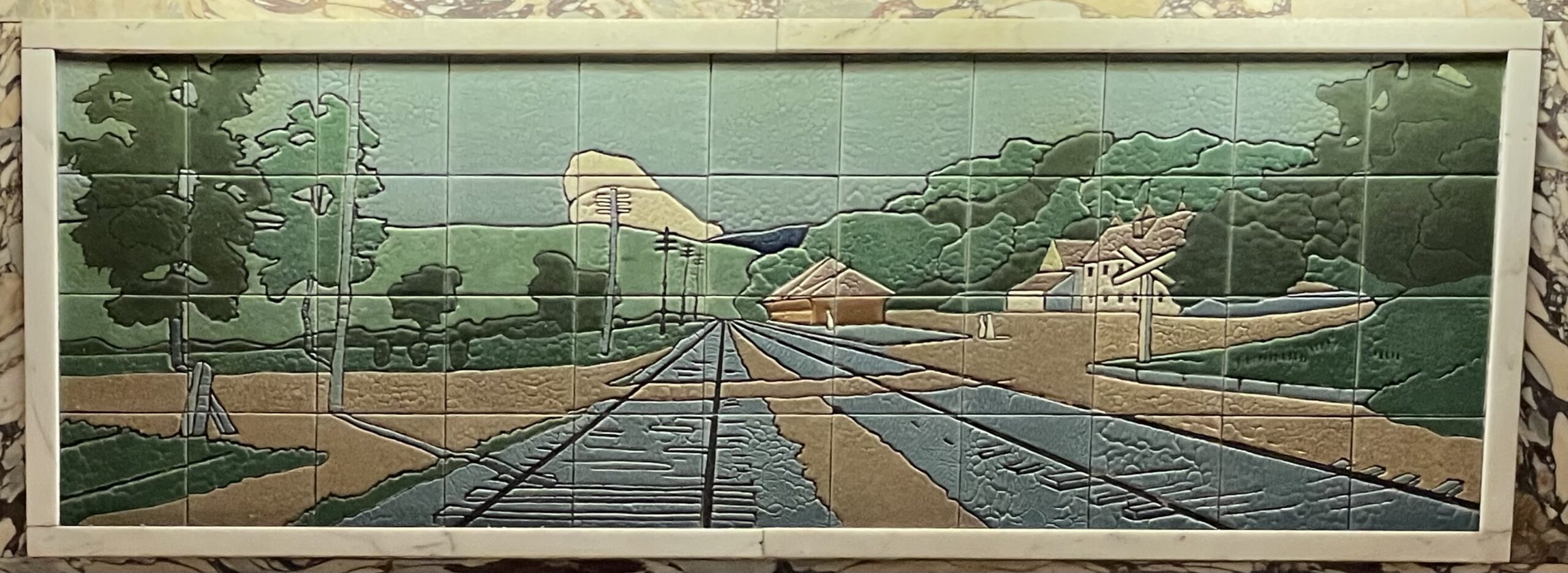
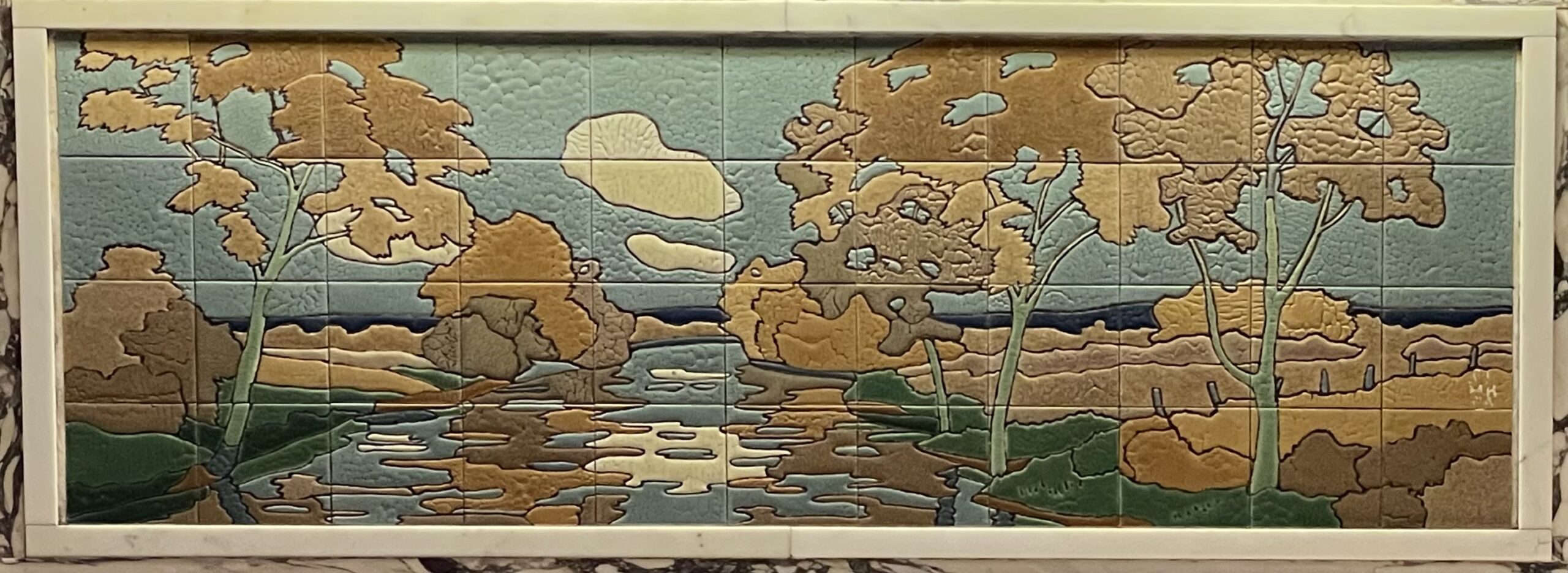
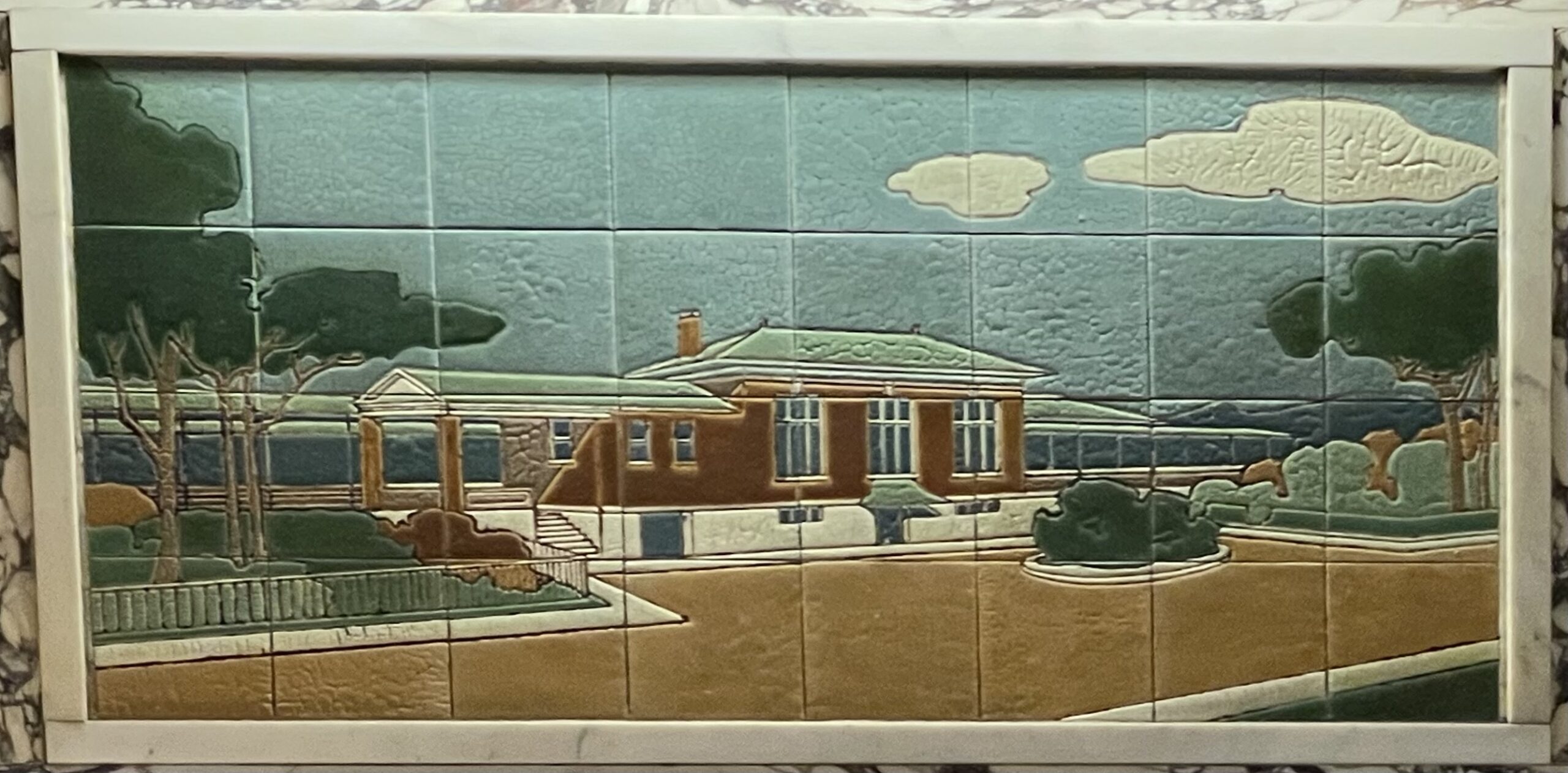
High up on the walls are faience tiles which recreate Clark Greenwood Voorhees’ paintings made along the DL&W route from Hoboken (NJ) to Buffalo (NY), just the other side of the Niagara River from those dangerous Canadians. This is a lovely place for breakfast though with the platform gone no one left, no one came…