In which Sid and Doris escape the Grand Prince Hotel for ferry rides around the bay and a visit to the Peace Museum.
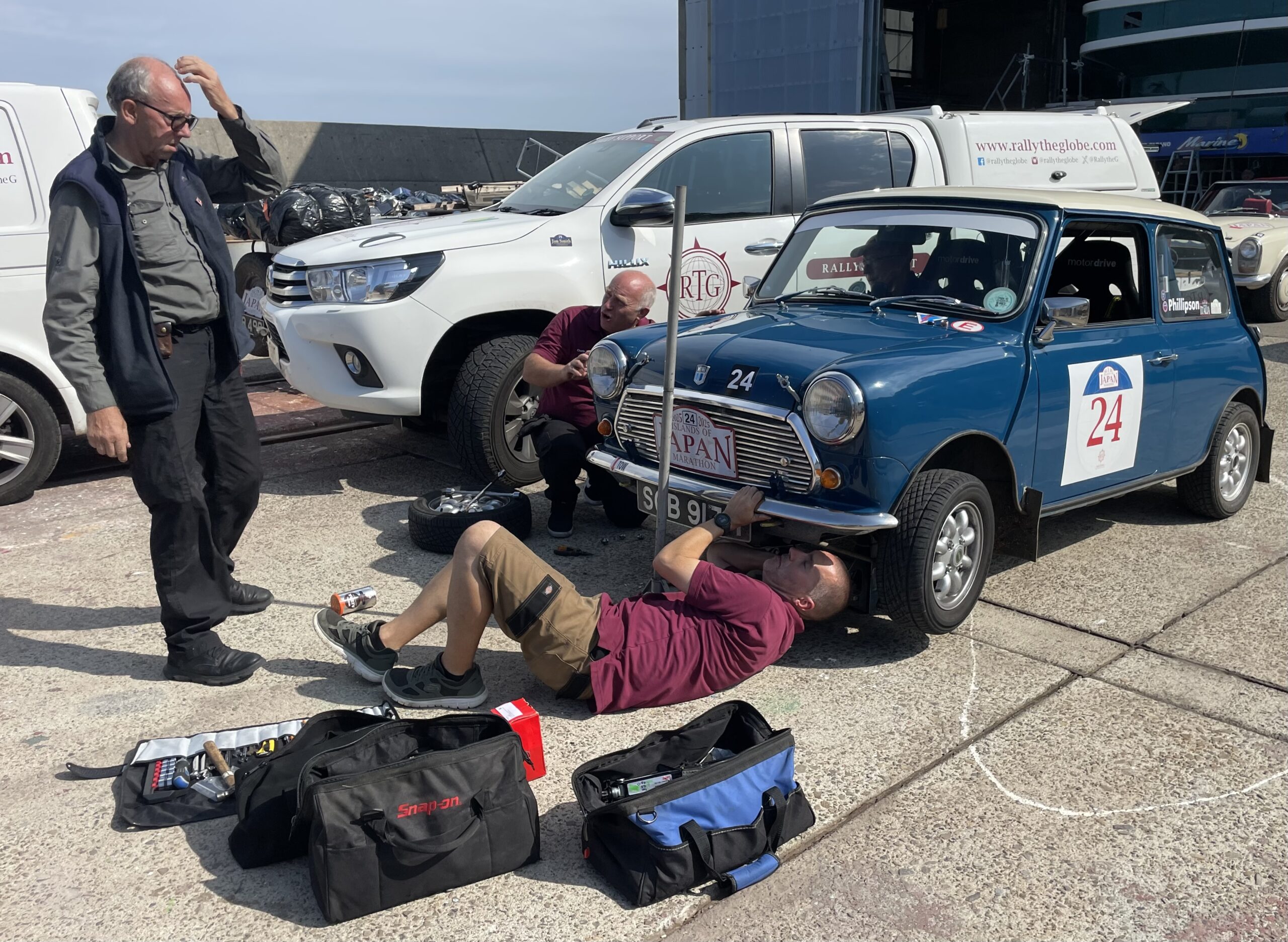
Sid starts the day in the car park with Teal, Charlie, Russ, a new outer CV joint and a front wheel bearing. Recent hissing and grumbling noises have been traced to a sticking calliper and pad, and the outer CV joint on the driver’s side. Sid has the parts and they have the skill and a pleasant couple of hours pass getting the CV joint swapped and the bearing into the hub.
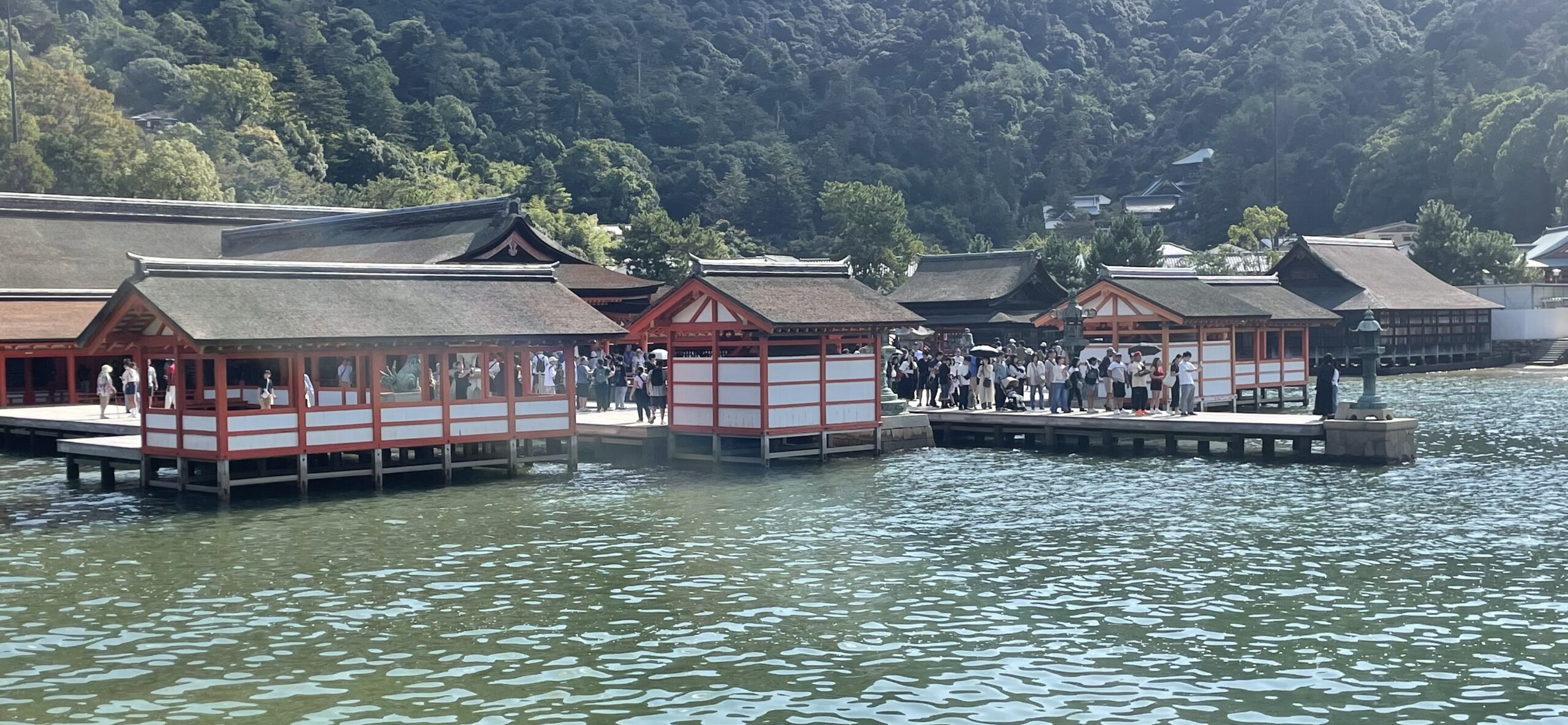
Japanese minder Jamie has put together a day plan using a ferry straight from the hotel. The first stop takes us to sea side shrines and because it is Sports Day weekend in Japan, Korea and China the shoreline walk is vairy popular. Every one has a camera ready and the torii (temple entrances) are relentlessly pictured, sometimes with a sweet looking girl child making TikTok fingers.
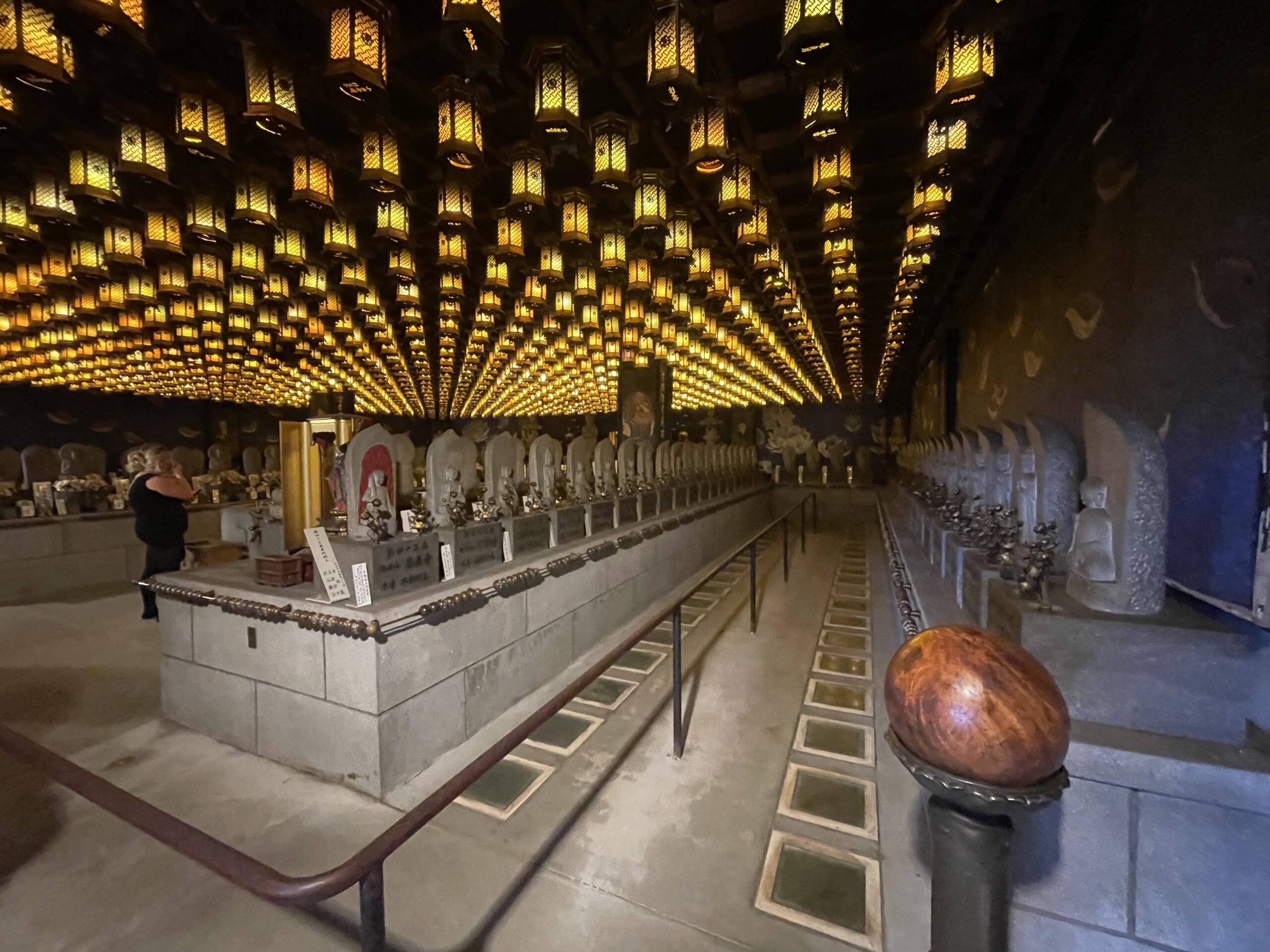
At the higher temple Bothy MacWeevil-San has arranged Buddhas from 88 shrines all in one cave, thus condensing a huge pilgrimage into a quick walk around a modest hall. This proves an excellent way to collect cash from guilty pilgrimage dodgers, which pays off for Bothy and the punters. Sid buys a paper fortune which bodes well for reaching Fukuoka. There are no cracker jokes but it’s all quite positive.
After another boat up the river it is time to commemorate 6th August 1945, 80 years ago in a very few living memories. The dome of the Prefectural Industrial Promotion Hall is the first stop. Brick, stone and concrete buildings stood up much better than traditional wooden houses. American planners had selected a few target cities for the new bombs and had carefully not visited these with conventional bombing so that it would be clear just what the effect of an atomic blast and radiation had been.
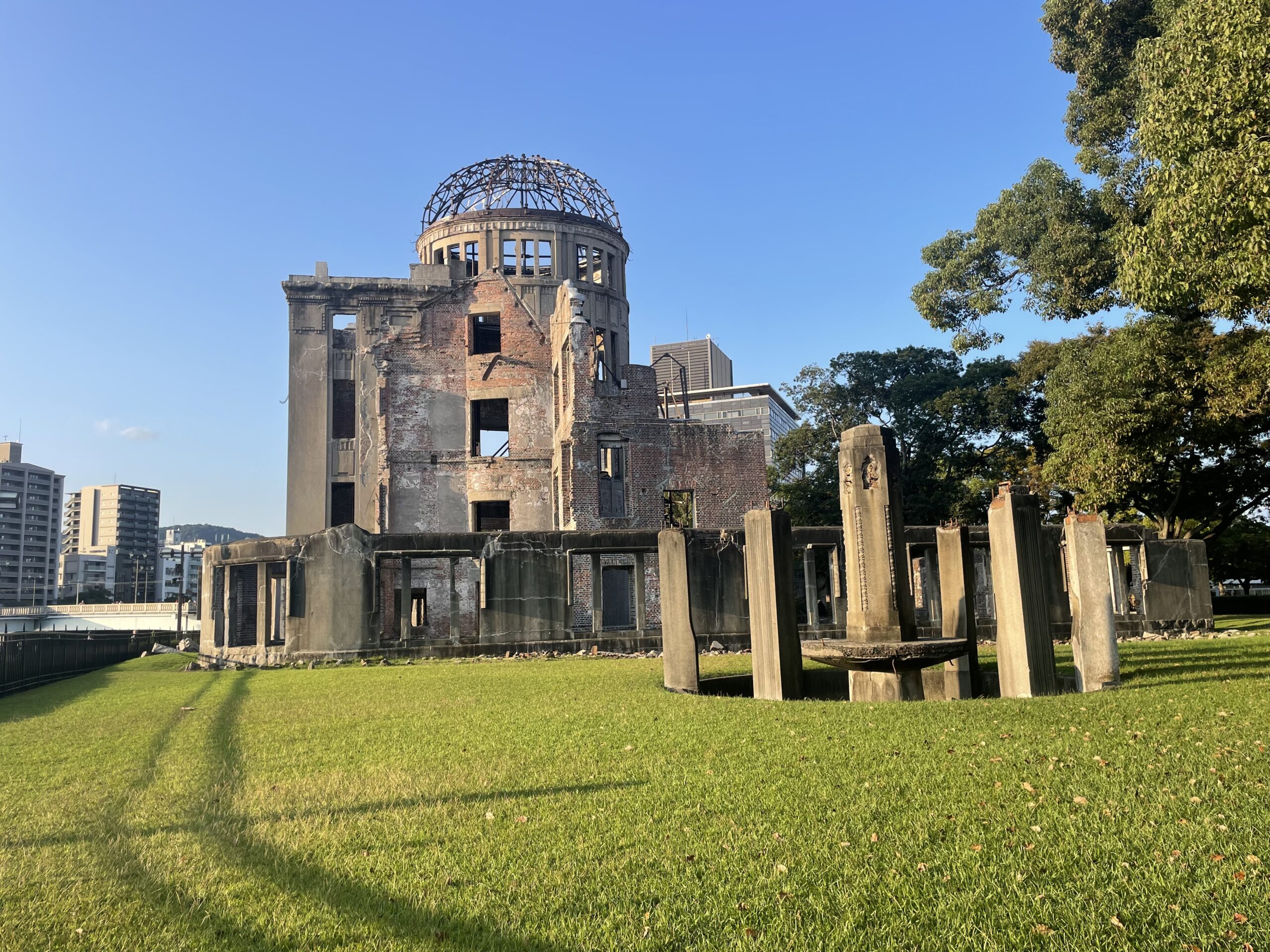
The museum visit starts with a description of the day and effect of the bomb in the same style as you might lay out the before and after of a volcanic eruption. People are going to work or school and then BANG and 140,000 are dead or soon will be. Deliberately no context, just the event and its consequences for the people then and as the burns, radiation sickness and subsequent genetic mutations took effect.
Later in the museum is a run through the Manhattan Project, Oak Ridge, New Mexico… There is nothing on the development of the B29 bomber which may have cost as much to develop as the bomb itself. But then it’s not an aviation museum.
Further on is some more context: 1931, Manchuria, 1937 (nothing on Nanjing) and then the 1941 expansion of Japan’s war in Asia: Malaysia, Thailand, Burma, India, China some more and the attack on America.
There is no discussion of the conscription or enslavement of occupied peoples (Korea was a colony from 1910) or the numbers of Chinese dead, maybe 20,000,000 military and civilian. There is a memorial to the Japanese school children sent into factories and farms to replace men gone for soldiers. Sad, but in the context of those not memorialised?
Anyway, the museum makes clear that nuclear bombing is very bad. (We are the folk song army.) There are calculations that ending the war that way cost fewer Japanese lives than the conventional campaign the US and Japanese armies had been planning for 1946 and beyond. And it was politically sustainable in the US where the continued casualties foreseen by military planners might not have been.
History museums are never only about the past. The war is a live issue in Japanese political culture wars in 2025.
Then we went to dinner with Bentley crew, Graham and Marina
That would be a tough museum day for me and, I suspect, most people. Dark stuff. Worth looking at, but difficult.