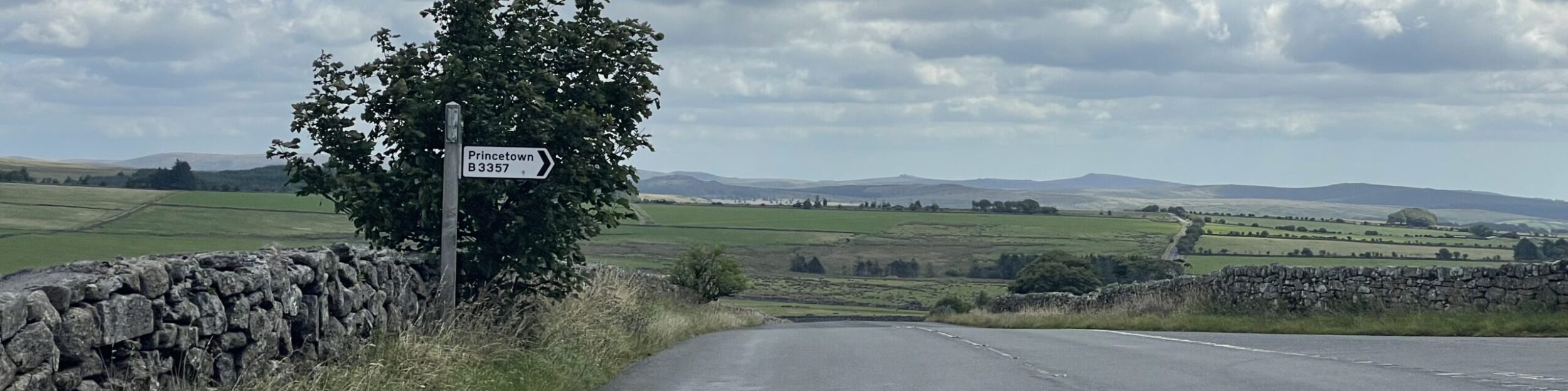
In which Sid and Doris manage to escape the rally circus, briefly.
The rally day finishes at 4pm and though the hotel is 40 minutes from the city Sid and Doris are not afraid and Teal goes to town.
Hakodate, on the southern tip of Hokkaido, was opened to foreign trade in 1858 so there are consulates and embassies from the period as well as churches: Russian Orthodox, Episcopalian (Japan having been opened up by Americans), Catholic and Anglican.
Some of the historic buildings have been gathered together in a “conservation area”. These are the ones that survived the Great Fires of 1907 and 1934, before which Hakodate was the biggest city on the northern island.
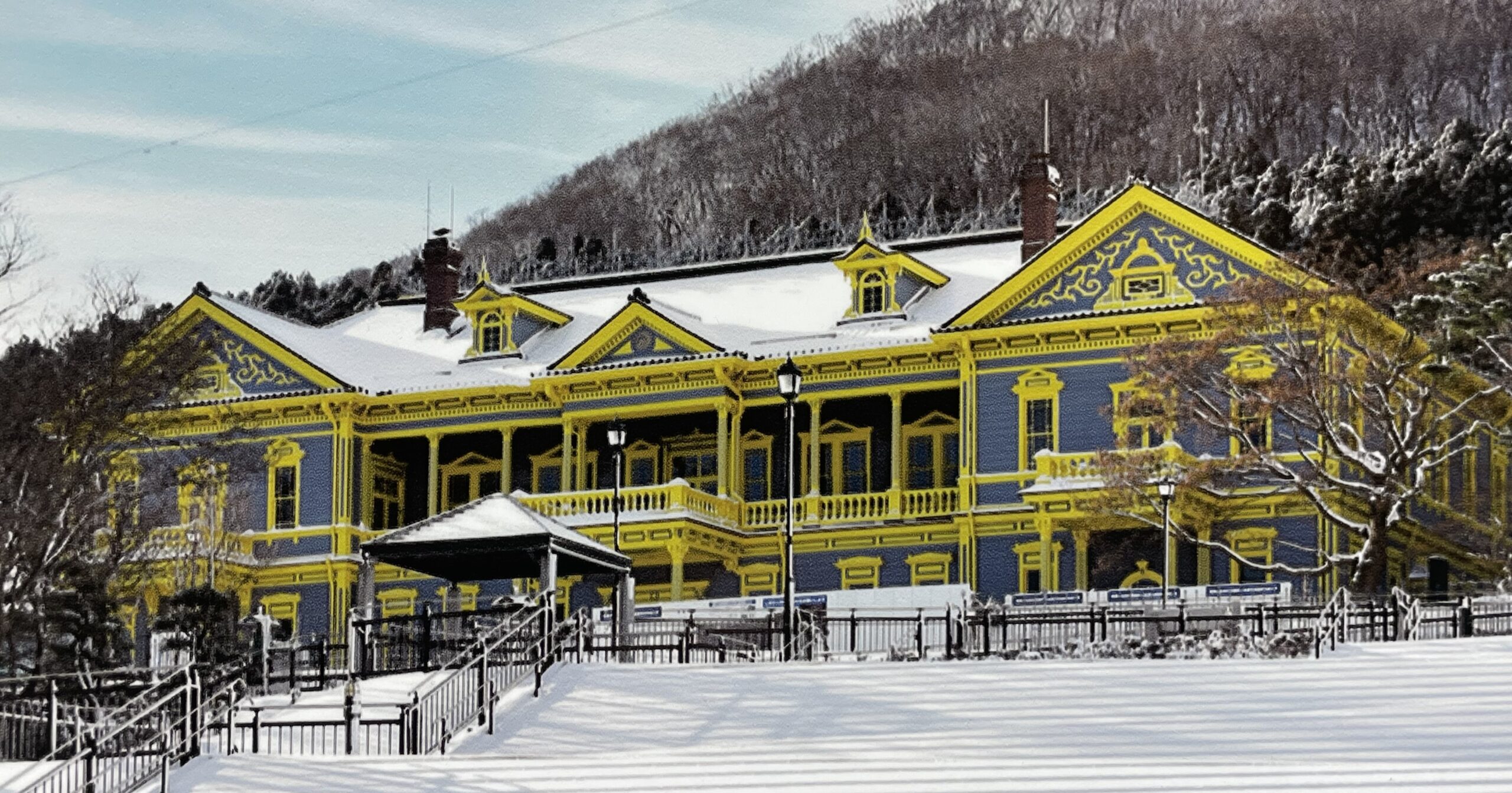
Above is the old Public Hall built in 1910 after the 1907 Great Fire and looks to have a lot of American influence. This was truly salle polyvalent, a place for city meetings, concerts and with a suite of rooms for important guests.
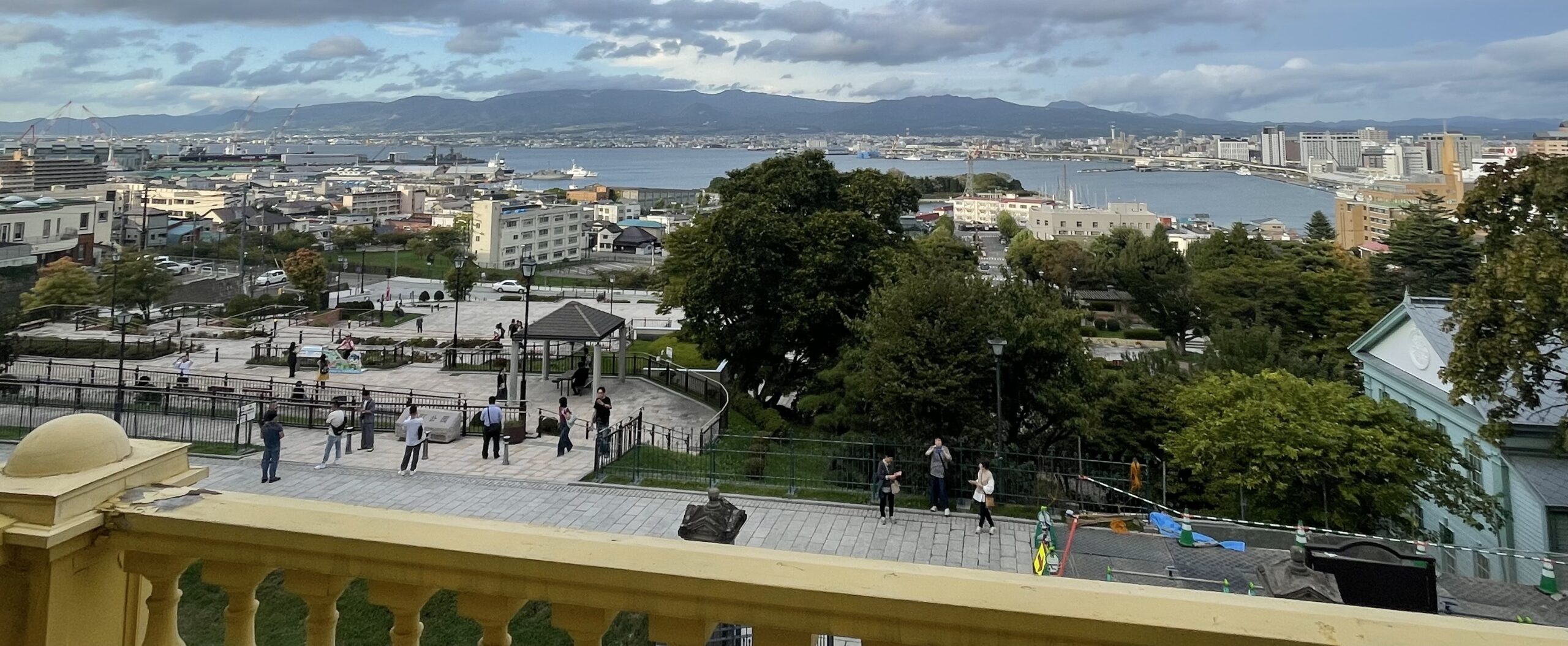
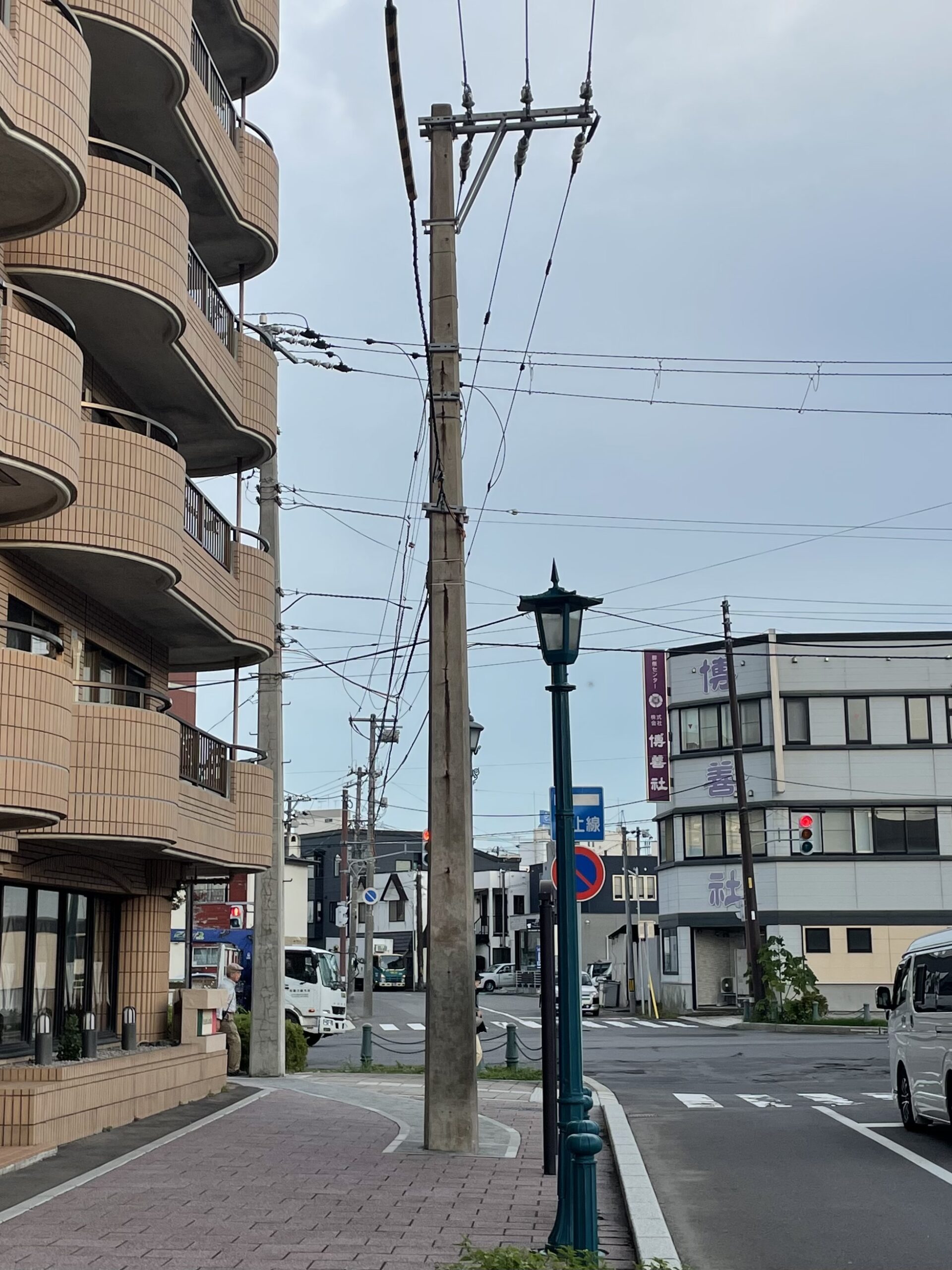 With a limited time before darkness, and an unwillingness to pound 40 minutes back up the road behind Teal’s non-rally-spec headlights, Sid and Doris pause on the balcony to wave to their uncaring audience and to plan a short walking tour of the Conserved Buildings. A plan which is soon discarded once a map shows “The First Concrete Electricity Pole in Japan”.
The combination of wood buildings, charcoal braziers for heating and frequent earthquakes create ideal situations for frequent Great Fires. The first concrete power pole in Japan in 1923 was actually the start of a greater movement towards fire-proofing the environment.
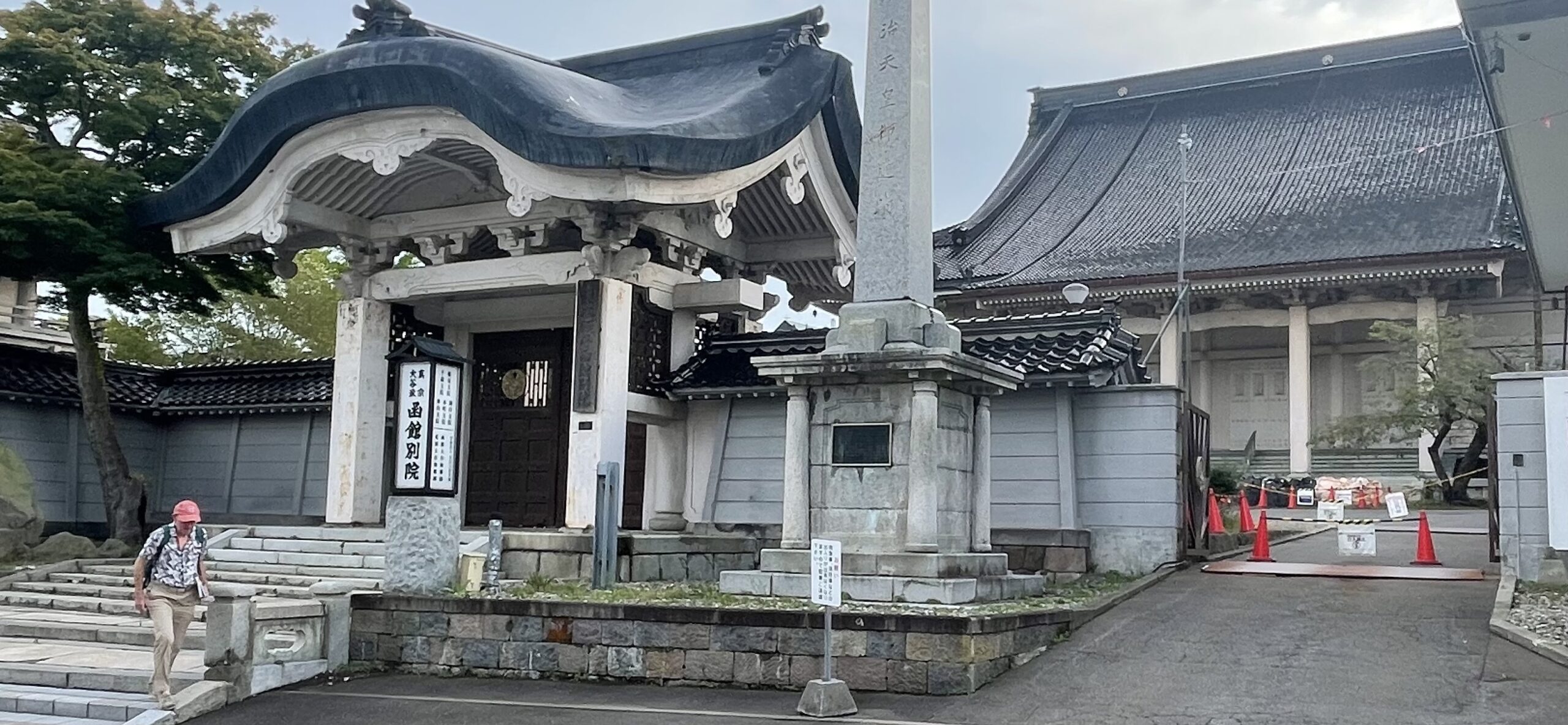
And above is perhaps the first reinforced concrete Shinto shrine, built after the 1907 fire and still there despite the 1934 fire and 1945 bombing of the port.
“At first, some followers thought that it might be sacrilegious to build a sacred hall using materials which people had stepped on and made impure, and others wondered if the new construction method was strong enough to support the temple’s huge roof. To collect donations for its construction, geisha were hired to dance on the floor to demonstrate the strength of reinforced concrete.”
Everything is interesting if you are interested.
One comment
Comments are closed.