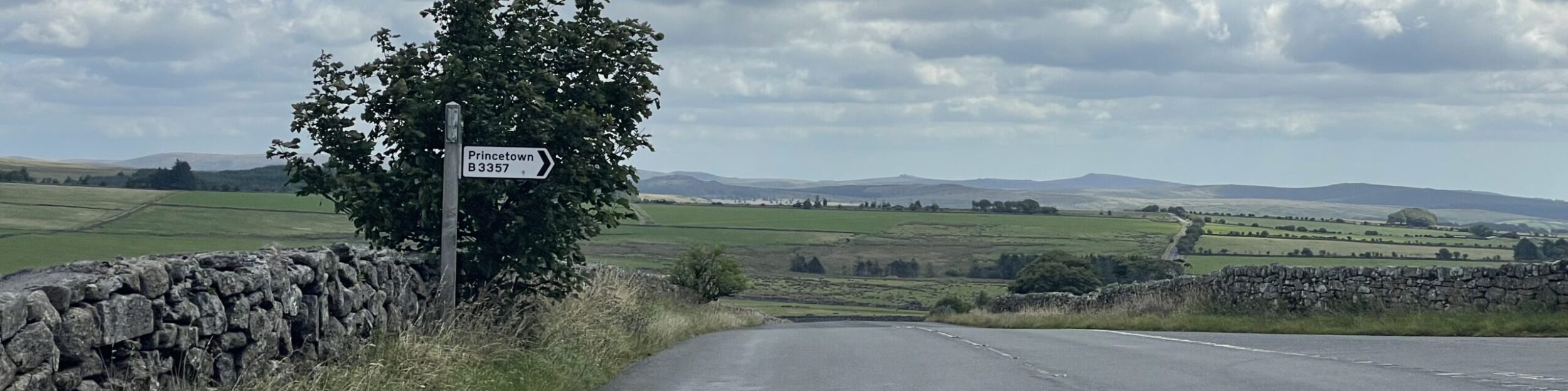
In which Sid and Doris visit upstate New York.
According to Mr GoogleMaps’ wisdom, there are two ways to get from Scranton to Albany. Go east and north along the interstates, or go north and east along the interstates. Only very peculiar people would opt to drive directly northeast. Fortunately Sid and Doris are your correspondents.
We may not have mentioned that in an All Time First for US driving (according to everyone else we meet) Sid and Doris actually have a paper map book on board. Purchased on our Vamos! trip, National Geographic’s Road Atlas Adventure Edition has an unusual mapping approach, which is that each state is scaled to try to fit on a single page. 10 miles on the Rhode Island page are equivalent to 250 miles on the Alaska page (which, in a nerdily fascinating observation, is at the same scale as the whole of the contiguous USA on a double-page spread). And who knows, maybe this is the best approach as the biggest states may also have the most spread-out roads.
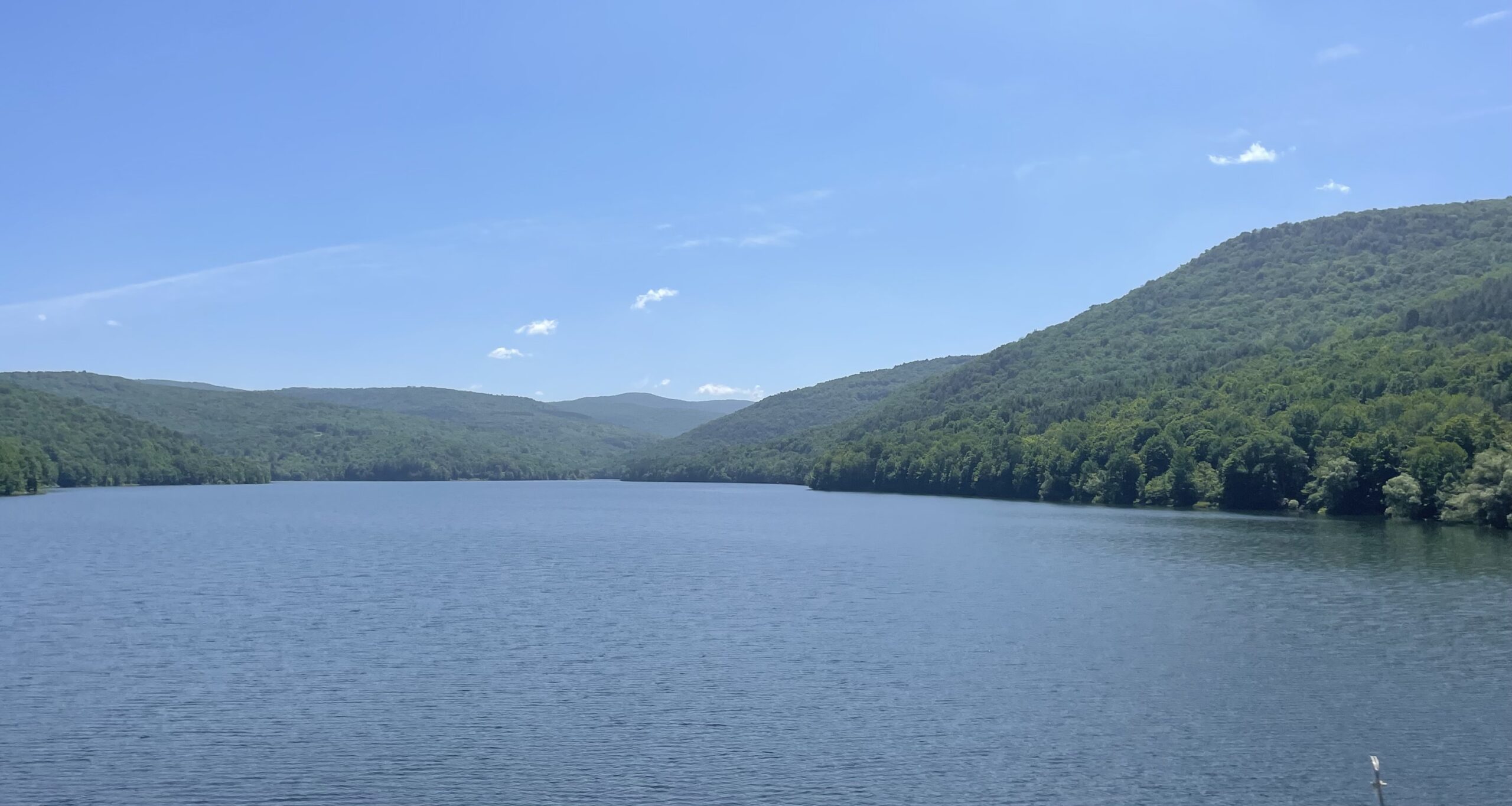 The Scranton-Albany journey takes us from Pennsylvania to New York state and therefore over some page boundaries – the pages are in alphabetical order of states so Doris is flipping between page 96 and 78. But on each of the pages the Catskills are clearly outlined in green, implying a very distinct Catskill/non-Catskill boundary. In practise as we drive along, the hills (or as the Americans would say, mountains) gradually swell up into tree-clad shapes, with lakes in between. It becomes very clear why the Catskills are a destination of choice for Noo Yorkers seeking a cool country cabin or indeed a lovely lakeside area to park their massive RV/motorhome right next door to another one.

With two land borders with Canada, there is no need for inhabitants of New York State to be complacent about the problems posed by those check shirt-wearing, Mountie-supporting, Lumberjack-axe-totin’ Canadians just waiting’ to come over and, I don’t know, randomly smuggle maple syrup or something. (Sorry about the alignment of the telegraph wires in this picture – it says Save America – Close Our Borders.)
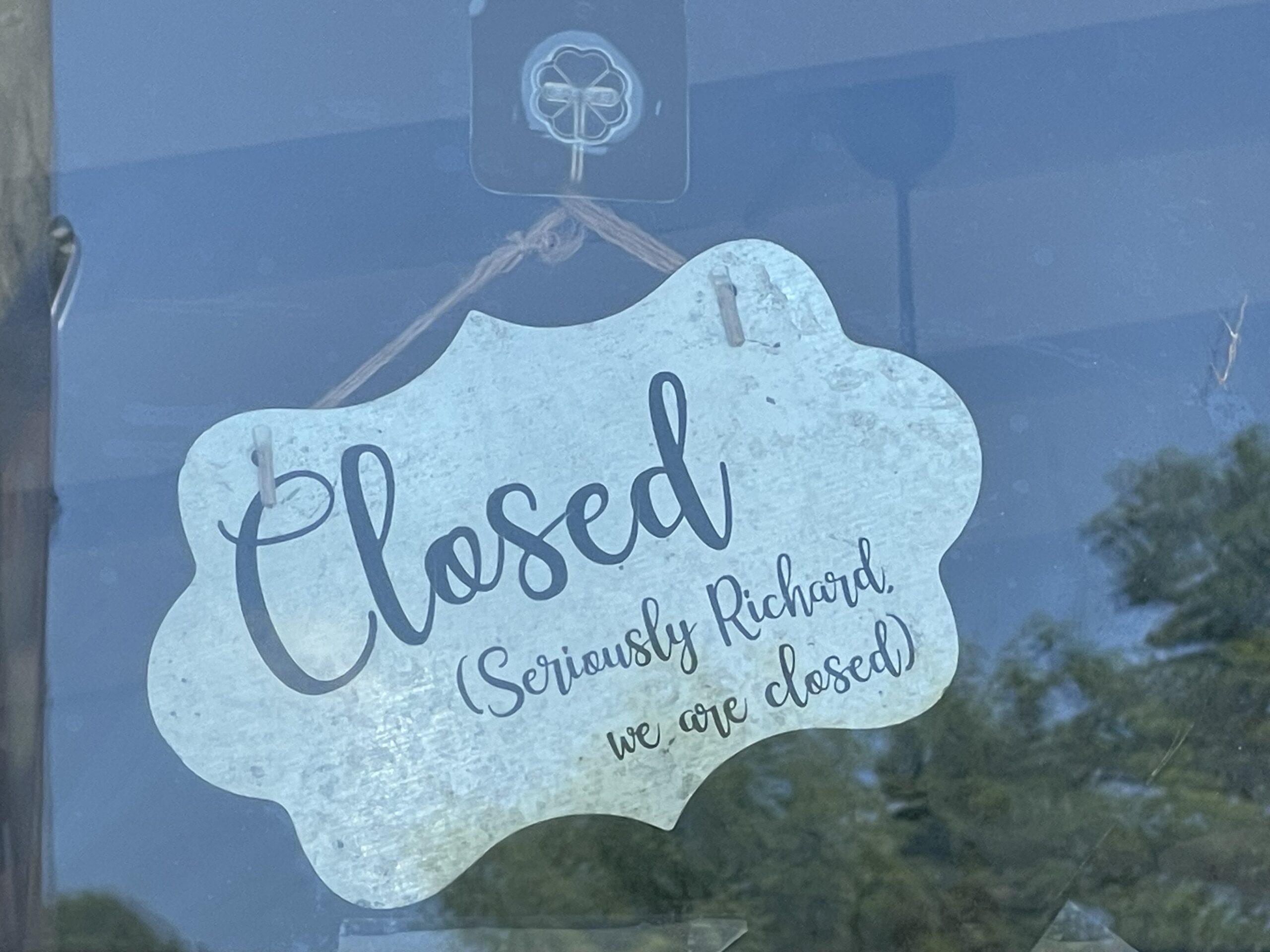 We stop at Margaretville in search of inputs and outputs. Sid and Doris have a habit of finding towns shut but this is on another scale.
 After finding the customer loo (sorry, washroom) in a grocery store, we amble casually outwards and able to marvel at the importance of those little punctuation marks. Let’s eat, Grandpa! Or maybe, Let’s eat Grandpa!
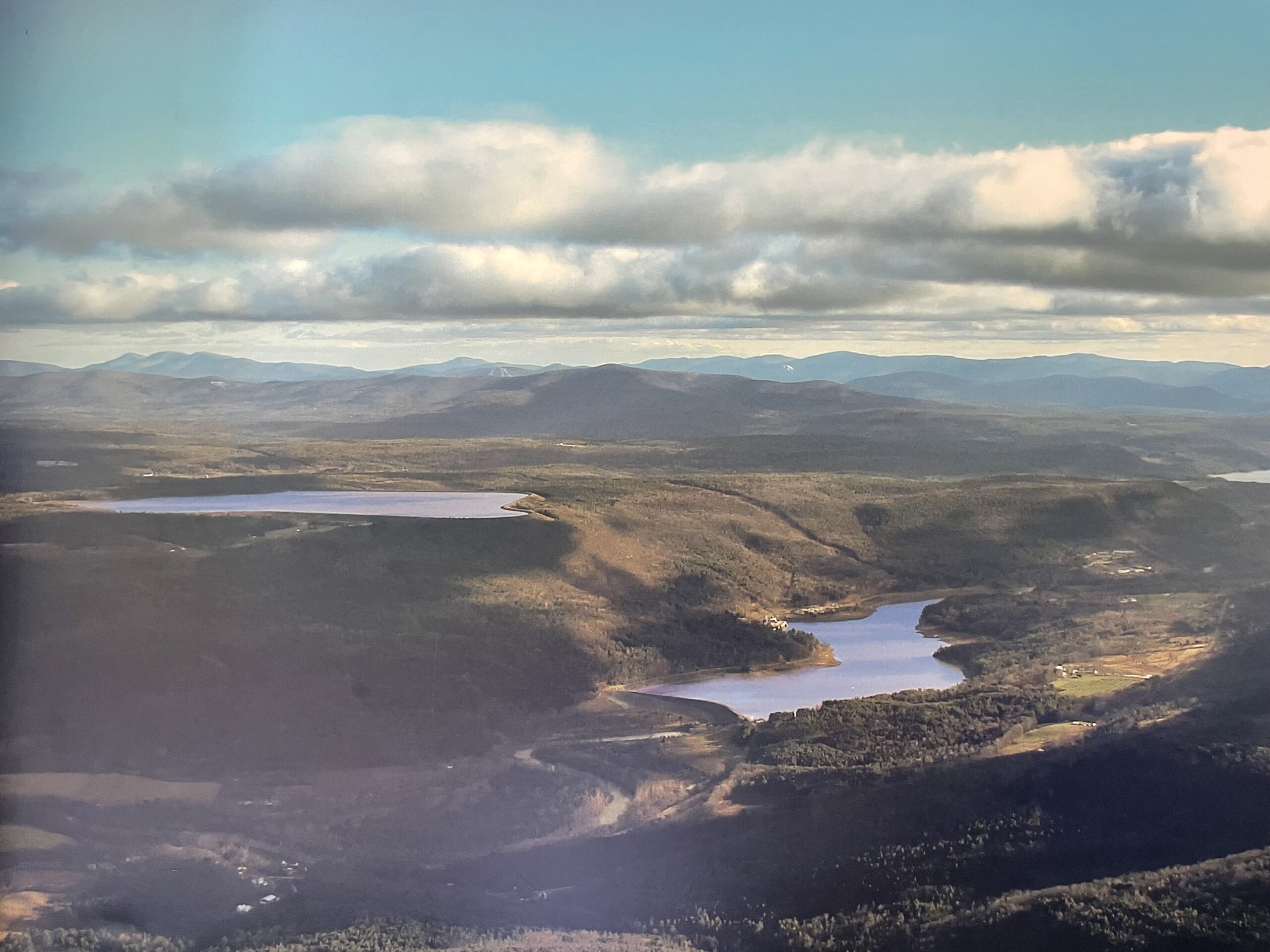
An Information Board beckons to the Blenheim-Gilboa Power Project which is interesting even possibly to our more infrequent readers. One of the big problems with wind/solar power is the way that it doesn’t align to usage patterns. So you need a way to store that power, and one way is to turn it into potential energy, by lifting something up. You can then convert that into kinetic energy, by dropping it back down again. Water is a conveniently heavy and portable thing to use for this. If you get the engineering right (and I believe it is a tad tricky) then the pump that you use to move the water uphill, powered by your surplus electricity, can also be the turbine that is turned by its passage back downhill, generating electricity at the time it is really needed, with, apparently, a 73% cycle efficiency.
Being in America requires that this has to be done on a Big Scale and so each of the reservoirs in that picture below that looks like a train layout based on the Lord of the Rings are 5 billion of your slightly undersized American Gallons, or approximately 1.3 million times the fuel tanks on Nereus, or 19M cubic metres which works out as a cube 266m on a side, none of which really helps to make the point that it is Very Big Indeed. The reservoir at the top was apparently made by “cutting the top off a mountain”, as you do.
We proceed into Albany where there is Democracy In Action underway. American elections start with primaries, where people who are signed up decide which candidate will represent your party. Then everyone votes on the choice of candidates presented by each party. It means that the infighting is conducted in relative privacy, and with carefully-gerrymandered electoral units in many areas it means that the primaries are effectively the main event. Albany is a Democrat town and there are a lot of young people standing in the primaries, which is great. We wander into a small bar where Deirdre Brodie is having her after-party. Although she did eventually win, it took two days to count and recount the vote which was initially a dead heat with each of the top candidates having 379 votes, so it is possible that a high proportion of her electorate was at the party. Still, you gotta start somewhere. When Deirdre Brodie is standing for President, you read about her here first.